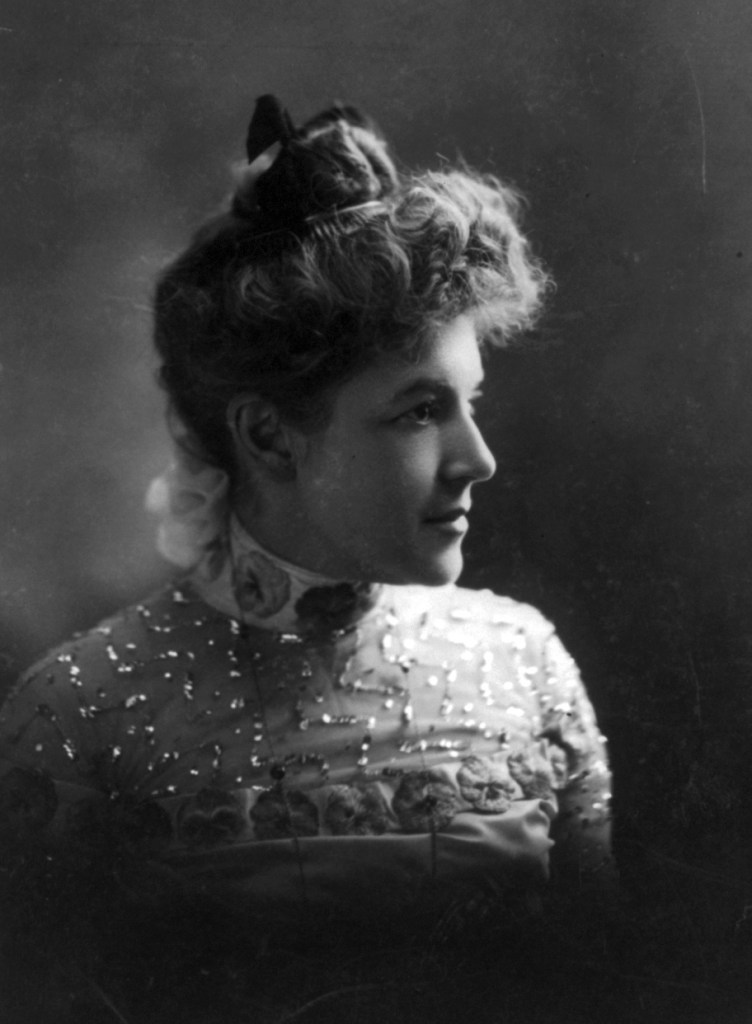
“What can be said in New Year rhymes,” wrote Ella Wheeler Wilcox in her poem “The Year,” in 1910, “That’s not been said a thousand times?”
Fair point. I’m not sure about what I could say about new year’s that hasn’t been said before. But in this poem, written 113 years ago, there’s a lot that still speaks to me.
As a writer, I appreciate a turn of phrase. Wilcox uncorks a good one:
We live, we love, we woo, we wed,
We wreathe our brides, we sheet our dead.
Sixteen words that tell a story.
Sixteen words that tell a lot of stories.
I admit that I’m not sure that I’ve ever seen “wreathe” as a verb. (No doubt that’s a bug of my incomplete education.) But I know what it meant. Dictionary.com’s four definitions for “wreathe” as a verb has two related to wreathes. The other two make more sense in this context:
- To surround in curling or curving masses or form
- To envelope
The latter’s probably the one, although I guess you can curl a bride in a veil just as you would envelope her in it.
I admire Wilcox’s lines. There’s no adorning. There are a lot of active verbs. What’s more active than live, love, woo, wed? Those first eight words encapsulate a lot of what’s wonderful about this life.
But it’s the last two lines that make up that year Wilcox wrote, the year just past for all of us, the year ahead, all years before and evermore:
We laugh, we weep, we hope, we fear,
And that’s the burden of the year.
There’s no doubt we have all of those ahead this year.
Here’s the whole poem from Ella Wheeler Wilcox, who was born in 1850 and died in 1919:
What can be said in New Year rhymes,
That's not been said a thousand times?

The new years come, the old years go,
We know we dream, we dream we know.

We rise up laughing with the light,
We lie down weeping with the night.

We hug the world until it stings,
We curse it then and sigh for wings.

We live, we love, we woo, we wed,
We wreathe our brides, we sheet our dead.

We laugh, we weep, we hope, we fear,
And that’s the burden of the year.

 Nows and Forevers
Leave a comment