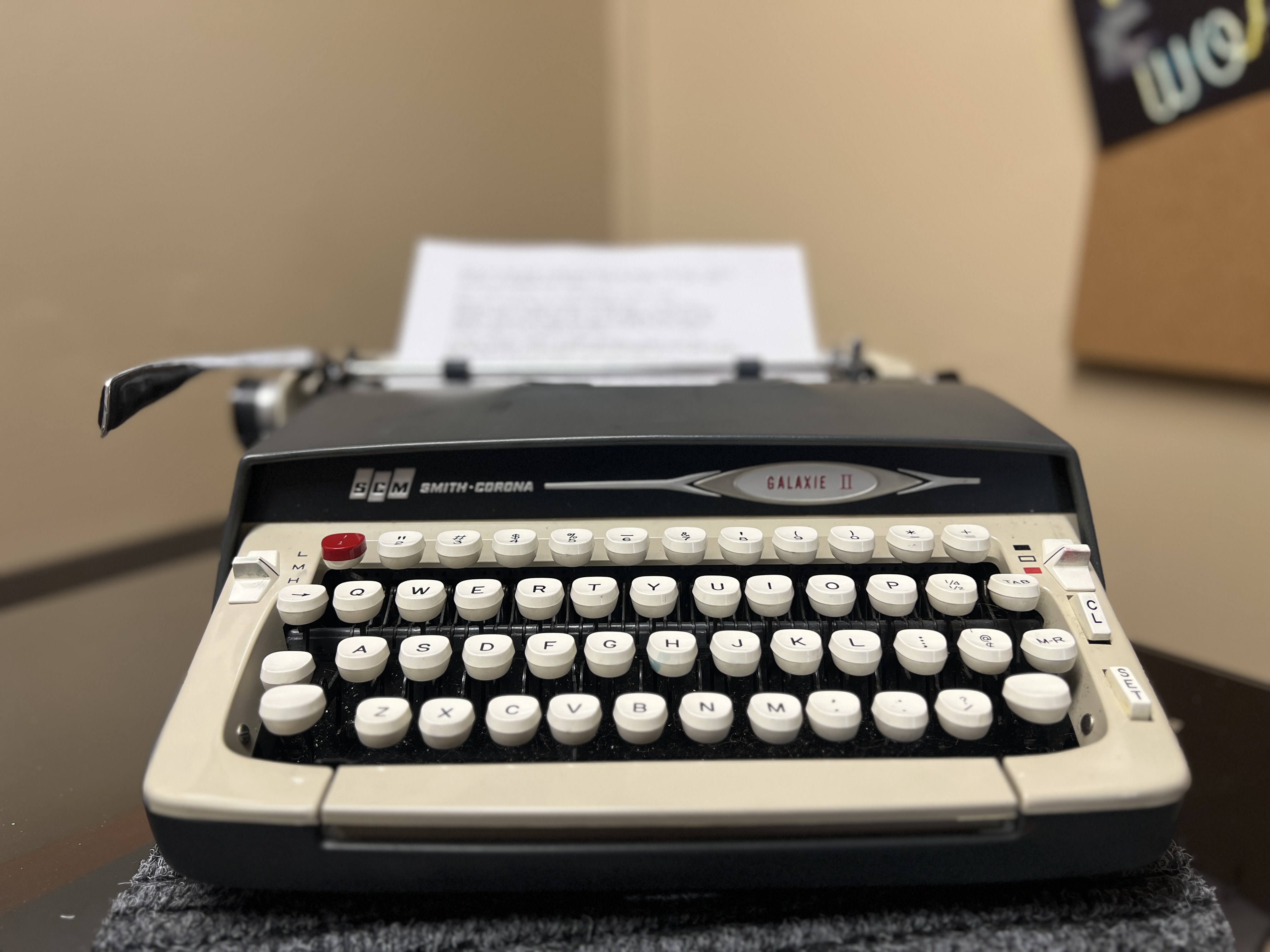
It has been a few months since generative AI like ChatGPT and Bard hit the national consciousness. The concern over what it means for jobs, particularly white-collar jobs, hasn’t died down a bit.
I was talking with a fellow journalist yesterday, and we joked that AI hadn’t come for our jobs just yet but who knows how long it will be. I don’t claim to know. Nor is it a paralyzing fear. I wonder how generative AI will impact my job and I’m uneasy about it, but I have to say that the state of journalism already was uneasy for us humans and it’s not hard to think of AI as yet another looming challenge.
The Los Angeles times just published a thought-provoking column from Brian Merchant about this very topic: “What it looks like when jobs disappear in the shadow of AI.” Merchant looks at the rise of AI at the same time the entire news department at Buzzfeed was sacked, and whether journalists will end up being replaced by AI.
Merchant calls AI “an ambiguity generator” when it comes to jobs:
“It allows those who hold the power to justify making all kinds of calls, in the name of embracing the future, improving efficiency, and so on,” he writes. “And in this still very young AI-infested moment of ours, we can’t be sure which way many of those calls will break.”
I think he’s onto something here. I’ve spent half my career covering business, and a fair amount has been chronicling the impact of change on companies and workers. That could have been the decline of industry in the Northeast in the late ‘80s and early ‘90s, when my traditionally blue-collar hometown started losing its factories and making the painful transition to bedroom community. Or maybe the offshoring of whole industries, like the shoemaking industry in central Maine, where hundreds of workers were jettisoned without the skills (or economy) to find new jobs. Or the rise of technology, biotech, energy and advanced manufacturing industries that were mostly the realm of science fiction when I was in school.
I cover that a lot today, with the decline of coal mining and steel manufacturing and the rise of so many other things, without the mechanism of transferring employees’ skills to something else. It’s happening in journalism, too. I long ago left the world of daily newspaper journalism, the places where you would see a range of local news, sports and features gathered by reporters and editors.
I will tell you that I left it before it left me. Community journalism, the kind of work and public discourse that we need in a democracy, is a shadow of it what it was even in the ‘90s. There are plenty of towns and cities where the mechanics of governing rarely sees the sunlight of journalism. It doesn’t pay for newspapers — or any media really — to delve too deeply into those topics.
Stories about local governance and activities may be critically important to democracy — and they are, really — but the amount of people interested in them doesn’t often justify the amount of time spent to really do it justice. The type of beat reporting I did for school boards and towns and cities 25 years ago, no journalist has the time to spend on that now. Nor do our bosses want them to. We can tell through web and social data how a story does, and these types of stories don’t “do well” in analytics.
Would AI help that? Doubt it. Maybe if you were to marry the Boston Dynamics physical robots with a powerful journalism-focused AI, then you might be able to construct a Journo Bot that could go to all those meetings that we human reporters can’t. But I find it hard to believe.
More likely, at least for the time being, is that we’ll see generative AI take up the slack in doing researching and writing the types of stories that aren’t a human worker’s best use of time. It’s already happening. (See CNET and elsewhere.) But it’s going to be a long time if ever, I think, before the bulk of the journalism can be transferred to AI.
Am I being too optimistic? I don’t think so. Generative AI requires there to be a paper trail, or at least a pixel trail. That’s some of what we do as journalists, but rewriting press releases has never been the best use of a journalist’s time. And staying in the newsroom is never the best use of a journalist’s time. Nope, the news is out there, to paraphrase The X-Files, and I can tell you as a longtime journalist, it rarely comes to you.
I don’t see the development any time soon of an AI that will be able to do that kind of legwork.
And then there’s the very real danger of AI getting things wrong or being so prolific that it waters down the value of the printed word on the Internet. Already on social media, and some websites, there are countless lessons in what happens when you don’t have professional reporters and editors to gather and produce news. AI amps up those dangers by orders of magnitude.
How that will spin out, I have no idea. But I wonder whether that’s the secret sauce, the fly in the AI ointment that there’s no answer to at the moment. We can replace humans with AI in white-collar jobs. But we won’t be able to replace that human connection,and the things that humans bring to the table as journalists, writers and other professions. It’s one thing to automate a production line, which can make for efficiencies and scale that humans can’t reach. Yet what makes us human — and what you want as a human — can’t be provided for by AI.
That was brought up to me the other day by someone who isn’t a journalist but is seeing the impact of AI on other white-collar fields. He didn’t think AI was going to wreak as much havoc on journalism and storytelling in particular because, at the end of the day, machines and algorithms aren’t people. Nor can they tell a story like a human being can, or like a human being wants.
I think that’s one of the best arguments I’ve seen about this topic. I’ve read generative AI fiction, even played around with it a bit myself. It has left me wanting. That’s partly because it’s in it’s early stages, but also because the gap between human and machine isn’t easily reached.
People want to read stories about people, my editor and every other one since time immemorial has said. And people probably aren’t going to want to read a story about people, written by a machine.
Not in the long run.

 Nows and Forevers
Leave a comment