-
Farewell, Super Blue Moon
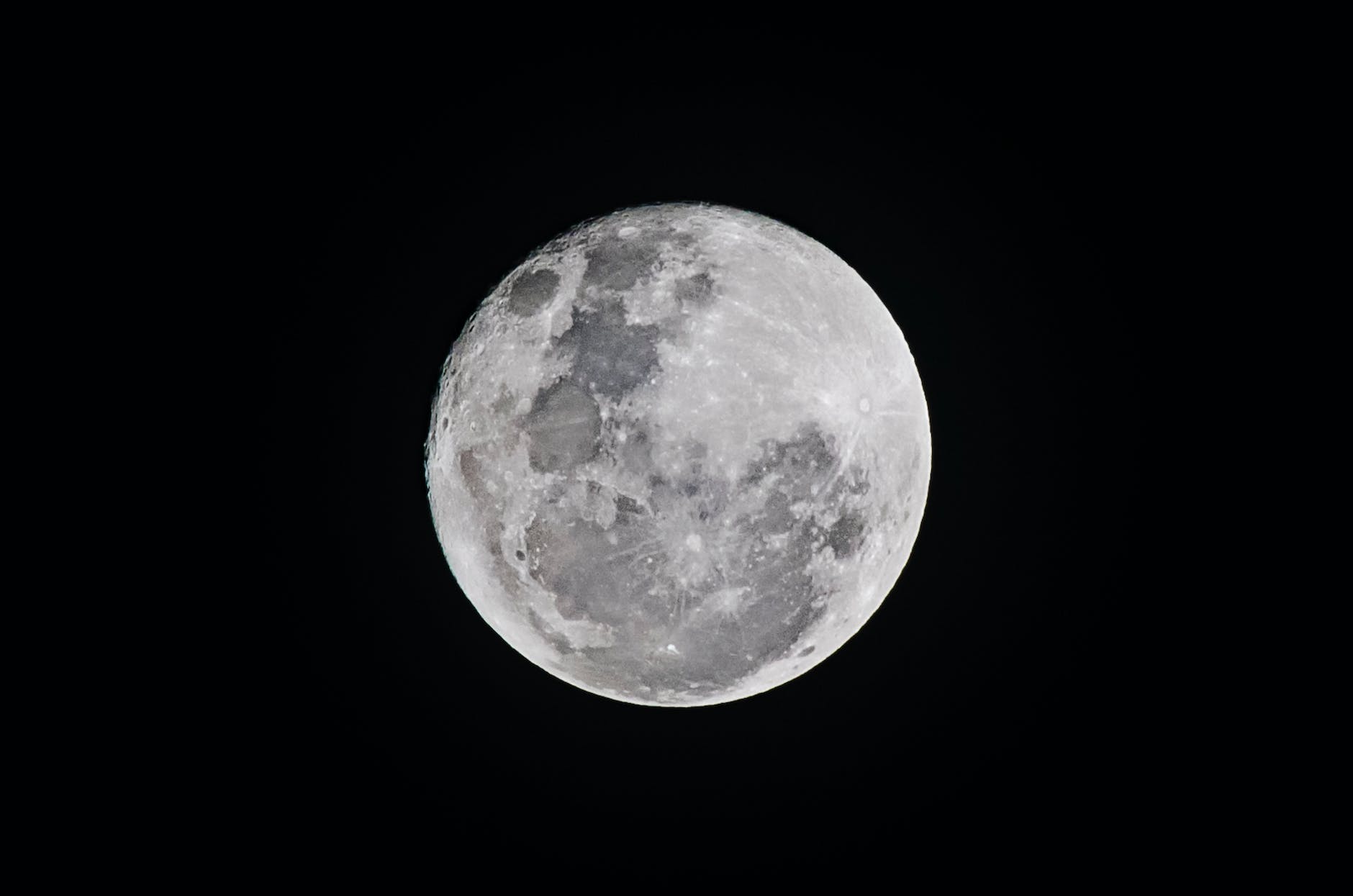
Photo by Bruno Scramgnon on Pexels.com Blue moon, I saw you standing there. And, maybe, one last time.
I’ve been enjoying the super blue moon above me the last few nights, even if last night, the penultimate, was mostly cloudy. Two nights ago, the moon shined bright and big, and it was wonderful. Tonight, as I write this, it’s getting dark and I’ll find out if I get to see it one last time, this super blue moon.
I better. I’m reading that it won’t be around again until 2037. I can’t guarantee I’m going to be around in 14 years. Every day is a gift, as I am reminded. So is every night.
I love looking at the stars, ever since I was a kid and I would wake up and look out my bedroom window after my parents were asleep.
Back then, as I understand it, the sky was much brighter than today. I lived in the Connecticut suburbs, not too far away from New York City, but I could see the stars and it felt like it got plenty dark at night. The moon was the first thing at night I remember seeing and then, in the early 1970s, it didn’t seem so far away. After all, 12 Americans had walked on the moon in my short six years of life and it had only been a few months since the last mission, Eugene Cernan and Harrison Schmidt, left in Apollo 17.
How did we know it would be so long before we went back?
That moon, it was yellow. I’ve been in wonder of it ever since. -
Umm, no

I know it’s Pumpkin Spice season. I only know a handful of people who do PSLs, but I hear it’s quite a vocal group. That’s fine, although I like my lattes straight up, no flavor.
But pumpkin-spice creep is A Thing, too.
Sorry, Tony. Can’t do Pumpkin Spice Frosted Flakes. Even if you are smiling.
-
Turning back the clock
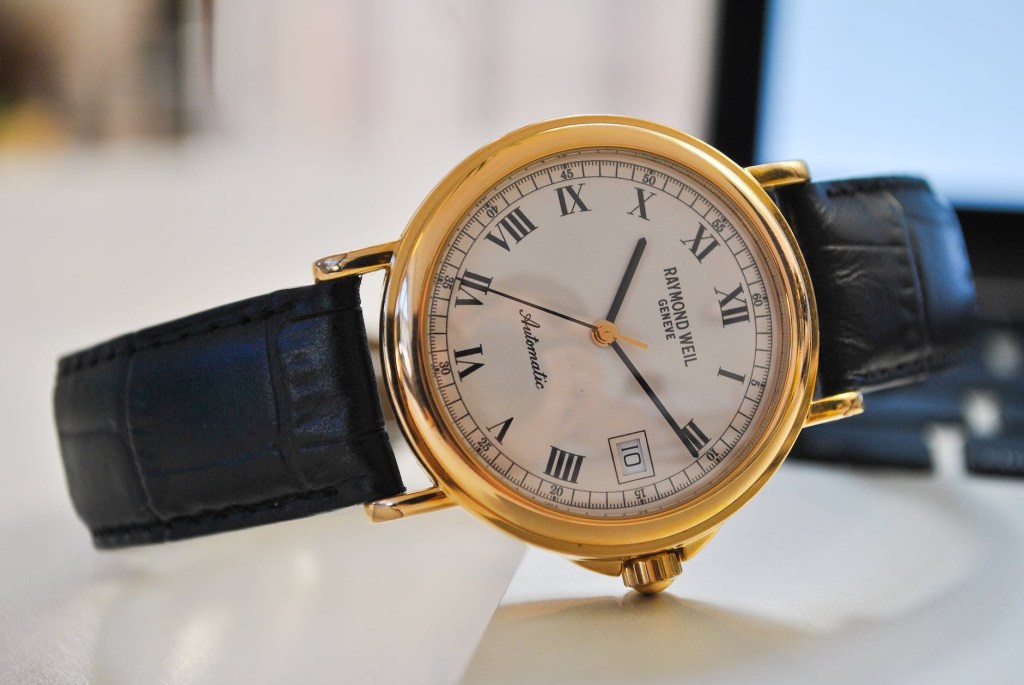
This looks old-timey, but like most watches these days, it’s probably got a battery.. https://www.nytimes.com/2023/08/09/fashion/watches-manual-wind-oris.html
The New York Times is telling me today that old-style timepieces are back in fashion.
It’s been a long time since I have worn a watch — I think the last time was the early ‘90s when I was trying to be polite to my grandparents, who bought me a watch for Christmas — although from time to time I’ve experimented with sports watches to time my running. And for a bit, I wore a FitBit, although that was doomed from the start.
You see a lot of watches these days, but they’re all Apple Watches. I know a few people who wear them. I never have had the urge, because A, I don’t like wearing something on my wrist and B, I have always found another way of telling the time.
It’s funny, though, someone whose career depends on deadlines, and who lives by at least two every day, not wearing a watch. Well, it’s been easier in the smartphone and cell phone era. But even before that, I found other ways.
The last watch I had was a manual timepiece, but it still had a battery. The one I had before that, when I was a kid in the ‘80s, was manual and you did have to wind it. I remember not quite understanding at first why my watch, which also was a Christmas present (see a theme?), stopped working.
You have to wind it up every once in a while, my grandfather told me. He wore a watch his entire life.
I guess for some reason I thought watches just worked, like Foucault’s Pendulum, tied to the rhythm of the days and nights and the moon or something. Science has never been one of my strong suits.
The Times’ article says that people are going back to the manual-winding watch because “people are feeling overwhelmed and want to hit pause on pretty much everything,” including anything digital.
That’s probably true. I sure have tried to spend less time in the digital world in my personal life, whether it’s writing more by hand or going off social media or reading a physical book instead of a Kindle.
The co-CEO of a watch company, Oris, told the Times that winding a watch is “a moment of contemplation, a moment to take for yourself.” I think that’s probably true, although I remember winding a watch and pretty much wondering if I was getting it right. That must have just been the impatience of a teenager.
Of course, this desire for contemplation and thinking about your life in the moment seems to come at a cost. The watches mentioned in the article cost between $4,400 and $12,300, which is way more than I can afford for a watch, unless it will somehow take me back in time. If that’s the case, then it’s definitely in my budget.
Other than that, I’ll find the time the old-fashioned way: Looking at my iPhone.
-
Some truth in this
“What makes a good newspaperman? The answer is easy. He knows everything … He can go for nights on end without sleep. He dresses well and talks with charm. Men admire him, women adore him; tycoons and statesmen are willing to share their secrets with him. He hates lies and meanness and sham, but he keeps his temper. He is loyal to his paper and what he looks upon as a profession; whether it is a profession, or merely a craft, he resents attempts to debase it. When he dies, a lot of people are sorry, and some of them remember him for several days.” — Stanley Walker, New York Herald Tribune – 1920s
I’ve had this quote hanging up at my desk in the past, but it’s been a while. I was thinking of it then, and now, as ironic.
And way out of the times. Even then, there were newspaperwomen. Great ones, too.
But putting that aside — and the stuff about men admiring a journalist and women adoring, which I haven’t found to be true (though maybe I’m just doing it wrong) — some of it rings true. I am loyal to my paper and the profession or craft or whatever you want to call it. I’ve been a journalist most every year after my 20th birthday, and that was a long, long time ago. Plus I’m a third-generation journalist, and both my parents were reporters and editors, too.
I do resent attempts to debase journalism. It’s been a lot of fun.
I’d hate to think that when it’s my time to go, whether they carry me out of the newsroom or not, that it wasn’t worth doing, even if every day there was a new challenge and you’re only as good as your last story.
-
Night heat

It’s getting dark enough that the lights are on for the baseball game I am at tonight. And it’s still 90 degrees.
Very little cooling at all.
I shouldn’t complain. There are plenty of people who have it worse than me. It has only been one day of 90+. I can’t imagine what it’s like in Phoenix or Houston or the many other places where the heat is unbearable, or worse.
-
Releasing a cinderella story
Drew Maggi, who got his first major league at bat in late April after 13 years in the morning leagues, was released by the Pirates.
That’s a long time to toil in the minors before making The Show, and it’s one of the reasons why Maggi’s story seemed to pop when he got called up out of nowhere from the Altoona Curve, two steps away from the majors.
He had two hits in three games, and then got sent back down to the Eastern League, where he’s been ever since. Except that he was batting below .200, the feared Mendoza line, and hadn’t been in a game since July 8.
A feel-good story, although all feel-good stories don’t have happy endings, as I well know. Let’s just hope that he finds his way back to the majors, or some other type of pleasant baseball future awaits.
-
No subscriptions
About an hour into my workday, I got a Tweetdeck notice for the first time:
Unlock more posts by subscribing.
And:
You have reached the limit for seeing posts today. Subscribe to see more posts every day.
Just another new Twitter experience. Everything on my Tweetdeck columns went blank, also the first time that’s happened. I went back an hour later and the same thing happened.
I don’t post on Twitter anymore, but I do keep it going for work. A journalist should keep as many streams as possible open, no matter how painful that can be sometimes. But until today, I never got this notice.
It’s been a long time (since April) that I posted anything on social media other than LinkedIn. I don’t have social media on my iPhone either, and I don’t scroll when I’m home. Tweetdeck in the hours I’m in front of my computer at work was the last vestige of my one-time social media fixation.
Looks like that’s going away, too. Because I’m not going to subscribe.
-
A burger, hold the burger
I’ve been a vegetarian on and off for the past 37 years. Mostly on, but recently off. But I’m still bemused by the fact that fast-food restaurants, after years of ignoring vegetarians, are still trying to find the magic key to cater to them.
The latest is Burger King, which in Asia launched what it calls the Real Cheeseburger: 20 slices of American cheese with sesame-seed buns on either side. Probably no chance of it coming to the United States, thankfully.
I’m old enough to remember when the best vegetarians could do at a fast-food restaurant was order a McDonald’s or Burger King cheeseburger and wonder whether the server would understand.
Usually, it would go like this:
“I”d like a cheeseburger, without the meat, please,” I’d say.
“A what,” would be the response 99 times out of 100. “Without the meat?”
Then they’d be a silence and sometimes a flurry at the register, as the server would ask someone else if A, this customer wasn’t full of [REDACTED] or B, how to ring it up.
Now it’s different. McDonald’s doesn’t really have a solid vegetarian option, although it has tested them. Burger King has the Impossible Burger, which isn’t bad but if you care about being a vegetarian, you gotta wonder whether it’s being grilled the same place as the meat.
Which of course, it probably is.
-
Here we go again
Another two days of smoke from Canadian wildfires have wafted over where I live, enough to give me more bouts of coughing.
Thanks, Canada!
Thankfully, it’s gonna now, or will be mostly gone this week. These fires are in the Canadian west, not the ones from Ontario and Quebec that made June and early July miserable. But these fires are apparently going to come and go the rest of the summer and fall, since there’s apparently no way to fight them all.
Home
About Me
Journalist and writer. Loves writing, storytelling, books, typewriters. Always trying to find my line. Oh, and here’s where I am now.


Leave a Reply