-
Digital media’s decline

Photo by Format on Pexels.com For years, those of us who were in traditional media (TV, radio, newspapers) have either lost jobs or seen them change drastically — or, sometimes both — with the rise of social media and online sites like Gawker, BuzzFeed, Vice Media, Huffington Post and others that are either still here or not.
I’m not here to glorify the Good Old Days of Traditional Media, nor am I here to trample on the graves of the publications, in print and online, that have shuttered. There are way too many to mention. But I keep wondering, as the business models of journalism continue to sputter and fail, just what’s next. Because I don’t see the need for news outlets going away.
For a while, digital news was thought to be journalism’s savior. It could survive, creatively, by mass audiences and by the new economics. But that seems so 2013. Now, unfortunately, that isn’t working out, either. Both BuzzFeed and Vice Media have undergone a number of layoffs and, according to this CNN.com article, are in survival mode.
That’s a shame. I wanted digital media to survive, just as I wanted newspapers and TV and radio to survive. We need it all.
“At one point, the outlets inspired fear in their legacy media competitors, with each valued at billions of dollars while making splashy hires and threatening further disruption. Now, they’re struggling to keep their head above water.”
Nobody wins in this environment.
-
It’s a success in my book
Depending on who you listen to, Intuitive Machines’ Odysseus lunar landing is either a success or a partial failure.
They got to the Moon, but the lander ended up tipped over. It may or may not be able to do all the things that it expected. But it’s doing a lot.
“We have quite a bit of operational capability even though we’re tipped over,” Intuitive Machines CEO Steve Altemus said Friday at the mission update.
Guess what? That’s a lot more than there was before landing. And the fact that it’s running, well, that’s a huge accomplishment, for Odysseus, for Intuitive Machines, and for NASA.
-
From the Earth to the Moon
The United States is back on the Moon for the first time since 1972. And, for the first time, it’s a private company that’s leading the way.
Inituitive Machines’ Odysseus lander touched down on Thursday evening after a journey from Cape Canaveral, a launch aboard a SpaceX rocket and then the trip to lunar orbit and then, history.
Amazing what we can do.
I followed the last hour or so of the landing, as Odysseus initiated a deb orbit burn and then headed to the surface. There was already a change in the mission, when something didn’t work so they had to improve with the sensors that help it navigate. The webcast was tense and, after the jury-rig for navigation, there were several uncertain moments when it wasn’t clear whether Odysseus had survived.
But then a first signal was heard. Intuitive Machines had successfully landed Odysseus on the Moon.
Amazing what we can do.
I’ve been following the Commercial Lunar Payload Services program, a public-private partnership with NASA to make the Moon more accessible, for a while. I’ve been writing about the race to put a private mission on the Moon since about 2013, starting with the heat of the Google Lunar XPrize competition back then. I’ve written a fair amount about Astrobotic, a Pittsburgh-based company that had formerly been a Lunar XPrize competitor and had always had the long vision of commercializing space. Intuitive Machines was founded around that time out of Houston, and it’s become a public company since then.
Astrobotic, unfortunately, wasn’t able to complete its mission to the Moon earlier this year, after a propellant leak doomed the lander. It was bittersweet to write this story in January about what happened and Astrobotic’s next steps, because it was so close and they had gone through so much. But Intuitive Machines’ success, as well as Astrobotic’s next try, is what is going to start to change space exploration.
We’re one step closer to the day when the Moon and space will be much more accessible places to live and work. I won’t live to see its full potential. I’ve been waiting since the Apollo missions of the early 1970s to see this. But I am confident it will happen.
-
‘Masters of the Air’
I watched with interest the promo for “Masters of the Air,” the new miniseries from Tom Hanks and Steven Spielberg on Apple TV+. What it depicts is part of my family history.
My grandfather was a B-24 and B-29 aircraft commander and instructor pilot. He didn’t fly in Europe, but still “Masters of the Air” tells a familiar story. I also read the book on the subway and nearly missed my stop a couple times, it was that engrossing. I also gave him a copy before he died.
I have to say that I doubt this miniseries will come close to the power of two of the best WWII movies, “Twelve O’Clock High,” and “The Best Years of Our Lives.” The former is all about the air war over Europe, and comes closer than anything about the psychological as well as full bodily cost of the bomber war. It’s a hard watch even 65 years later, because it’s unsentimental and unsparing and it wasn’t too long after the war. It isn’t telling a feel-good story. Many of those men died in the early days.
“The Best Years” also takes on PTSD and you cannot help but be crushed by Fred’s memories of bombing runs and what it meant to him. Again, this was just after the war and it wasn’t just a movie but real life. I
-
On Jon Franklin and writing through the years
Jon Franklin, professor and author of the classic “Writing for Story,” died last week. Don Murray and Roy Peter Clark more directly influenced and inspired my writing and editing. But I learned from “Writing for Story” and especially “Mrs. Kelly’s Monster,” which ran in The Baltimore Sun in 1978.
Something Franklin said years ago really has stayed with me:
“Unlike with poetry, which favors young artists, or science, which favors younger people, writing is just the opposite. I was 35 before I could do that. And writing is something you’ll never get too old to do.”
I found that a source of optimism in my early 20s, and I find it true today. I am a much better writer in my 50s than I was in my 20s. It’s not just logging thousands of stories and many millions of words in print. I have absorbed more about the craft. I’ve made mistakes, and learned from them. I see story and character and drama in almost everything and (mostly) now how to reveal.
I have more lived experience. It took until my 30s before the pieces began to fall in to place, about halfway through my time in the wilderness and found myself mentoring and editing other journalists. I began working closely with another writer, who inspired me. Then I moved to New York.
I can see that now, going back through my writing and my journal. It was a long apprenticeship. Guess what: it’s still going on. Forever apprenticeship to the craft, Don Murray called it.
Anyway, here’s “Mrs. Kelly’s Monster.” I made all of my reporters read this, along columns by Mike Levine and Jimmy Breslin. It’s 45 years old, but it’s still as gripping as it was when it was published in The Sun.
-
The information backup

Imagine all of the world’s knowledge on one computer disc, just in case.
Well, you don’t have to imagine it. A nonprofit, the Arch Mission Foundation, has actually done it multiple times.
“Our modern civilization, the most technically advanced in human history, has no backup,” the Arch Mission Foundation says on its website. “If a global catastrophe occurred today, most of our collective knowledge would be gone within a decade, and it would take centuries to rebuild.”
It’s actually a good point. There wouldn’t have to be a global catastrophe. Just a big solar flare or EMP could play havoc with our modern world, which is so dependent on computers and AI. Since no one seems to really care about writing stuff done or having books these days, what would happen if all of the computers and the Internet just stopped working?
The Internet of Nothing, as it were.
The foundation dropped the first disc aboard the SpaceX Falcon Heavy mission in 2018, followed by a lunar landing in 2019 and there was supposed to be another lunar landing sometime this year. And then there’s what they call the Global Knowledge Vault, where the disc of human knowledge and books will end up underground in Switzerland.
Sixty million pages worth, apparently.
“And it’s designed to survive a nuclear holocaust,” according to The Sun newspaper.
Not a bad idea, really. There are plans to put one on each continent, just in case. But travel arrangements to each backup location could end up being a pretty big problem if we were all transported back to a time of horses and buggies. Not to mention that if there was a global catastrophe, where are the computers and other devices to read all that information?
This isn’t the first time humans have worried about losing knowledge. There was the burning of the great library at Alexandria. Or the naming of the Dark Ages, from 500 to 1000 AD, which based on what I believe, wasn’t the Dark Ages at all.
-
In memoriam
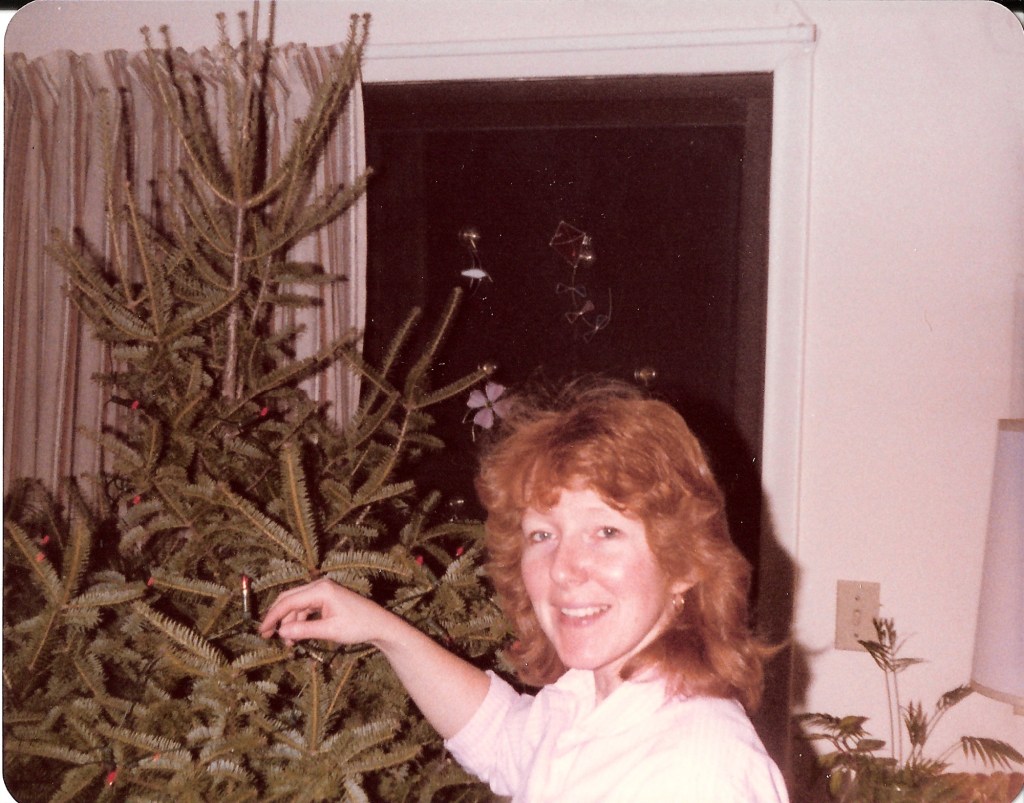
Harriet (Davies) Shelton, Sept. 29, 1945 – Jan. 14, 1994. My mother, Harriet (Davies) Shelton, died 30 years ago today. She was 48 years old.
Today, I drove six hours to her hometown of West Pittston, Pennsylvania, to visit her resting place and to put flowers in her memory at the First United Methodist Church. Here she was baptized, confirmed and, after many years of living around the world, it’s where we had her memorial service. She’s buried, with her parents and grandparents, a few blocks away.
Thirty years gone but never far from my heart.
-
How 367 Passengers Escaped the Japan Airlines Crash With Minutes to Flee – WSJ
Vacationer on Japan Airlines plane in Tokyo airport collision recalls a ‘big boom’ and a dash for survival
— Read on www.wsj.com/business/airlines/inside-a-flaming-jet-367-passengers-had-minutes-to-flee-heres-how-they-did-it-f0e3c2dcIf this isn’t one of the most amazing stories of survival on an airplane, then I don’t know what is. Kudos to the crew who kept their heads and did what they were trained to do, a fatally wounded jumbo jet that kept itself intact for just enough time, and passengers who heeded advice and escaped the burning jet.
-
Specialty fiction
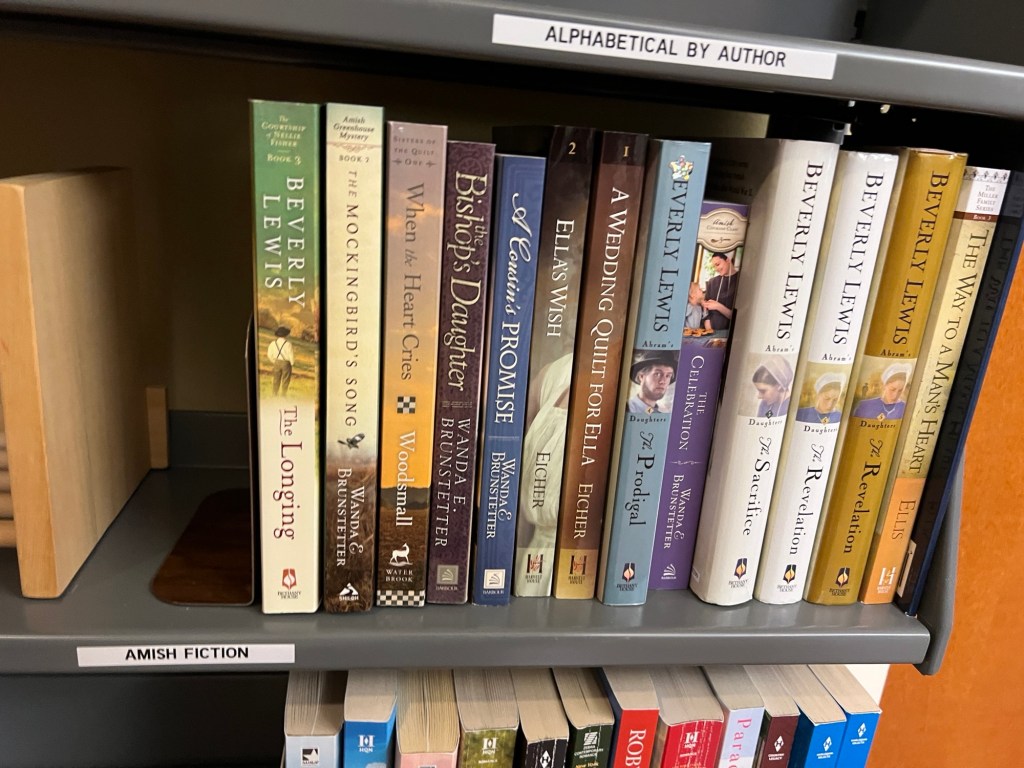
This bookstore has a whole shelf for Amish fiction, which I realize til I was now years old is a thing. -
In Mr. Rogers Neighborhood
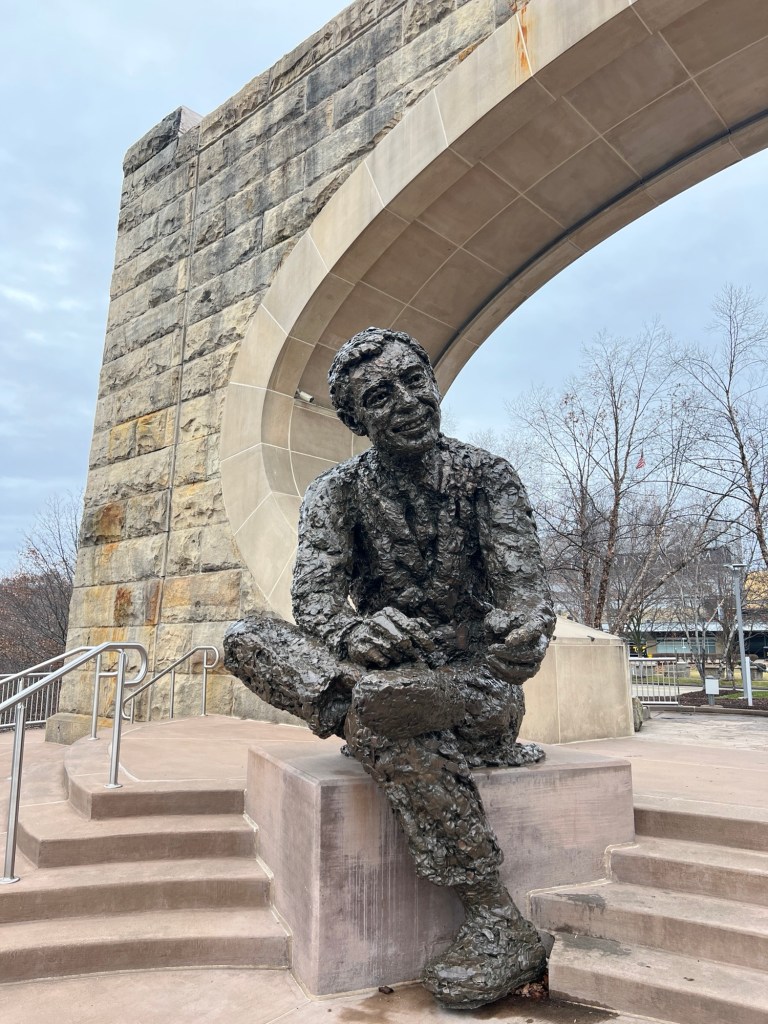
One of the best things about Pittsburgh is it’s where Mr. Rogers began the work Baby Boomers and Gen Xers grow up.
Neither Pittsburgh, his adopted home, nor Latrobe, his native home, have forgotten Fred Rogers. There’s this memorial along the North Shore of Pittsburgh, across from Acrisure Stadium and overlooking the three rivers. There’s also a special section of the Heinz History Center in the Strip District, a memorial statute in downtown Latrobe, and a museum to his life and work at Saint Vincent College, also in Latrobe.
I don’t know why, but I’ve been to everything except for the memorial along the shoreline. I’ve passed by it many times, usually driving. But something drove me to stop by this afternoon. I’m glad I did.
Mr. Rogers was not only a televised companion to me growing up in the ‘60s and ‘70s, nor just a man of constant wonder as I got older and realized that he was even more special than we all thought.(See “Can You Say Hero,” in Esquire, well-worth the read.) He was all those things. But a year before I existed, my father — a reporter for WGBH-FM in Boston — was wowed by Fred Rogers when he spent a day or so with him.
If you know the Fred Rogers lore, then you know that he came to Boston, where WGBH-TV was about to take his program national. The show wasn’t on everyone’s TV yet. But word of mouth brought hundreds of kids and their parents to the WGBH studios — and my father, who was a young radio reporter who had been sent to interview him. My dad told me many times about that day and how he found Mr. Rogers to be one of the greatest men he ever met. And my father doesn’t impress easily.
The scene at WGBH opens the documentary about Fred Rogers. It was that day my dad spent with him.
You could write whole books about Rogers’ goodness, and still have plenty of stories left over. One, written about in Hartford Courant’s Northeast Magazine, sticks with me more than three decades after I read “Saving Beth Usher.” Rogers is just one of the characters in a story about how a girl woke up from a coma. (This, if you can find it, is also a great story.) But Rogers plays an important role: Responding to the parents’ request, and on his own, Rogers spoke to her before brain surgery and then checked on her often, and then he flew from Pittsburgh to Hartford and spent an afternoon with her, with his puppets and just talking to her. That Rogers would do that, on his own volition and without any desire for attention, says a lot. So does that after she woke up and until he died, he kept in contact with her.
My children didn’t arrive until after Mr. Rogers had died. He came with me and I talked to him about the show and the man. He’s too young to really understand the grand sweep of Fred Rogers’ life, and how the lessons he taught all of us — children and adults — still resonate today.
We need him, still. With all the pain and suffering in the world today, all the incivility in our country, Fred Rogers left us so soon.
Home
About Me
Journalist and writer. Loves writing, storytelling, books, typewriters. Always trying to find my line. Oh, and here’s where I am now.


Leave a Reply