-
Hemingway weighs in
Too busy on Day Two of NaNoWriMo. I easily cleared the 1,667-word quota by the time I got to work Monday morning.
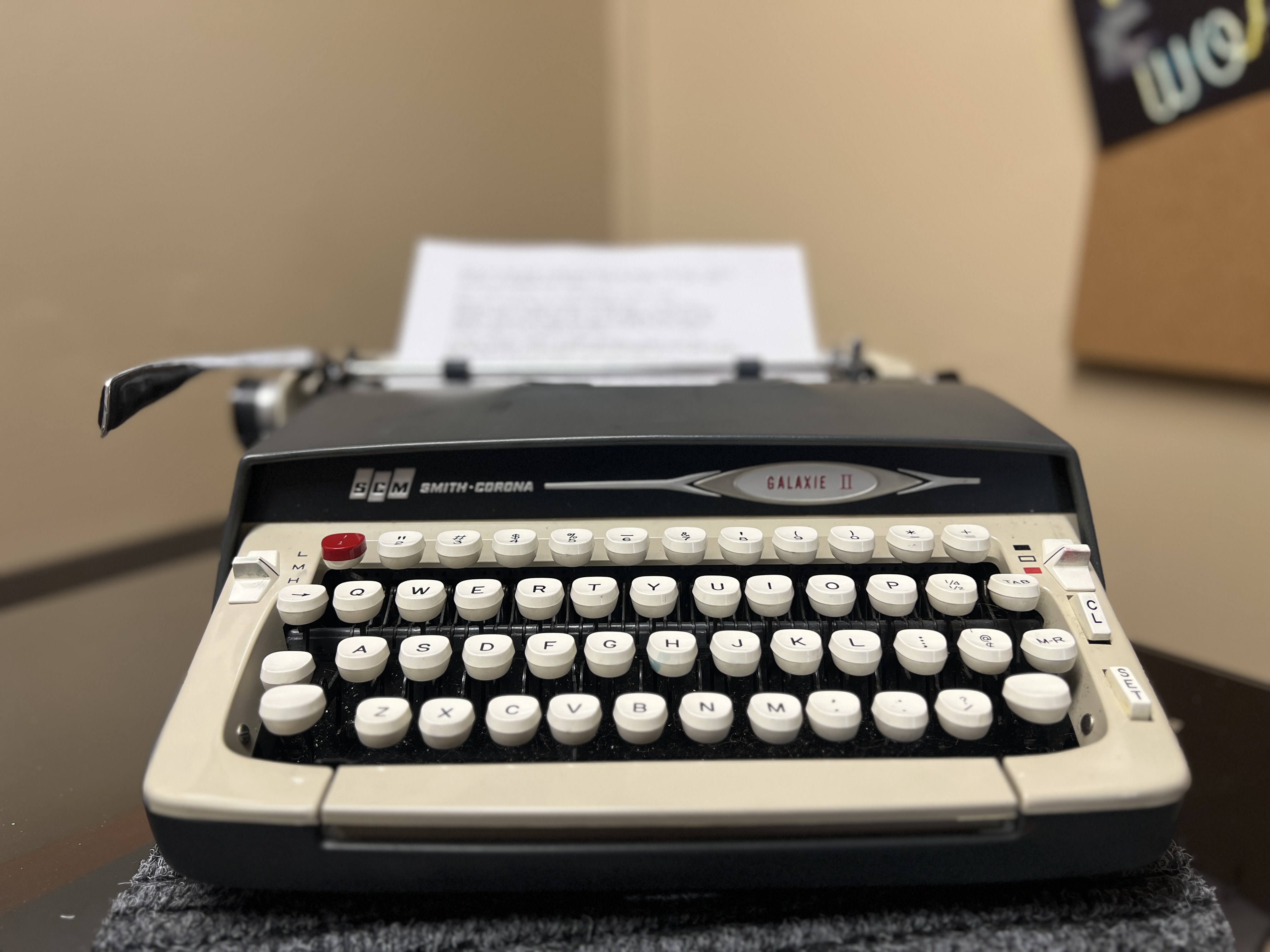
In the meantime, here’s something I’m thinking about as I write today. Words of wisdom from Ernest Hemingway:
“All you have to do is write one true sentence. Write the truest sentence that you know.”
Ernest HemingwayNot sure he’s the best guide in all of life — or even all of writing. But that rings true …
-
The first day of NaNoWriMo
So it begins.
I’m excited. It’s the first time I’ve participated in NaNoWriMo since 2019. Hopefully I’ll “win” for the first time since 2018. My Welsh language studies have kept me busy from 2020 until earlier this year.
Of course, I’m always writing. But I often write several things at once, in addition to my professional writing and my journaling. But this month I’m going to focus, like I did in 2018, on writing one project.
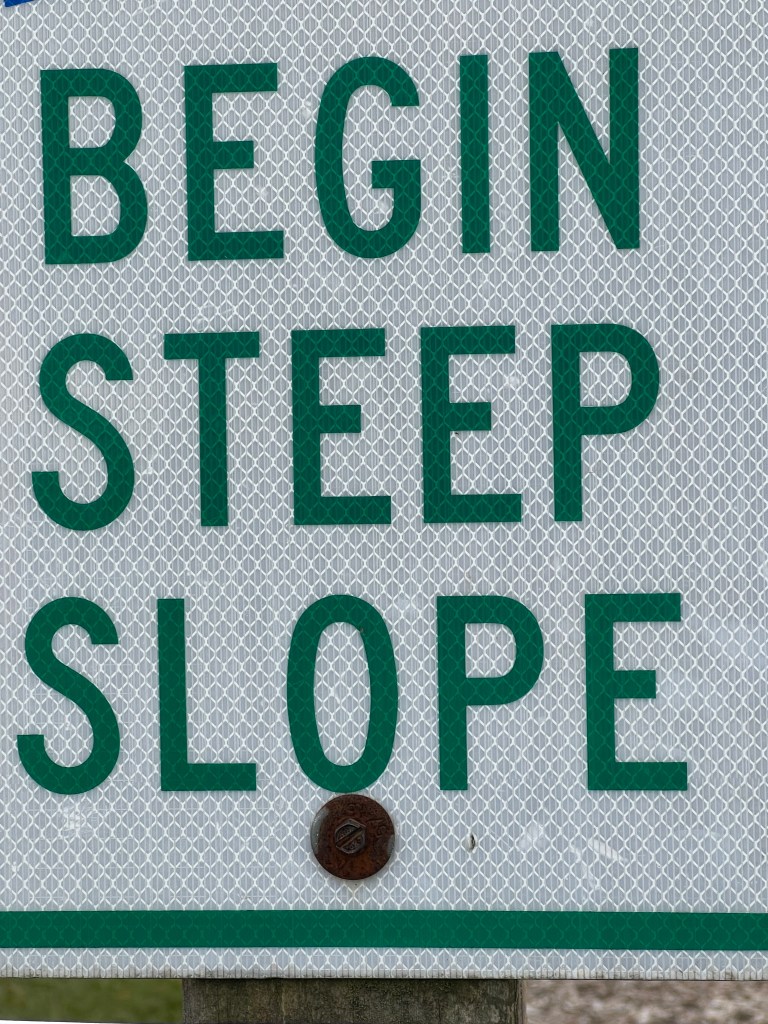
I’m focused. I’m ready. I know I’m beginning a steep slope. That’s why I know it’s a worthy journey. -
Why I’m not a fan of Halloween
I don’t like Halloween.
This is not something I normally tell people. That’s because most everyone I encounter, children and adults alike, love Halloween. I know this from the hundreds of pieces of candy that gets distributed from my front door every Oct. 31. I know this when the costume stores open up in August. And I know this from all the Halloween-themed parties.
Even as a kid, I could pretty much care less about Halloween.
How do I know this? Because I have almost no memory of Halloween as a kid. Neither my parents or my grandparents ever put much, or any, emphasis on Halloween. I’m sure there was a holiday party or two at school, and I dressed up. But I don’t remember. And even though I have thousands of pictures when I was growing up, from my mother and my grandparents, there’s only one or two photos of me in what could be Halloween. And that’s from when I was three years old.
That’s it. No other photos. I have dozens, probably even hundreds, from Christmas and Thanksgivings and Easters.
That’s on both sides of my mismatched family. My father’s side was Boston Irish Catholic, and most decidedly not fun. They were not inclined to spend a lot of time on foolishness. My maternal grandparents were a lot of fun but also devout Methodists. They didn’t have much truck with Halloween either. My mom probably thought of Halloween as being one of the worst parts of parenthood. My sister, who came along 15 years later, also has few memories of Halloween, so Mom didn’t change later.
I don’t have many memories of trick-or-treating, either. My mom wasn’t a fan of having me take candy from strangers, long before there were ever any concerns about it. She didn’t like it on principle. And to be honest, she didn’t like having candy around the house, either. I know my it sounds like my mother was a Puritan. She wasn’t. But after having kids of my own, I see where she was coming from.
I have two memories of trick-or-treating, both in the ’70s in Connecticut. My first 10 years or so was spent in an older, middle-class neighborhood with closely spaced houses. Some were nice. Some weren’t. Even now, 45 years later, the neighborhood hasn’t changed and the houses, many there in the early 1900s, haven’t been improved in the early 2000s, either.
This one time I remember, maybe 1977 or 1978, my mother reluctantly took me trick-or-treating in our neighborhood. I don’t remember the costume, I don’t remember the candy. All I remember is the orange UNICEF box that we got at school — and at church — and I was more focused on making sure I got coins for box. We didn’t go more than a few blocks and was back, but I got some money to donate.
I remember one Halloween costume, a Red Sox uniform my aunt knit for me at age 2 or so. I still have it in a box somewhere.
The last time I went out for Halloween was 1979. My parents split earlier that year and Mom and I moved to a small apartment in the big city, in a somewhat dicey neighborhood. I just turned 12 and I needed, I think, something that reminded me of good times. I fixated on Halloween. I was going to Catholic school at the time — the local school was rough and tumble — and they considered Halloween a sin. So I asked my mother if I could go out on Halloween.
For reasons I don’t understand, she agreed. And I don’t know why, but she sent me out on my own. I wouldn’t do that now, and my mother was always a very careful parent who wouldn’t leave me on my own. But she did that night. A kid from the suburbs, I didn’t belong in trick-or-treating where I lived. It wasn’t necessarily dangerous. But we didn’t spend a lot of time out when it was dark.
I survived. I walked around with a friend and his parent who took pity on me. I went out a few blocks and then went back home.
And never thought about Halloween again from 1989 to 2006. I avoided Halloween parties and never had a reason to do anything other than buy and hand out candy at my front door between then and now. And gradually I discovered I disapproved of the whole concept.
It wasn’t until my daughter was born that I had to go back to Halloween. Her mother wouldn’t have it any other way, nor would her grandmother. We went out my daughter’s first Halloween, going door to door in our Queens neighborhood with a stroller and an unhappy girl dressed as a pumpkin. Her third Halloween she would walk up to the door and say, “trick or treat.” That was, I admit, fun. And in the nearly two decades since, I’ve watched my kids dress up, go trick-or-treating, and dump all the candy on the living room floor afterward.
I still don’t like Halloween. But they like it, and that’s enough for me to enjoy it through their eyes. -
A new look
When I was an editor, every once in a while we liked to switch up the design.
Sometimes, it was a minor cosmetic change. For a newspaper group where I was top editor, I started small: Datelines, and then expanded bylines, a new section. That made it easier to make the larger changes I envisioned, a top-to-bottom redesign. I accomplished that four times in my career, thanks to a talented graphic arts team who liked a challenge and who agreed the newspapers had to get into the 21st century. Or at least the late 20th century.
I don’t know if this blog needs such a radical change. But I was thinking I needed a different look. After a few days of trying new designs behind the scenes, I ended up pulling the trigger, just now.
Why?
Maybe it was just getting ready for NaNoWriMo. Maybe it was that I needed a visual change. Or maybe I just had nothing else to do today.
Or the real reason: I just wanted a change. -
Decisions, decisions
Three days from NaNoWriMo, and I’m still deciding on the story I’m going to write.
I’ve got three to choose from, where I’ve got enough in mind to see the beginning and a good chunk of the middle. I’m going to be surprised at the ending, no matter what.
I suppose I should be worried, right? I know plenty of people who have been outlining and preparing character biographies and what have you. But I have rarely been that kind of writer, and I’m not sure I’m going to start now. -
Things don’t ever change
It’s horrible when a mass shooting occurs, anywhere in the United States, which is where it happens so frequently. It’s even more tragic when it happens in a place you know well.
That’s happened to me three times in a little more than a decade: Newtown, Connecticut, near where I grew up; Pittsburgh, where I’ve lived; and now Maine. Newtown and Pittsburgh were deep blows to people I knew who lost loved ones and friends. That it happened in a town I knew well, in a school I had been to, the whole thing shook me in a way that few other things did. And, six years later, covering the Tree of Life murders, which I did five years ago yesterday, was one of the hardest things I’ve ever done in a career where I’ve seen a lot of pain and tragedy.
And then it happens again. Because it always seems to happen. But the location of Wednesday’s murders was another gut punch to those of us who know and love the state. It’s a magical place, closeknit, and one where I have spent both happy and sad times. I’d like to think it’s pretty special.
Except that it’s not. A mass shooting happens there, just like so many other places. And it leaves behind shock, horror, sadness, and empty spaces where friends and loved ones used to be. The pain lives on, layer upon layer.
And, as the Maine native Steven King pointed out in a brief and depressing op-ed piece in The New York Times today, things don’t seem to ever change. I thought, in the aftermath of Sandy Hook, that 20 murdered first-graders might wake up our nation.
I was wrong. -
‘Maine in Mourning’
I hadn’t been paying attention to the news Wednesday night but checked my email to find mention of the president being informed about the latest mass shooting. Reflexively, I Googled and lost a breath with the answer.
Maine.
I’ve never lived in Lewiston, which is in southern Maine, hours from where I lived in the northern part of the state in the ’90s. Yet I’ve certainly been to Lewiston and Auburn, the twin cities the locals call L-A. It doesn’t have a ton in common with the other LA. These are old mill towns that dot the landscape in Maine and New Hampshire.
In the mid-90s, in fact, I was through Lewiston several times because of a friend who lived nearby.
But I can tell you that Maine, a big state, really is a small state. There are less than a million people in the whole state, top to bottom. The biggest city is Portland, with about 65,000 residents (I’m working from memory here.) Lewiston is the state’s second biggest city, with 38,000 people. It’s the kind of place where everyone knows everyone else.
There’s a lot of that in Maine. I’m from the New York City area and Connecticut, which are densely populated and full of more people even in a small-ish town than you could ever imagine. It’s where I grew up and I wouldn’t have had it any other way. But I learned so much from living in Maine and it has a piece of my heart still. In fact, it has more than that, long ago.When I moved to Maine, in my late 20s, for a job, I had a culture shock not from the accents and the rural nature but from how familiar everyone was. Being from Away, as it’s called there, I was both a curiosity and also someone from the Big City.
Like I said, where I’m from, you can’t know everyone and you don’t really know the ins and outs of your town or city because it’s so big and things are going on. Not so in rural Maine, where if you work and live and worship in a small town, you get to know most everyone in it. I lived in a town of about 500 people in a county of about 14,000. I knew a lot of people there. And even when I moved to Aroostook County, where I ended up having the most ties, it wasn’t much bigger: I spent most of my time in a city of 9,000 or so and a town of about 3,000. And I knew people in other small towns there, too.
When something happened, either good or bad, you knew it. And you felt it.
And while I could tell you of the multiple Maines that exist, I also know that when it comes to tragedy, Maine is all one state and it’s hurting right now. I don’t know how it comes back from something so tragic, made all the worse by the fact that the suspect in the mass shooting hasn’t yet been found.
“Maine in mourning,” the TV station said.
I believe it. -
We had no idea
A fun thing I wrote back in August 1999, when I was writing a weekly business column for my newspapers. It was a story about how small businesses keep up with changes.
About halfway through the story, I wrote:At the end of the 20th century, Thompson pointed out, business moves faster than ever before. In years past, businesses had a fair amount of lead time to evaluate trends and options. But thanks to the faster pace of television and the Internet, “everything seems to happen faster,” Thompson said.
Talk about something that didn’t age well, through no fault of the interviewer or interviewee. Sure, TV and the early Internet brought a fast pace to the world. It even started to shake the foundations of the incredibly rural and self-sufficient place I lived and worked at the time, along the U.S.-Canadian border.
But that was about a decade before almost everyone started getting cell phones and then smartphones, when texting and then social media changed everything.
Twenty-four years later, I’m still trying to parse it all. -
My NaNoWriMo project, or not
Less than a week to NaNoWriMo. Just one problem: I’m not sure what I’m going to write.
Because of my yearslong sojourn learning to read and write in Welsh, I’ve got a backup of fictional story ideas in various stages of development. Not only are they pieces that are drafted but unpublished, but they’re also ideas that I keep in a notebook and in my journal. There are two reasons why I dropped out of my Welsh classes halfway through my third year: one was that I began a book project that I knew I needed to write. I’m still working on that book project, nonfiction, and earlier this month came back from a research trip. I’ve written some of that draft but I’m still in deep research, so that doesn’t fit the spirit of NaNoWriMo.
Instead, I’m going for something new. Driving around, working out, going for a walk, waking up in the middle of the night, I’ve been thinking a lot about what I want to write about. There are ideas I’ve been kicking around for a long time, others that have come to me only recently. I’ve never really hurt for ideas. Getting to the point where I want to release them into the world, that’s another story.
So many stories. That’s the way I like it: Enough stories to last me a lifetime or two. I know I’ll die with stories to write, no matter how long I live. The goal is to finish as many as I can. I love to write. I need to write. A year ago, I was called to it anew. I haven’t taken a day off since.
That commitment begins anew a week from today. -
The magic of game 7s
When I was covering TV in the early 2000s for The Hollywood Reporter, one of the annual storylines was the Major League Baseball postseason. And one of the things I learned early was a seven-game championship series and World Series was the holy grail.
Baseball was in the midst of a long, slow decline, having long ago given up space on the American hearth to the National Football League. Baseball was still No. 2 in professional sports, to be sure. But the country didn’t live or die on who was in the World Series every year.
Fox, then and now, held the rights to the World Series with the classic team of Joe Buck and Tim McCarver. Sometimes there were seven-game championship series, but seven-game World Series were pretty rare in those times. The 2002 World Series between the Angels and the Giants went seven games. Then the next seven-game World Series wasn’t until 2011, although there were plenty of dramatic seven-game championships in between, including my favorite, the 2004 American League Championship Series where the Red Sox overcame a three-game deficit against the Yankees on the way to a four-game sweep of another historical nemesis, the Cardinals.
I was thinking of this all this week with both championship series going to seven games, Monday night for the Rangers-Astros and Tuesday night for the Phillies-Diamondbacks. It’s the first time since 2020 both the ALCS and NLCS went to seven games.
I watched some of the ALCS on Monday night. It’s only the second baseball I’ve seen this postseason although not the first in October: I was in person for the final game of the National League team in the city I live in. My kid’s a big fan.
Game sevens are pretty awesome. As I write this, it’s 3-1 with the Rangers, who haven’t lost on the road yet this postseason, ahead of the Astros. To quote Depeche Mode, everything counts, in large amounts.
‘Course, I’m not the best baseball fan. I’m going to bed long before this one is over, and I won’t check until tomorrow. But I know Fox is rooting for an exciting game 7, all the way.
Home
About Me
Journalist and writer. Loves writing, storytelling, books, typewriters. Always trying to find my line. Oh, and here’s where I am now.


Leave a Reply