-
RIP, Richard Belzer
The actor and comedian Richard Belzer, famous for “Homicide” and “Law & Order: SVU,” has died.
I didn’t know him well, but we ran into each other at parties back in NYC when I worked at The Hollywood Reporter more than a decade ago. It got to the point where I would see him regularly and he would wave if he was talking to someone or we would stop and talk, briefly. I found him fun and friendly. I didn’t always find actors to be super friendly, but he was different. He would go out of his way to talk.
We found two things in common off the bat: We both were from Connecticut and we both had worked as reporters at the same newspaper, the Bridgeport Post, although 30+ years apart. And he just was a nice person, too.
-
Balloons and ham radio
Did an amateur radio balloon get shot down? I have got a little experience with ballooning and a lot of experience with ham radio, and this is exactly what I thought was at least one of the objects shot down over the weekend.
These balloons aren’t threats. They’re scientific projects and valuable ones, too. Schools and ham radio clubs often collaborate on these projects, which provide valuable insights into radio propagation. And they’re not that big, although they do have some microelectronics on them that you can monitor if you have the proper equipment.
I used to live five doors down from the National Weather Service office in Caribou, Maine, where at 7 a.m. and 7 p.m. every night they sent up a radiosonde balloon to take meteorological measurements. I used to love timing my jogs to see the balloons released, and on many occasions they used to float above my house and that was fun, too. These ham radio educational balloons aren’t any bigger than that, and they fall to the ocean eventually.
I’m not thrilled by the reality of foreign powers sending surveillance balloons over the United States, especially the big Chinese balloon. We should take action against that. But we should not send missiles to knock out an American school balloons, and we should be able to tell the difference.
-
What a difference 2 years makes
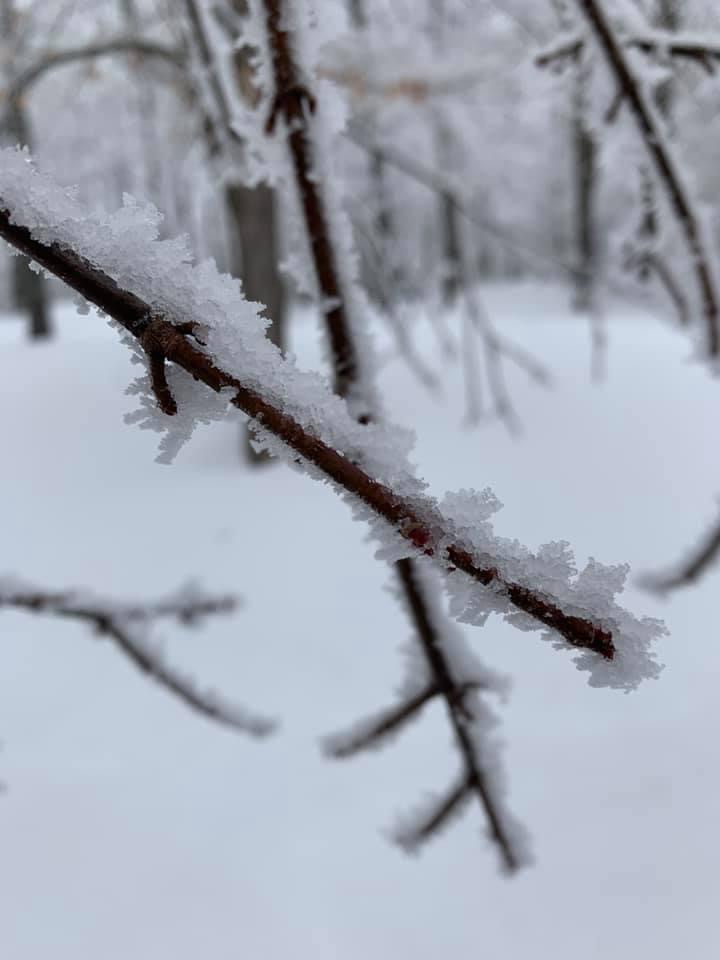
Ice on top of the mountain, Somerset County, Pennsylvania. I took the photo above two years ago today, on a cold, snowy and blustery day on a mountain in western Pennsylvania.
Today, it was more than 70 degrees and a beautiful sunny day.
Both in February in the early 21st century.
-
Not-so-super bowl
Long ago, I had to care about the Super Bowl. Thankfully, not anymore.
So I won’t be watching the ads, nor the game, nor checking Twitter. Just waiting for it to be over so baseball can begin.
-
Bitter cold in Caribou
I’m still trying to wrap my head around what’s going on in and around my former town of Caribou, Maine last night and this morning.
There are blizzard and extreme cold warnings from Friday into Saturday, with blowing snow and wind gusts up to 45 mph piled atop temperatures that won’t get above 0 and wind chills that for the top half of Maine are between -43 and -81 below zero.
Aroostook County, that far northern top of Maine bordered by New Brunswick and Quebec, are used to brutally cold winters. It’s not unusual for it to snow from September through May, and temperatures to fall well below zero for days on end. Nor are double-digit wind chills unheard of. Aroostook County winters have driven their share of people away, never to return.
It wasn’t the only reason, but I’ll say that by the time I was thinking about leaving, I had grown tired of the winters.
Northern Maine is not for the faint of heart. It’s part of New England, but just barely. It doesn’t get as cold as that in my part of New England, Connecticut and Maine, and rarely gets that snowy. If you love winter, then you will love Aroostook County. It breeds a pretty hearty person, and I’ve always admired the Aroostook County people. I still do. And today, even more so.
And on the flip side, the summers are wonderful. Even in the depth of winter, the sun shines bright across the rolling hills and the sky is wider than anything I’ve seen outside of some parts of the West. And as I’ve written about before, the Northern Lights and other wonders of the sky make Aroostook County a great place to look up.
But wow, today. I hope everyone gets through this OK.
-
Groundhogs don’t predict the weather
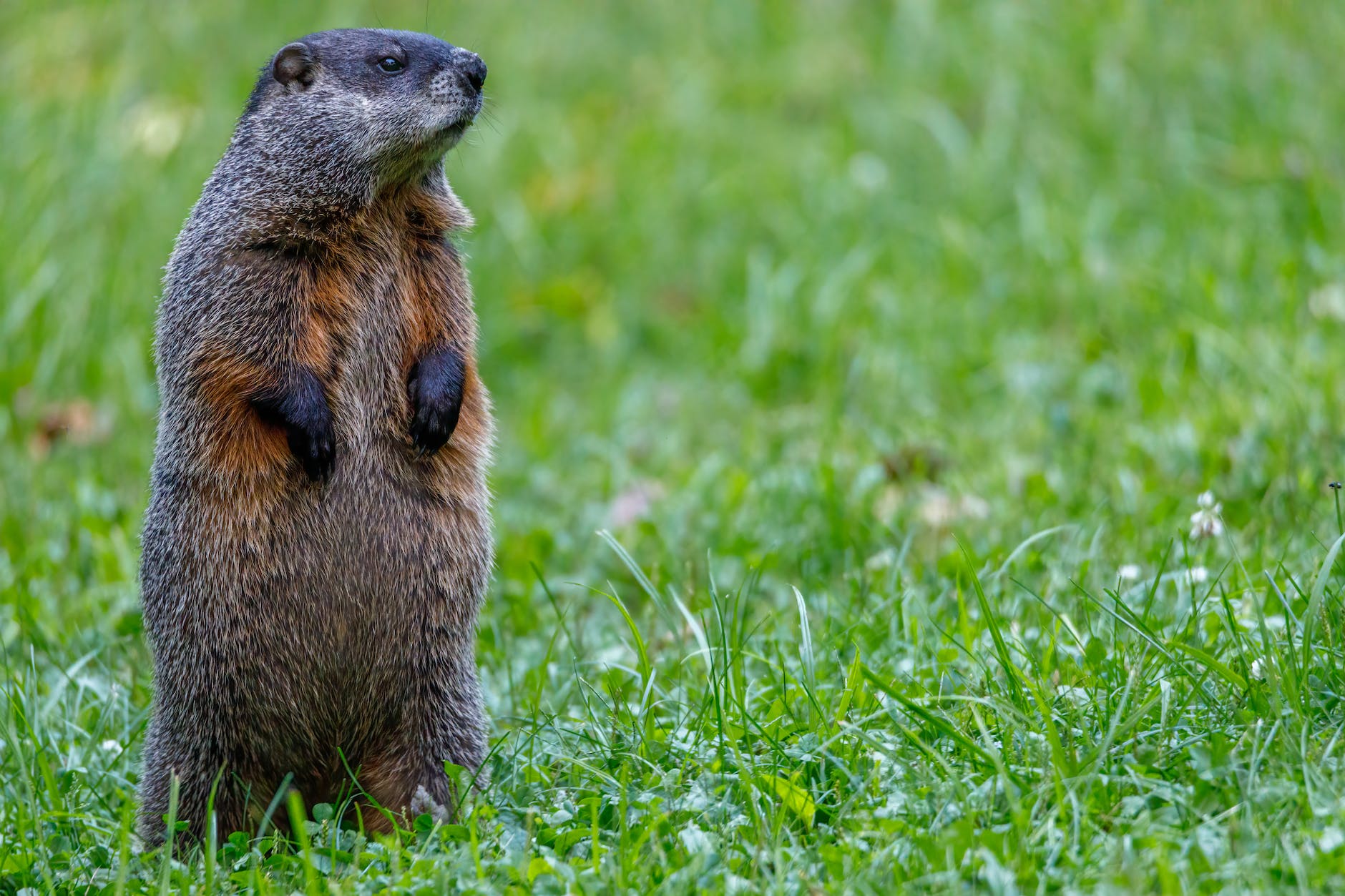
Photo by Aaron J Hill on Pexels.com Since I didn’t listen to the radio or TV this morning, what would I do without Twitter to tell me what I already know living here in Pennsylvania: Six more weeks of winter.
I honestly don’t understand the whole Punxsutawney Phil phenomena, nor any of the other groundhogs who are out there, forecasting the weather. I’ve spent most of my life in cold climates, whether that’s Connecticut, New York, Maine or Pennsylvania. There’s no way that winter ends on Feb. 2. I mean, who would think that? It sometimes doesn’t end on March 21.
And where I used to live in Caribou and Aroostook County, Maine, winter is definitely not over: There’s a blizzard and wind chill warning for Friday and Saturday. The wind chill will be somewhere between -55 and -60 in Presque Isle and Caribou, places I know quite well.
“The coldest wind chills in decades will thrash New England,” CNN reported today.
On the bright side, though: It spawned a great movie, “Groundhog Day.”
-
What Schoolhouse Rock taught
Schoolhouse Rock!”
LIke anyone my age, “Schoolhouse Rock” was part of my childhood. I guess I shouldn’t be shocked that they are 50 years old this year. I was in kindergarten in 1973.
And yeah, “Schoolhouse Rock” was pretty influential. In the ’70s, that was a way to learn more about your country, its history, grammar, nutrition, and other topics. I still have several of those tunes rattling around in my head.
I learned the Preamble of the Constitution because of this song, long before I decided to make my living based on the First Amendment. Schoolhouse Rock’s “The Preamble” always gets me a little emotional. I even teared up a bit hearing the song at performed live at a show I took my kids to years ago.
Why? Because the song lays out the promise of this country, these United States, and for that lesson so long ago, I am thankful. It really is amazing, this country of ours, even though it’s been under stress lately. It’s not perfect, nothing ever is. And I’m beyond disappointed how it treats, and has treated, some of its people. Inequity and racism runs deep. We are never going to get to where we should be as a country til we fulfill those promises. I am thankful to both my parents for teaching me from a young age that the country has a long way to go until it lives up to the words of the Preamble to all people.
True in 1787, true in 1973, true in 2023.
-
It’s in this month’s issue

Photo by Jess Bailey Designs on Pexels.com A coworker of mine told me about a column in Town & Country about how to beat the crowds at Disneyworld.
“It’s in this month’s issue,” she said.
My coworker subscribes to a lot of magazines, and I say bless her for that. There aren’t enough people who subscribe to magazines or newspapers these days, at least not on the paper side. Seems like every week I hear about a magazine or newspaper either going out of business or reducing its frequency. It’s a big change from when I was covering the magazine industry in the early 2000s, when print media were starting to feel the heat from online but that magazines seemed to be immune.
“It’s an active medium,” one big media planner/buyer told me back in the fall of 2003 for a story I wrote for MediaPost. “For our clients, the appeal of magazines is tapping into, trying to borrow from the reader, that passion for a particular magazine, and transfer it over to the brand.”
Fast forward 20 years and it’s different. There are probably more things to be passionate about than ever before and it’s easier than ever, thanks to social media, to get passionate about them. And you can connect to enthusiasts quicker and deeper than ever before.
I look at my own reading habits. I read most periodicals online. I used to subscribe to Men’s Health, Esquire, Real Simple, The New Yorker, The Economist, and QST (an amateur radio magazine). None come to my house anymore.
The magazine industry is changing and the lines are blurring, just as they have for the newspaper industry where I’ve spent most of my career. In my career, I’ve founded one magazine (a local one) and worked on two others, both in New York and Pennsylvania. All three never made it past 2015, even though one had been going since the 1940s and the other two had at least 15 years’ each. Another magazine I worked at for six years, The Hollywood Reporter, went from a daily magazine (yes, really) to a weekly after I left in 2010.
Magazines, like newspapers, are changing with the times.
I’ve enjoyed the transition to digital that my career has taken over the past more than two decades. I’ve written primarily for an online audience, or at least predominantly online, since 2002. The Hollywood Reporter was in transition when I was there and there was more prestige in writing for the print editions over online, even though even then the online stories tended to have more reach and impact, at least for someone like me on the ground. Where I work now, we have both a print edition and online. We put time into both, although as a journalist I have daily deadlines as well as weekly and monthly ones.
But I think we are missing a lot when it comes to the gradual (and maybe not-so-gradual) decline of the print media. While I’ll admit The New Yorker’s always piled up at my house, I remember a certain thrill in the ’80s and ’90s when a new magazine would come to my mailbox. You don’t get that same thrill in the digital age, when something hits your email box. Magazines were an event. They were also bigger than they are now.
I think my colleague has the right idea.
-
Remembering Challenger
Every Jan. 28, I pause to remember the seven men and women who died in the 1986 Challenger explosion. They were extraordinary, by any measure. They were heroes – not just by being aboard the shuttle. Judy Resnick and Ellison Onizuka switched on the emergency air for the pilots in the flight deck after the explosion. That could not be done by the pilots. Most of the crew if not all were alive for three minutes afterward til the flight deck hit the water, something NASA took years to admit. The crews’ oxygen tanks were not only open but mostly depleted, something that can only be done by breathing.
I bring that up as a prologue to this remembrance of Onizuka by the late CDB Bryan, was published in The New York Times a few weeks later. Bryan knew Oniziuka, and he and his stepson attended the launch 37 years ago as the astronaut’s guest. I have kept this piece, from the Times magazine, all these years because it inspires me in something that I have been called to do, writing remembrances of people who have passed.
Everything I have read about Onizuka and Resnick and Christa McAuliffe and Ron McNair, and the entire crew, compounds the profound sense of loss. They were bound for even greater things after their flight.
-
When is too late to say Happy New Year?
I was on a Zoom conference call this afternoon where one of the speakers wished everyone a happy new year.
“If we’re still OK to say that on the 26th,” she said.
It made me wonder. Because I don’t know.
I wished people a happy new year much earlier at the end of 2022 than I normally would. I started saying it just before Thanksgiving to people I wouldn’t see or talk to for more than a month. It kind of just popped out of my mouth. But then it stuck.
I didn’t wish anyone a happy new year at all in 2021 or 2022. It didn’t feel right, with all the people dying from Covid-19 and the general tone of the world. I would say it back if someone asked me. But I have to say that at the end of 2020 especially and even the end of 2021, I just felt grateful to be alive. It could have gone a different way.
Frankly, 2022 wasn’t that great a year either, at least personally. I felt the weight of a passing, which then gave way to a flood of emotions. But that’s neither here nor there. I still felt it was important to say “happy new year” for 2023.
And, like the woman on the conference call, I’m still happy to do it, 26 days in. It’s still a new year to me.
Home
About Me
Journalist and writer. Loves writing, storytelling, books, typewriters. Always trying to find my line. Oh, and here’s where I am now.


Leave a Reply