-
A prize that still gives back, 93 years later

This is the first time, I think, that a member of my father’s family ever made the front page of a newspaper. And above the fold!
I got this a few weeks ago from my father, who had gotten it from my aunt who was cleaning out stuff that hadn’t been touched since the 1930s. This is the Boston Daily Record, the front page of June 6, 1929. My grandfather, Edward A. Gough, was the “Newton Boy First Prize ESSAY WINNER!” and, just below the big Rum Trial headline, that’s his picture looking all studious.
The caption: “First Prize Winner in Daily Record’s schoolboy essay contest. Edward Gough, 17, junior in the High School of Our Lady, Newton, shown reading over his prize contribution. Young Gough wins a $500 first year scholarship in any college he may select.”
This was a huge deal. It allowed him to be the first member of his family to go to college. He would later be able to pull his own parents out of poverty, pay for his four kids to go to college (and some graduate school), have a summer house along the Massachusetts coast and travel around Europe with my grandmother. Each of his four grandkids went to college, and his great-grandkids are starting to now, too. All from this.
Not bad for the only son of immigrants from near Belfast, Northern Ireland, and he grew up in abject poverty at a time when Newton was anything but a tony suburb. He lived with his parents and grandparents on Silver Lake Avenue in a house that is, the last time I checked, still there. This helped him pay for his first year of Boston College, which allowed him a foot in the door to his future. The essay, “What My School Means to My Community,” got him a job as a part-time reporter for the Daily Record. He paid for the rest of college by joining the National Guard, taking odd jobs, and, this is impossible but true, boxing.
But this is where I think it began, where a poor Irish Catholic kid could achieve the American Dream. I know he was incredibly smart and industrious. He was fluent in French and German, which would end up being perfect for his Army service after D-Day. He was a magna cum laude graduate of BC, got a master’s degree in social work from BC and then also got a master’s from the Kennedy School of Government at Harvard. Except that it wasn’t the Kennedy School of Government when he was there: JFK was one of his classmates. And he designed and built the summer house three generations of his family grew up in in Marshfield, Massachusetts.
It’s also interesting, the date of this paper. June 6 would end up a crucial day in my grandfather’s life. This, of course. And then, 15 years later, he’d wake up on the morning of June 6, 1944, as a U.S. Army officer about to go ashore on D-Day.
-
Losing the night sky
Imagine looking up every night and being mesmerized by nature’s wonder. I don’t have to imagine. That was my every clear night when I lived in far northern Maine, a sparsely populated stretch of land near the Canadian border. It was one of the best things about living there.
How many times have you seen the Northern Lights? I didn’t have to fly to Alaska or Iceland. All I had to do was walk out my door or drive around Aroostook County. I probably missed just as many due to clouds or just being inside. (I saw the best one ever April 6, 2000, thanks to a call from a dear friend, who saw the Northern Lights out her window and knew I would want to. You could see that one down to Connecticut.) How about comets or meteor showers? What about stars as far as the eye could see? Or seeing the Milky Way?
That’s what you get every darkfall if you live far enough away from city lights. Or at least it used to be that way. Now light pollution is getting worse every year, according to a citizens science study Globe at Night and researchers in Germany and the United States. That study found an annual brightening of the sky 10% every year since 2011.
It’s “equivalent to doubling the sky brightness every 8 years,” according to the study published Thursday in the journal Science.
LED lights, human migration patterns and the march of civilization has done a lot of things. One is to drastically change the sky at night.
“The visibility of stars is deteriorating rapidly, despite (or perhaps because of) the introduction of LEDs in outdoor lighting applications,” the study said. “Existing lighting policies are not preventing increases in skyglow, at least on continental and global scales.”
That means that even in my lifetime, a little over a half century, the sky has gotten markedly brighter. Light pollution means that children growing up will end up seeing far fewer stars as an adult than they did when they were younger.
And that doesn’t even include the impact of Starlink satellites, which are bringing the internet to remote places but at a cost of light pollution for those of us who enjoy looking up at the sky.
It’s at a huge cost. The stars have, for as long as human beings have looked up, been essential to our existence. And they’ve beguiled us for that long.
“Every night come out these envoys of beauty, and light the universe with their admonishing smile,” wrote Ralph Waldo Emerson in “Nature and Selected Essays.”
Or this: “The sky was clear — remarkably clear — and the twinkling of all the stars seemed to be but throbs of one body, timed by a common pulse,” Thomas Hardy wrote in “Far from the Madding Crowd.” Or this from Joseph Conrad: “In a few moments all the stars came out above the intense blackness of the earth and the great lagoon gleaming suddenly with reflected lights resembled an oval patch of night sky flung down into the hopeless and abysmal night of the wilderness.”
The stars matter. What would we do without them?
Before I moved to Maine in the mid-1990s, I saw only a fraction of the sky above. I lived in cities and suburbs around Boston, New York and San Diego, where the everyday light even then masked all but the brightest stars. Rare would I glimpse a star that the light didn’t cover. But there were times: One week, when I was a teenager in October 1983, my stepfather and I went fishing and mostly slept under the stars on Lake Havasu, Arizona, before that part of the desert became populated, too.
I was shocked to discover how many stars you could see when you got far enough away from the city lights.
Then I went back to San Diego and its lights, and even without that, the fog rolling into Coronado almost every evening, blocking even the moon. It wasn’t until a dozen years later, when I was in my late 20s, living in Maine, did I get a chance to live under the stars again.
I didn’t just enjoy the night sky a little. I loved it a lot. I never was much for the outdoors life. My mother hated all forms of camping and believed the indoors was invented so you didn’t have to be out there with the insects and animals and rain. But I lost track of how many times I was blown away by the sheer beauty of the sky in northern Maine, day or night. Aroostook County’s rolling hills and farmland, with no mountains where I lived, led to more sky than I had other than in the West.
I grew up in the crowded East and West coasts, the houses close together and a big city never too far away, whether it was Boston or New York or San Diego. I’ve spent more than half my life near or in one of those three cities. And no matter how dark it got in the suburb, it was nowhere near as pitch black as a night driving up Interstate 95 between Bangor and Houlton, or walking to my garden in Abbot, Maine, or coming home from church on Maine Route 89 between Limestone and Caribou.
Or as lustrous. I was down in Bangor for work once a week for years, and I always drove back to Aroostook County, three hours or so in the car, late at night. I often was the only car on the road for an hour and a half or more. And sometimes I wouldn’t even have the radio or cassette player on in the car to keep me company. Just watching the sky, the intense moon rendering headlights almost unnecessary, the white or colored flashes of aurora borealis across the sky, or being able to navigate by stars alone.
I didn’t have a telescope in those days. I didn’t need one. What I could see with my eyes alone was plenty.
I have only been back to northern Maine once in two decades, and it was raining. So I don’t know what it was like in the intervening time, but I suspect that if any place in the country still has its fill of dark sky, it’s Aroostook County. I wish I could bottle it up for the rest of the country, the 80% or so of the United States that can’t see the Milky Way when it looks up.
I’m sad that succeeding generations won’t be able to see the same night sky that I did when I was younger. I know where I am right now, even though it’s 25 miles from a big city, is still too light to do much of any skywatching. It was so difficult, even on a clear night, to see the last big comet. It took five times to see it, when it should have only taken once.
Take it from a sky watcher: There’s nothing like the heavens. It makes you feel more alive.
It was nearly a quarter of a century ago, I still remember the light shows I saw almost every week.
They felt like they were blazing for me alone.
-
On a long ago parade ground

My father gave me some of my grandfather’s photos a few weeks ago, which had been rescued from my aunt’s house when she moved. My grandfather has been dead since 1976 and my grandmother since 1994, and my aunt joked that a lot of the material hadn’t seen the light of day in at least 70 years.
I got more photos. My grandfather was an Army combat veteran in Europe, and he brought a camera along with him, from training through every battle between D-Day and after the Bulge. This is one of those photos. I only know what it is because my grandfather scrawled on the back:
“First (leading battery) of 302nd C.A.B.B. Bn executing eyes right as it passed reviewing officers on retreat parade, Saturday, Sept. 5, 1942.”
Can’t tell you where it was — somewhere where the 302nd Civil Affairs battalion was being trained here in the States — but at least we know when it was.
-
A memorial, then and now
I recently got a bunch of family memorabilia from my father, who got them from his older sister when she moved recently. One of those was a photo my grandfather, Edward A. Gough, took in what I think is 1942, visiting the Gettysburg National Battlefield.
It was odd because the day before my father gave them to me, he and I had visited Gettysburg ourselves. It was only my third visit. That in itself was difficult, given that the first time, 20 years before, was with a loved one who is now passed. It’s interesting that the only photo that we have of the 1942 visit is of a place where I had just been, the Gettysburg Address Memorial, at the cemetery.
Here’s what it looked like then:

And here’s what it looks like now. I was a day early for getting this photograph, otherwise I would have tried to take the same angle.

It did throw me a bit, to be honest, seeing it among the two dozen or so 80-year-old pictures. I had just been at Gettysburg the day before, only the third time in my life. Interesting to know that three generations of my family had been there, 80 years apart.
-
Poets Corner, and the teacher who made me appreciate it, long ago

Three years ago this week, I was in London and Wales, blissfully unaware that within a month or so London would be gripped by the Covid-19 pandemic. The highlight of the first day was Westminster Abbey.
It was incredible to see a place so steeped in history, so connected not only to British history but Western Civilization. It’s been the home of almost every monarch’s coronation since William the Conquerer in 1066. It’s the final resting place of Henry VII, Queen Elizabeth I, and so many other monarchs.
But what moved me the most was Poets’ Corner, the final resting place of so many of the British writers that I grew up reading and still love. So many, I can’t count them all: Charles Dickens, Robert Browning, Thomas Hardy, Samuel Johnson. There are memorials to William Shakespeare, Dylan Thomas, the war poets including Wilfred Owen and Rupert Brooke.
And it’s the final resting place of Geoffrey Chaucer, whose masterpiece — The Canterbury Tales — I was introduced to by Jan Hart, my beloved British Lit teacher at Westbrook High School in Westbrook, Connecticut, in the mid-1980s. It was there, in her classroom long ago and far away from London, that I fell in love with British literature. I won Student of the Year in British Literature in 1985, and it probably the award I hold most dear given that it was given to me by Mrs. Hart.
I paused a long while to pay my respects to Chaucer and to remember Mrs. Hart, who I learned a few years ago died way too young, about a decade after I graduated from Westbook High School. It was crushing news, hearing she had died, even though it was almost 20 years later before I found out. I have two teachers who mean more to me, above all others. She was one. I hear her words to our class and to me when I sit down to read and to write. She encouraged, she inspired and she fanned the flames of a love of literature.
Bless teachers like her.
-
More Moxie
I was writing about Moxie yesterday, and then I was surprised to read more about Moxie in a book last night.
Funny how things work out.
Moxie is one of the first soft drinks, developed in the 1800s and still produced today where it got its start, Maine. I have a somewhat tortured relationship with Moxie. I never really found the taste for it — to put it mildly — but my stepfather loves the stuff. So on and off for the past 30 years, I’ve gone up there to get it for him. (Or, more recently, I’ve been able to find it where I live.)
But I was reading Stephen King’s “11/22/63” and about 15 pages in, there’s an homage to Moxie.
Kind of.
“Moxie, that weirdest of soft drinks,” King’s main character calls it.
I can’t disagree.
You can read much of the Moxie in an excerpt that was published in Entertainment Weekly, it turns out.
-
Do you have Moxie?

Moxie, one of the oldest carbonated sodas around. I’ve probably bought more Moxie in my life than anyone who doesn’t drink it. That’s because my stepfather, who can’t really find it where he lives, loves the stuff. So I end up buying it.
When I lived in Maine, as I did for several years, I could find it anywhere. It was a little harder to find in Connecticut and even more difficult to find in New York, where I have lived half my life. But you could find Moxie some places and I was up in Maine enough even then that I could buy some.
It’s a little more difficult where I live now. But it’s not impossible, thanks to the craft soda boom. I ended up finding a six-pack at a candy store near my house, and there even were some in a cooler at a Fresh Market. It was more expensive than I remember buying it at Hannaford in Maine, but I’m pretty far from the Pine Tree State these days.
Moxie has its roots in Maine and it’s also one of the first carbonated sodas, going back to the 19th century. It certainly has history going for it.
Even though my stepfather likes it a lot — and my own father, if he doesn’t drink it, still remembers the Ted Willliams ads — I can’t say I reach for a bottle myself when I want a taste of Maine.
The last time I was in Maine, about five years ago, I brought back a bottle of Moxie and a B&M Canned Bread and let my coworkers have a little taste of Maine. They weren’t impressed.
“It’s an acquired taste,” I said.
-
Harriet (Davies) Shelton, 1945-1994
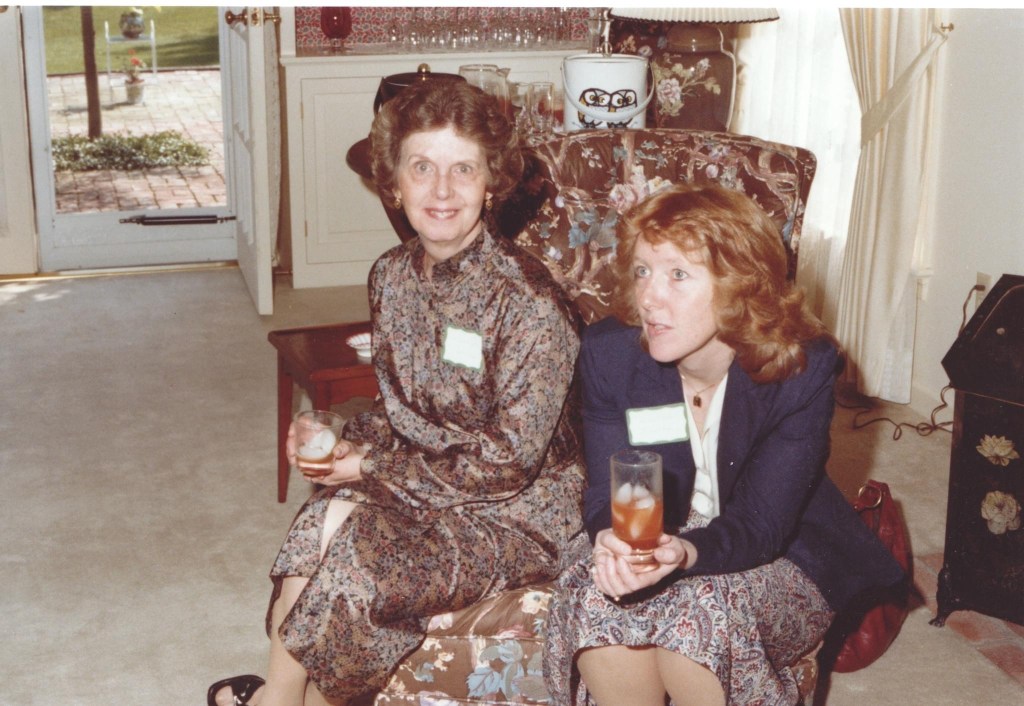
My grandmother and mother, Harriet (Jones) Davies, left, and Harriet (Davies) Shelton, on Labor Day Weekend 1981. Twenty-nine years ago this morning, my mother, Harriet (Davies) Shelton, died. That’s her on the right, on Labor Day Weekend in 1981, along with her mother, my grandmother, Harriet (Jones) Davies.
Looking through the many pictures I have of her, 48 years’ worth, I don’t think she ever took a bad photo: Short hair, long hair, every style in between. Mom met every moment sparkling and alive and wonderfully present, good will and optimism and realism all blended unforgettably.
Twenty-nine years later, her memory doesn’t dim.
-
Is a robot is coming for my journalism job?
I’m a journalist. Is a robot coming for my job?
Even if I wasn’t a sci-fan, I might be more than alarmed by the story published in The Sun today about CNET’s use of AI-written stories on its website.
I’ve been fascinated (and yeah, a little nervous) by the possibility that an algorithm might be employed to write articles and leave me without a career someday. It’s not out of the realm of possibility: Bloomberg, Reuters, The Washington Post and The Los Angeles Times have all published AI-generated stories, and not just recently. The rise in natural language AI and data-driven stories have made this possible, if not universal, for years. At least 18 years ago I wished I knew computer science and programming enough to be able to start a company like this.
The Sun’s article, on the Drudge Report, puts it this way: “AI Secret: Artificial intelligence replaced humans in job role for months and ‘no one noticed.’” It says that CNET published 73 AI-generated articles since November.
I’m not worried. Judging from what I know about journalism and the kinds of stories referenced, if AI can do those types of stories, mostly explainer and fact-based articles, more power to it. And 73 articles since November is hardly a big workload. I myself have written 1 articles for publication since Dec. 1 plus hundreds of other words for things that aren’t published yet. (Not to mention this blog, especially this 2,500-word remembrance. There isn’t an AI around that could have come up with that.)
Many of the articles required me to make a few phone calls, reach out to people over Zoom and Teams, ask complicated questions and take down answers, follow up, and analyze what what said and what I know about the topic. Sometimes, I had to drive and then get out of the car and walk around. I don’t think AI yet has those skills.
So I’m not worried. At least not yet. An earlier Sun story, and they must be quite fixated on this, says that a certain type of AI can churn out a sparkling essay or op-ed piece in minutes. I can’t do that.
I’m actually not against AI in the newsroom. I can see it being helpful in sifting through large tufts of data, helping journalists glean insights that may not be immediately apparent, much like they do for radiologists and other physicians. And I also even see a role for AI in writing some types of stories, the kind that are rote, like stock prices and earnings reports.
Rather than taking jobs from journalists, AI would help them spend less time feeding the beast of daily deadlines, and focus on stories and projects of higher value to editors and readers.
What’s not to like about that?
-
Tie-ing one on
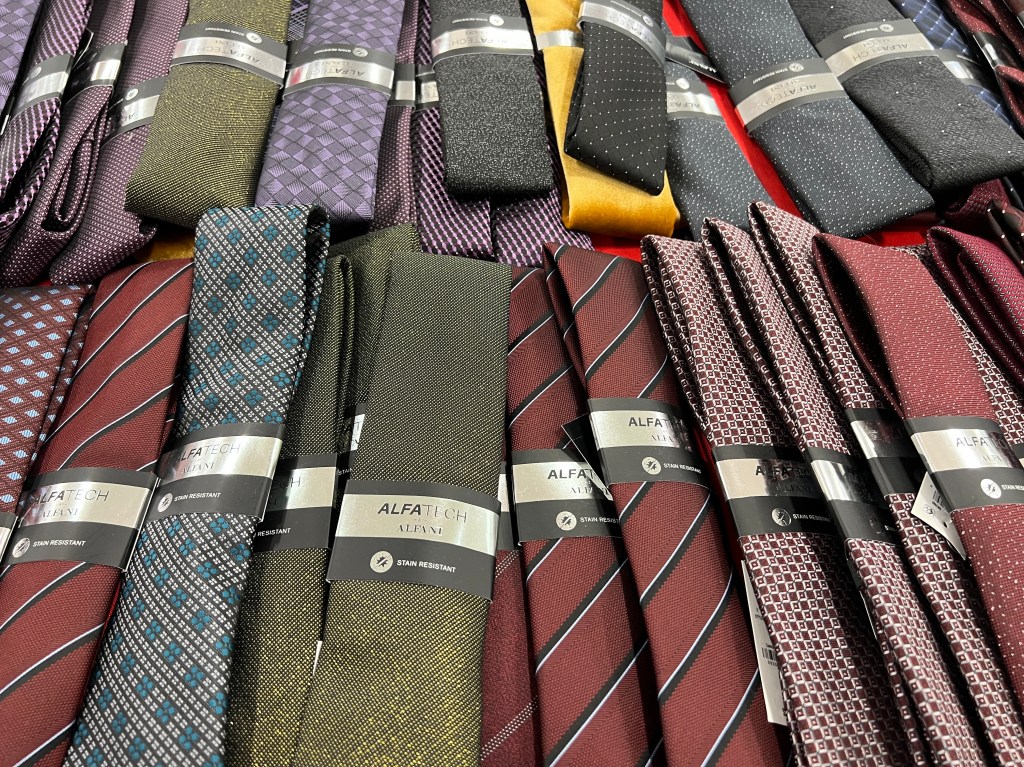
Today was the first day in 2023 that I’ve worn a tie. And I thought hard this morning about whether I would do that at all.
There wasn’t a dress code at the event I attended. About half the people wore ties, maybe a little less. I had a suit jacket on and so did they. But everyone else wore either a dress shirt without a tie or a sweater, and everyone got along just fine. I can’t tell you the last time I wore a tie but I think it was before Thanksgiving. It’s odd now to have a tie around my neck, and I’m still getting used to it.
I know there’s been a tendency over the last decade to have “casual Fridays” or dress-down days at the office. That all came to a halt in March 2020 with the Covid-19 pandemic and I don’t know about you, but I rarely wore a tie from 2020 all the way through yesterday. It just hasn’t been necessary.
That’s been a big change for me, who straddles the line employment-wise between the days when you always wore a shirt and tie to everything to these days when there’s no such thing as a dress code. And that’s working for the most part in an office setting, the newsroom, where almost anything went.
As a journalist, I wore ties for a long time. I didn’t when I was a copy editor who worked nights and didn’t interact with the public. Nor did I when I worked from home, as I did a couple of days a week in the 2000s. But my job has demanded it for years on end, and it was cool.
I have always believed that I should be dressed up to the level that the people I cover are. That meant that if I was covering politics or going to a news conference or a meeting, then I would “dress up” with a tie. For the past two decades I’ve spent covering the business world, I’ve worn a tie more often than not. But I will acknowledge that I was well into my 40s before I consistently wore a suit jacket or a sportscoat, until someone told me to grow up and wear a jacket.
But these days, it’s confusing. We don’t have a dress code and we aren’t expected to be in the office every day. (Both things I’m over the moon about, personally.) I’ve taken, in the cooler months, to wearing a sweater instead. Yesterday, I went to a government meeting without a tie and I have to say I felt a little self-conscious. But if I’m just going into the office or working around the house, I’m not wearing a tie. To me, that’s progress.
I don’t know whether this casual approach is going to last, just like I don’t know if we’re going to continue to be able to work remotely as much as we have over the past three years. The signs, on the remote work part, are all over the place. But I don’t think we lose anything when we allow workers to loosen up a bit.
Just like me. I’m pretty close, halfway through my work day, with loosening the tie altogether. And who knows how long it’ll be before I wear another?
Home
About Me
Journalist and writer. Loves writing, storytelling, books, typewriters. Always trying to find my line. Oh, and here’s where I am now.
 Nows and Forevers
Leave a comment