-
Thankful
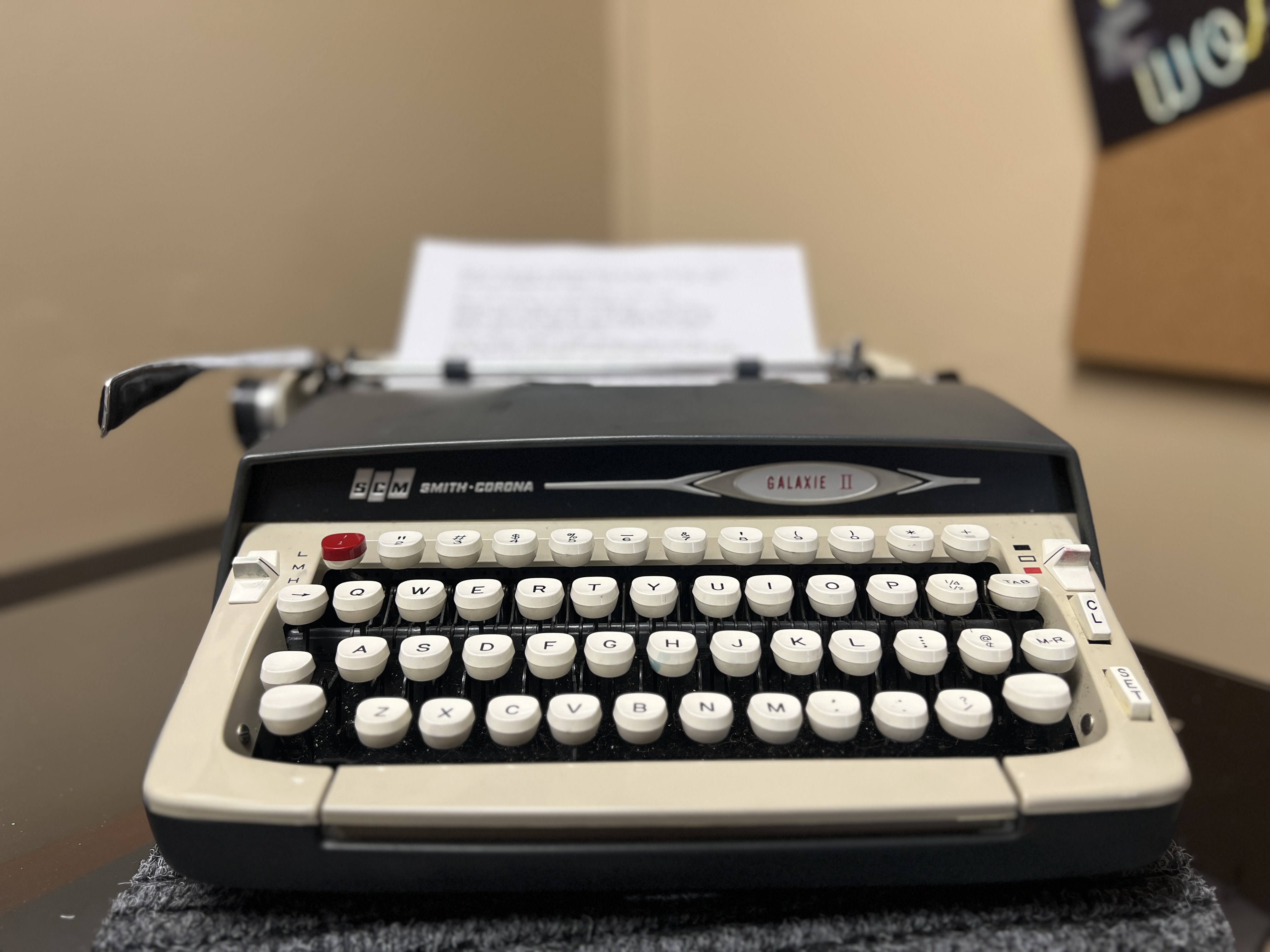
Back at work for the first time in two weeks and thankful for another year of telling stories, both the ones you see in my newspaper, and the ones you don’t.
I’ve got a lot more in me.
I have mixed feelings about the year just past, but I know that being allowed to make it to 2023 is a blessing. I won’t forget that, no matter what it brings.
-
‘The burden of the year’
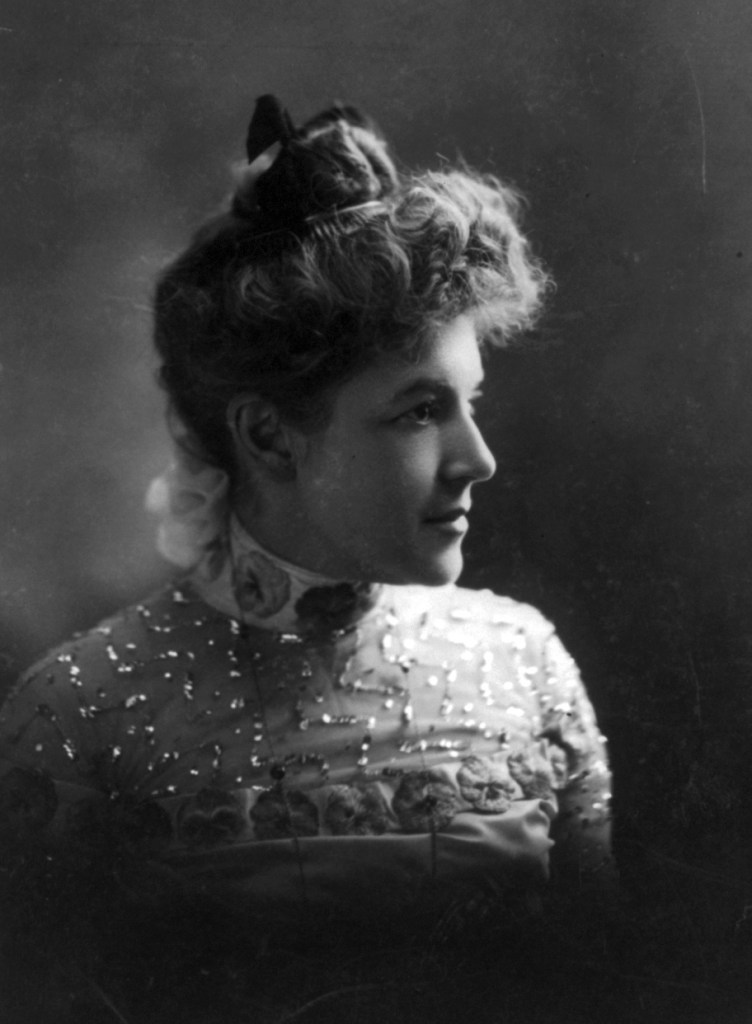
Ella Wheeler Wilcox, 1850-1919. (Photo: Library of Congress). “What can be said in New Year rhymes,” wrote Ella Wheeler Wilcox in her poem “The Year,” in 1910, “That’s not been said a thousand times?”
Fair point. I’m not sure about what I could say about new year’s that hasn’t been said before. But in this poem, written 113 years ago, there’s a lot that still speaks to me.
As a writer, I appreciate a turn of phrase. Wilcox uncorks a good one:We live, we love, we woo, we wed,
We wreathe our brides, we sheet our dead.Sixteen words that tell a story.
Sixteen words that tell a lot of stories.
I admit that I’m not sure that I’ve ever seen “wreathe” as a verb. (No doubt that’s a bug of my incomplete education.) But I know what it meant. Dictionary.com’s four definitions for “wreathe” as a verb has two related to wreathes. The other two make more sense in this context:
- To surround in curling or curving masses or form
- To envelope
The latter’s probably the one, although I guess you can curl a bride in a veil just as you would envelope her in it.
I admire Wilcox’s lines. There’s no adorning. There are a lot of active verbs. What’s more active than live, love, woo, wed? Those first eight words encapsulate a lot of what’s wonderful about this life.
But it’s the last two lines that make up that year Wilcox wrote, the year just past for all of us, the year ahead, all years before and evermore:We laugh, we weep, we hope, we fear,
And that’s the burden of the year.There’s no doubt we have all of those ahead this year.
Here’s the whole poem from Ella Wheeler Wilcox, who was born in 1850 and died in 1919:
What can be said in New Year rhymes,
That's not been said a thousand times?
The new years come, the old years go,
We know we dream, we dream we know.
We rise up laughing with the light,
We lie down weeping with the night.
We hug the world until it stings,
We curse it then and sigh for wings.
We live, we love, we woo, we wed,
We wreathe our brides, we sheet our dead.
We laugh, we weep, we hope, we fear,
And that’s the burden of the year. -
To post or not to post on Post
A lot of the people I’ve been following have been jumping to Post and to Mastadon lately after Twitter’s slow-motion implosion. Today, I became one of them.
To be fair, I’ve had the invitation for a couple of weeks. Just with the holidays and also the aggravation with trying to learn a new social media network (hey, I’m old), I wasn’t as enthusiastic as I was when I started with Facebook and Twitter back in 2008 and 2009.
Mastadon seemed like a little too much than what I could do today. I’ve read about it but I decided against carrying through with it, at least until I can figure out more about it. It sounds a little too complicated.
Post, I did within 15 minutes.
I don’t know much about Post. It seems like an interesting platform, and maybe it’ll take off. It won’t be the same, at least right now, as Twitter. But it seems to be sort of between Twitter and a straight up blog, like this one, and I might as well give it a try.
So I did.
Not that it’s that much right now. I had to ask on Facebook if there was anyone that I followed who could point me in the right direction. I have found a few, but I don’t have any followers yet.
That’s OK. -
Beginning the Beguine, again
For nearly 30 years, I’ve begun the year listening to Artie Shaw’s version of “Begin the Beguine.” I know it’s odd, but you could do worse than begin 2023 by listening to Artie Shaw.
I didn’t expect to start my year with this song. It just sort of happened, one of those funny little traditions that you start with yourself but you don’t really know why and you don’t make a big deal about it. I would doubt that anyone I’ve lived with since 1995 would have any idea I did that. It’s just something that I like to do for myself.
And it’s not an expression of luck, like eating pork and sauerkraut on New Year’s Day or throwing salt over your shoulder. God knows, “Begin the Beguine” have started both good and bad years. I can’t even say why I did this.
I just did.
I can say how I discovered the song and the music of Artie Shaw: In my late grandfather’s record collection when I was visiting my aunt in Newton, Massachusetts, in the summer of 1994. My grandmother had died a few months before and my aunt was cleaning out things that hadn’t been sifted through since my grandfather had died in 1976. My grandmother, who wasn’t very sentimental, didn’t want to give up any trace of her husband in the 18 years that she lived past him. The family respected that.
My aunt asked me if I wanted to go through Grandpa’s records. She was going to send them to Goodwill.
So I went down into the basement, and looked.
There were about two dozen records from the 1940s through the 1960s: Burl Ives, Roger Miller, Ray Conniff, Lawrence Welk, and other albums. This was early in the reign of the CD and even though I stopped buying albums years before, I still had a record player. We all did. I spotted a compilation of big band music that had a few songs and artists that I recognized and more I didn’t.
One I recognized the songwriter (Cole Porter) but not the song or the performer, Artie Shaw and his Orchestra. I picked that one up, one of the only ones I did take.
I drove home and broke out the record, placed it on the turntable and began to play. I was instantly hooked by “Begin the Beguine.”
My other grandparents had introduced me to big band music, what they had grown up to in the 1930s and 1940s, and I went from humoring them to actually liking it a lot. That was mostly Glenn Miller and Benny Goodman and Tommy Dorsey. I hadn’t heard about Artie Shaw, who grew up decades earlier where I had (New Haven, Connecticut) and who, in 1994, was still active as a musician and one of the few people from that era to still be alive.
And I loved the song.
I don’t know why I began 1995 by listening to “Begin the Beguine.” Maybe it’s in the title. There are no lyrics in Shaw’s version which came out in the summer of 1938 and quickly became his signature song. Apparently to his chagrin after a while. It was a long time before I listened to the lyrics on other versions. I still go back to Artie Shaw’s version.
I couldn’t say much about the lyrics at the time, although reading them over on the web right now, it hits a lot harder than I would have expected. It’s about wanting a second chance with a lover you had taken for granted before:
What moments divine, what rapture serene,
Till clouds came along to disperse the joys we had tasted,
And now when I hear people curse the chance that was wasted,
I know but too well what they mean;I also know too well what they mean. But that’s another story. And one that can never be. I wasted my chance.
So in 2023, I began the year like I have with all the others since 1995. But this year, it had more meaning than I expected.
-
Looking back, looking ahead
At this time every year, even though I know it’s not always something I’m going to follow through on, I do two things: I write a review of the year past and then I write what I want to accomplish in next year.
I’ve been doing it for the most part for 30 years, and most of these documents I have kept, either in my journal or on paper.
I say most. Some I’ve gotten rid of, because the year past has been so painful.But it’s mostly a useful exercise. We mark time in many ways. But every Dec. 31 we close the books on one 12-month period and then start a new one. At least I do. It’s not just a new calendar that I buy. It’s also trying to understand what happened and how I took it (hence how painful it can be), and then also what I think I should accomplish in the new year.
Whether I do, I don’t know. Sometimes I do, sometimes I just drift along and see what happens. I like to at least challenge myself.
I wrote the review a few days ago, when I was back in a place that held a lot of memories for me and I was in an emotional state. I wrote notes on what I wanted 2023 to be, but I haven’t written that yet. I’m going to finish that later today.
I do have plenty of things I want to accomplish. I can’t wait to begin.
-
1-800-Kars-for-Kids
One of the funniest scenes I have seen in a while. Back in New York I had to listen to one of my jams, WCBS Newsradio 88. As a teenager and a budding journalist growing up in Connecticut, I listened to it all the time. (Yeah, I was odd.) Plus my dad listened to it in the car. Some of the same people I heard listening to it in the 1980s are still there. But that’s another story.
One of the commercials I heard was 1-800-Kars for Kids, which played incessantly on WCBS in the ‘90s and 2000s. My dad and I both had the same reaction at the same time.
“That song again!”
I don’t know if it was just a tristate area thing or whether it went national. But that little ditty is burned into my brain.
It reminded me of this scene in “The Good Place,” where the demons sing the official Bad Place Song.
Yep.
I remember seeing that when it first was on and nearly doing a spit take. That was a deep cut by “The Good Place” writers, and it probably sailed by 95% of the audience.
But it was awesome.
-
Polar vortex
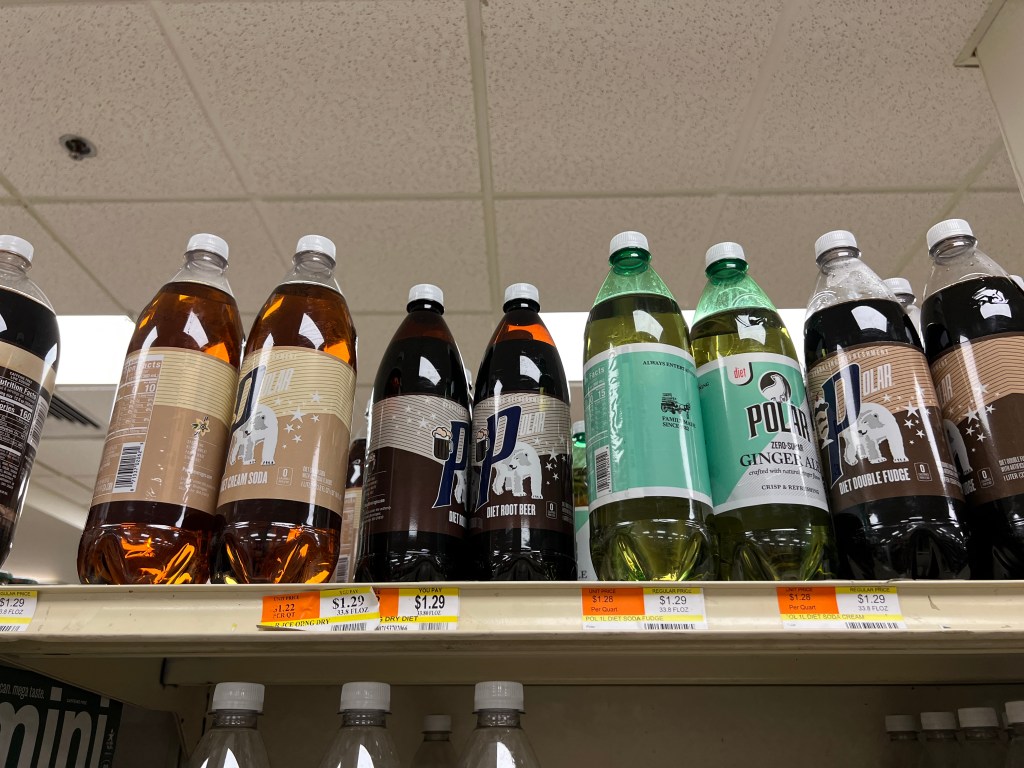
I may have bought one or four bottles of Polar soda. Nice surprise about being in the Hudson Valley, New York, however briefly, is that I can pick up Polar soda anywhere.
That’s a comfort drink and always has been, in bottles at my grandparents in Massachusetts when I was growing up. Plus my parents used to drive me on I-290 past the bottling plant in Worcester, Massachusetts, with the huge Polar bear mascot.
Nice to see some familiar items here.
-
Back in time

Newark-Liberty Airport. I was driving so I did not take the photo. Interesting day to be at Newark-Liberty International Airport. I drove my stepmother from Pennsylvania to Newark for a flight to Europe. Twenty-nine years ago this morning, my dad drove me here from Connecticut so I could go visit my mom, who was dying of cancer. It would be the last time I saw her.
It was a bitter cold morning, Boxing Day 1993. Dad got up super early and picked me up, and we drove about 60 minutes to Newark. It was the first time I had ever flown out of there and my first time in an airplane in 10 years. The flight had only a handful of people and I sort of just wrote in my journal and didn’t look out the window or care much about what was going on. I landed, picked up my rental car at O’Hare, then drove another hour to see Mom.
I don’t like to remember that visit. I spent the whole week and a few days crying, near tears or coming to grips that I was going to lose my mom and soon.
Turned out she died less than two weeks later, a few hours before I was to see her again.
I was a poor journalist then and I couldn’t afford the flight to Chicago. So my paternal grandmother and my paternal aunt gave me the money for the flight, which was $600 more than I had to my name. Dad gave me the money for the rental car. I owe them a lot for making sure I could see Mom, as devastating as it was.
Came back a week or so later in an epic blizzard. Flew out of Newark a bunch of times when I lived in New York but only via train, bus or Super Shuttle. Melissa and I went there one time, since we liked watching airplanes and then I picked up my sister there on another snowy night in 2005. Both visits were relatively short.
But this one was the shortest. It took no time at all to drop my stepmother off and then head to the next destination. Leaving me with remembering the first trip, 29 years ago. I didn’t really want to.
-
Feeling grief during the holidays

Those who are hurting from the loss of loved ones, no matter how long ago, this holiday season, I see you.
I am you.
Decembers have hurt in varying degrees since I spent a final Christmas week with my mother, dying of cancer in her 40s, in 1993. She passed days later. That sent me into a skid, a long and dark time in my life. Though I was foolish to think Mom dying was as bad as it would get. Eight years later, three days after Christmas at a hospital in New York, at the happiest moment of my life, another loss showed me how naive I had been. That led to another skid.
And a decade ago this month, I said goodbye to my grandmother. Three losses, all in December or immediately after. A few years ago my dad also almost died two days before Christmas. I distrust December.
To be sure, I have a lot of blessings in my life. I know how lucky I am.
Sorrow and grief don’t follow a straight path. They pop up when you least expect it. Could be a reminder of your past, and then you are back in it. Or December itself. Some years are better than others, but 2022 has been tougher.
But I know a lot of other people feel the same way this holiday season. It’s the most wonderful time of the year, I keep hearing. Except that for more people than you would think, it’s not. The loss could be weeks old or decades old, but we feel it. And it doesn’t happen in December.
And we can feel guilty, as I do, for feeling this way. I don’t want to drag down anyone’s joy. Maybe expressing my vulnerability here will provide some comfort to the others who have lost and are missing what was or never was.
And so I came here, a United Methodist Church near where I live, this Christmas Eve. I didn’t know anyone. The Methodist church – in Connecticut and Massachusetts, Maine and New York, and Pennsylvania and California – is where I spent four decades of meaningful time with four people I have loved so much. Three are relatives. All are no longer in this world, and this as close as I can get to them now. I haven’t been a regular churchgoer in 18 years and haven’t been since my grandfather died 10 years ago.
This is where I needed to be Christmas Eve.
-
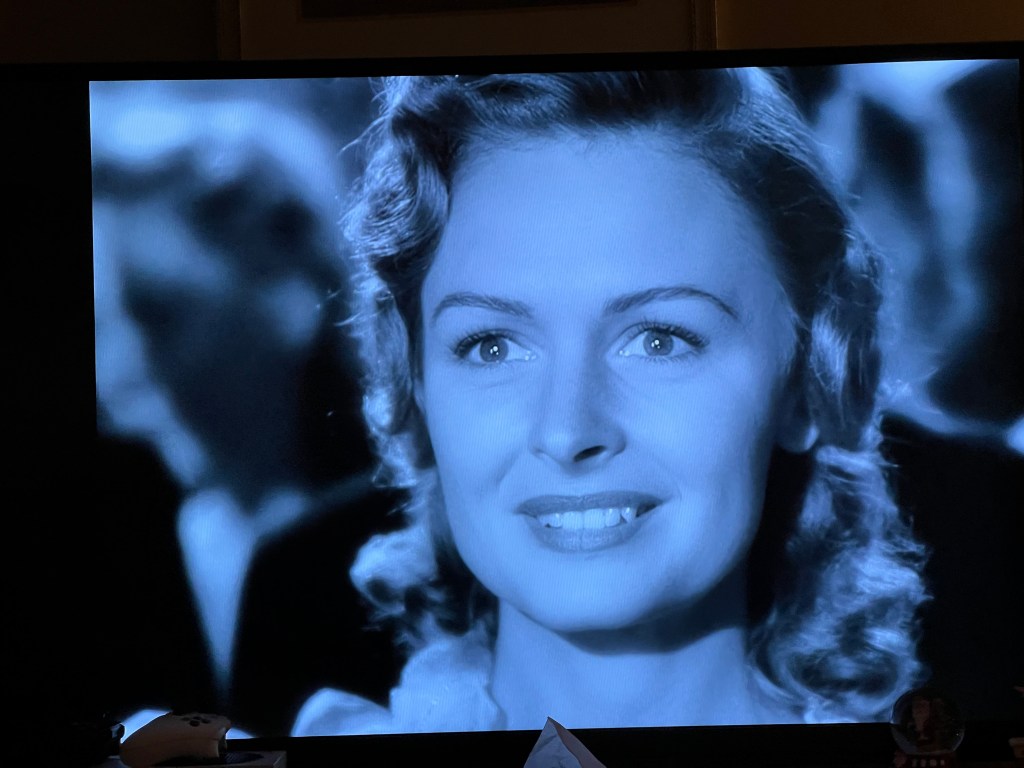
Donna Reed, a fabulous actress of the movies and TV, in “It’s a Wonderful Life.” May someone look and feel for you the way that Mary does for George Bailey when their eyes meet when they are grown up in “It‘s a Wonderful Life.” When that happens, love her the same and never leave her.
Home
About Me
Journalist and writer. Loves writing, storytelling, books, typewriters. Always trying to find my line. Oh, and here’s where I am now.


Leave a Reply