-
The snowiest Christmas ever
One of my favorite stories to write as a young reporter had to do with weather, and every year someone had to do the traditional article about the chances for a white Christmas.
I didn’t do that story every year, but I always tried, no matter where I was. It was always a fun story.
There was only one place I lived where you could be as close to guaranteed of snow on the ground on Christmas: Caribou, Maine. I saw a story in The Washington Post that there’s a 95 percent chance of a White Christmas every year. There was a 97 percent of a White Christmas in Caribou, Maine, in the ’90s. I remember writing that story back then, but it’s not online. I did find one, from the same newspaper, online from 2015.
Either way, there’s pretty epic snow in Caribou and the rest of Aroostook County, the very top of Maine, every year. It gets an average of 97 inches of snow a year, and recent years it’s been over 100 inches a year.
That’s not the highest average amount snow in the United States, records that according to one search I made are Sault Ste. Marie, Michigan, and Syracuse, New York, each over 100 inches. But Caribou’s 97 inches every season beats places that you wouldn’t think, from Buffalo (a mere 93 inches) and International Falls, Minnesota (64.8 inches). It’s even higher than Anchorage, Alaska’s 73.1 inches.
But there have been plenty of stories about Caribou’s Christmas snow fame, from the Boston Globe and and United Press International, among others.
I grew up in New England, so I’m not a stranger to winter weather. But I grew up in Connecticut and Massachusetts, which is nine or so hours from Caribou and a world away from what I was used to. A winter in Connecticut is nothing like a winter in Caribou.
I lived in Maine from 1996 until 2001, all but one of those years in Caribou. (The other year was near Bangor, in the center of the state.) I had spent a week or so in Wisconsin, one of the coldest ever recorded there, when my mother was dying in the winter of 1993-94. I don’t remember it above zero that entire time I was there. It was bitter cold.
So I thought, when I moved to Maine three years later, that I was ready. I was wrong.Caribou is next-level cold, as is the rest of northern Maine. It’s Potato Country, and potato fields are everywhere. It’s small (about 9,000 residents) and about 10 miles away is the city of Presque Isle, which isn’t much bigger. And there are a whole lot of small towns within about a 50-mile radius.
It gets cold and it gets snowy up there. The first full year I was there, 1997, it snowed on Halloween, about 8 inches. Halloween went on as scheduled. They are hardy souls up there. Look up snow and Caribou on YouTube and you will see what I mean.
And there’s snow on the ground almost every Christmases. I was looking it up and since 1940, there have only been four snowless Christmases — 1957, 2001, 2006 and 2010 — which is incredible if you think about it. Compare that to my hometown, near New Haven, Connecticut, where there’s only a 31 percent chance of snow on Christmas since 1940. There have only been 14 in my lifetime, although my first Christmas, 1967, was a White Christmas. So was the year before.
But Caribou was different. Snow on Christmas was one of the benefits of living there. So was having one of the most fabulous, comfortable summers — if short — than I could ever imagine. The downside was that it got awful cold from December through March every year. And it got dark quite early around the winter solstice, only about eight hours of sun a day, with sunset on Dec. 21 just before 4 p.m. That took some getting used to.
The year before, I was working in Caribou at the newspaper for about a month, filling in, in late November until just before Christmas. It snowed, quite a bit, while I was there. But where I lived, about three hours away near Bangor, it hadn’t snowed at all.
Christmas 1997, I was up in Caribou as a resident, having moved there about two months before for work. I had always wanted to live in Caribou, ever since I heard classic WTIC-AM host Bob Steele give the weather in Caribou every day on his morning show.
Yes, it’s true: I made a career choice based on a radio show I heard when I was a kid.
That Christmas Eve 1997, we had gone to the late-evening candlelight service at the church we had found. It was starting to snow when we arrived and on our way out with the candles it had begun to stick on the ground and on the road.It had been a long time since we had seen snow on Christmas Eve. There’s only about a 20 percent chance in Connecticut, where I had lived from when I got back from California in 1984 to 1996.
We drove around town afterward, marveling at the big flakes falling and the way the Christmas lights reflected in the snow. We listened to carols on the radio and were alone on the road as we circled around town, the snow making it even more Christmasy.This was the first time either of us had been away from our families at Christmas, 10 hours’ drive, and we weren’t going back home to Connecticut for the holidays. We didn’t really know anyone yet. The Christmas Eve snow made us feel a little more at home.
I still think of that moment on Christmas Eve into early Christmas morning as a warm Christmas memory.
I thought about that the other day when I saw an article in The Washington Post about the chance of a White Christmas across the country. Like I said, Caribou came out very well with its 95 percent chance. But the highest amount of snow falling on Christmas since 1940? It was that Christmas Eve into Christmas Day in 1997, when 8.7 inches eventually fell.
That made me smile.
-
Snow and ice
An epic winter snowstorm is about to hit the East Coast and the Midwest, where I live. It’s a little unclear what’s going to happen, but the forecasts are kind of worrisome: A couple of inches of snow atop rain that’s been falling on and off all day, then 60-mph winds that will bring an Arctic cold front that will drop temperatures to just below zero.
Everything could flash freeze, making driving hazardous.
I’ve been through enough snowstorms — and even my share of ice storms — that I’m not looking forward to whatever happens tomorrow. I don’t have anywhere to go. I’m working all day, but remotely. I have several assignments that are tomorrow and we’re lightly staffed because of the holiday. Plus I have to write whatever news stories happen tomorrow. (I don’t know what’s going to happen but today was a pretty busy news day.)
I’ll admit that not having to drive anywhere takes the edge off of worrying about a big part of the storm. A lot of things are going to stop tomorrow, and the authorities have asked people who don’t have to travel to stay off the roads. I’m happy to do my part.
But I am concerned about another consequence of an ice storm: The loss of electricity and heat. I’m not clear on what might happen if there’s a power failure at my house. Technically, I suppose I could still have heat — thanks, natural gas — but electricity could be a problem. A big problem. I am not prepared at the moment for a big ice storm and the potential for power outages.
What it’s time to do is charge up the iPhones and MacBook batteries, and make sure the portable battery I have for this occasion — which can power devices for a few hours — will be ready if needed.
And then wait. Guess we’ll see what happens.
-
All we are is just another brick in the wall

A hole in the brick wall. But why? I’ve been obsessed lately about holes in brick walls.
In the 116-year-old building I work in, there are a lot of them. It seems like every one has a story.This building was first occupied in 1906, four years before my oldest grandparent was born. It’s along the river and part of this region’s long industrial history, a remnant of what the Rust Belt used to be since the beginning of the Industrial Revolution.
That industry, which literally built and powered the United States in the 1800s and 1900s, is a shadow of what it used to be.
The city I’ve lived in for the past decade or so has a storied history, famous sports teams, and an innovation and eds & meds economy that has helped imagine a future.
Gradually, even in the time that I’ve been here, pieces of that industrial history have been refurbished and given new life. This building is certainly like that. It was a 500,000-square-foot, six-story cargo terminal, next to a cement plant and other industry, for decades. Then it was acquired by a commercial real estate company, noted in this city for their innovative work, and it’s been slowly transformed into a series of offices.
We’ve only been here a year and I’ve been here less than that, since we didn’t go back to the office until May 2022, more than two years after we and most white-collar workers were forced out from the Covid-19 pandemic. But it’s been a joy to work here, not only for the refurbishment that will ultimately cost $100 million when it’s all done, but also because of the building’s character.
It’s terrific. There are so many nooks and crannies and even though I’ve only been on the ground floor, the first level and the floor my office is on, I’ve appreciated what I’ve seen.
Now to the holes.
There’s brick everywhere, mostly painted over white, and bubbly and bulging, depending on the condition of the mortar and the bricks themselves. And there are holes in the bricks, some large, some small, all over the place. There doesn’t seem to be a rhyme or reason for most of them, although some of them clearly had important use that is still apparent today.
Even if they are just holes.
But others, it’s hard to tell. And I’ve been wondering.
Like this hole. It’s small enough for me to put my finger in — I have pretty small fingers — but I can’t seem to put my finger in what it’s for. It’s not bothering me, per se, I’d love to know more. What did this space look like before 2016, when the building was bought? What happened here, what kind of work and how many people, in all the decades between 1906 and 2016?
And whatever was in the hole, and all the holes, what happened to them?
There are a few clues. I was walking back to the office a few hundred feet away, sort of taking notice of all the holes that up until recently I had just sort of passed by. Then I saw a washer and bolt orphaned along the brick wall. That’s obviously what was in at least some of the holes.
I sort of wondered why that washer and bolt were left in place. There are a lot of holes and not a lot of bolts.

One with a bolt. I don’t have much experience when it comes to old buildings. Most of the places I’ve lived in, including all the way through childhood, were either younger than me or not too much older. My maternal grandparents’ house was older, probably 100 years old by the time I came around, in an old and dignified section of Newton, Massachusetts. And my first newspaper had once been a train station and was modeled on a building in Siena, Italy. But neither had the level of stories, it seemed to me then, that my new/old office building does.
There was one place, however, where I lived in the mid-1990s, that reminds me a lot about this. It’s in Beacon Falls, Connecticut, and before it was converted to apartments in the mid-1980s, it had been some type of mill. Beacon Mill Village still retained that look on the outside, four stories and a little under 200 units, red brick and with some of the mill infrastructure still intact, inside and outside.
I had a two-bedroom, corner apartment there in 1995 and 1996. It was glorious, with 15-foot high ceilings and windows that were almost that tall, floor to ceiling. The carpets were plusher than I had ever seen before, even more plush than my maternal grandparents’ house, which you could sink into. The exposed brick was everywhere, it was buffed and classy, and the inside had been transformed into a chic living space for the 20-something I was. I lived there alone for most of the time I was there.
I didn’t have any particular affinity for Beacon Falls, a small town off the highway between Bridgeport and Waterbury. I worked in Norwalk at the time, about a 45-minute drive on a good day. I actually don’t remember why I moved there. It was closer than living in New Haven, where I did when I worked in Norwalk. But it wasn’t that much closer, and I didn’t at the time have any family within 25 minutes or so. And it was about that far to my graduate school classes in New Haven.
But it was wonderful.
I’ve lived a lot of places. I’ve moved about three dozen times, thanks to my parents’ divorce, my mother’s remarriage to someone who worked for the Navy and got transferred a lot, and then an itinerant newspaper career. But in terms of the bricks and mortar, not taking into account either the loved ones or the location, Beacon Mill Village was the best place I’ve ever lived.
Being in the corner, on the second floor, on the street but not on the main street, helped. It was both quiet and secluded, but not that far away from everything. It was quick to go down the stairs or the elevator to the parking lot. And when it snowed, which it did a lot in that winter, laying on my bed, surrounded by the biggest windows I had ever seen on two sides, the effect was stunning.
I really enjoyed living there.
Plus it was the best kitchen I had, big and modern and I loved cooking at the time.
All around, a great place.
I also enjoyed exploring that building, inside and out. It was historic and yet had all the trappings of modernity, too. It was almost like I could touch, if I looked closely, the history and the people who had been in there in the building’s former life.
I thought of that today when I started looking a little closer at my office building. Beacon Mill Village is red brick and an apartment building in a valley in Connecticut, 400 or 500 miles away from where I live now. I haven’t even been by the place since 2007. I just don’t get back to Connecticut much and if I do, it’s usually on the Merritt Parkway or I-95. Beacon Falls is out of the way.
Anyway, I’ve been thinking a lot of holes in brick walls lately.
-
Elegy for an angel, Melissa Morris

Melissa A. Morris. Melissa A. Morris
Dec. 21, 1958 – June 30, 2022An angel was born Dec. 21, 1958. Her name was Melissa Anne Morris.
It’s fitting Melissa was born on the shortest day and longest night of the year, for the warmth and light that she brought to life was an extraordinary present to everyone who ever knew her. That was one of Melissa’s many gifts.
She had so many gifts.
To know Melissa was to encounter a human being who was a blessing and a force for good in this world, alive and lovely, a rare and wondrous soul. Missy was so much: intelligent and passionate, courageous and graceful, humble and genuine. I know this. I was first her friend, and then her husband.
Melissa excelled in every role she inhabited, and there were many: first child, daughter, big sister, student, teacher, wife, mother, friend, Christian, hostess, journalist, editor, storyteller, writer. Watching her in the world was a constant display of selfless love and bringing out the best in everyone. Melissa approached every encounter with servant leadership, a chance to leave the other person either a little or a lot better, no matter how short a time. She opened her heart and her home, whether that was in Maine or in the Hudson Valley in New York where she grew up and spent the last years of her life, and made visitors feel welcome.
Melissa brought love, wherever she went.
I saw it so many times, how pure and loving she was to friends, family and strangers alike. She shared coffee, her table, her food, and fellowship. And if you were fortunate enough for Melissa to love you, it was the best present you could ever receive.
She had the most caring eyes, bright and expressive and soulful, and they took in all of you and provided comfort and affection. She had the deepest concern about people. She knew what to say and do in the happiest moments, in the saddest moments, and in every time in between. Her smile made your heart leap, her laugh was joy, and just sound of her voice was comfort.
Melissa blended optimism and realism. She bravely met every challenge – and there were many, her life was far from smooth – with an upbeat and realistic attitude, steadfast as a mother and as a human being. She advocated for her kids, made hard decisions, and faced the big obstacles and crises that would break many others. Melissa often was forced to face those challenges alone. But it didn’t stop her from doing what she knew was best, no matter what the cost.
It takes fortitude to be so brave, over and over, with a hopeful heart and a resolute will. And she never lost sight of what was best for her children, and put them ahead of herself. Her strength, her willingness to stay the course and to do the difficult things, they were even more reasons to love her. She was so wise.
Missy was a loving and dedicated mother, and her dedication to her kids and her extended family was boundless. She gave all, never lost hope, never lost sight of the miracle of life and her responsibility, nor the appreciation of her children. Her kids made her happy, and the smile and light in her eyes when she talked about them or saw them was infectious. Motherhood was one of the many things that she was born to do so well.
Her love of family, both the one she came from and the one she made, was evident. She loved spending time with her kids, her siblings, her mother, her large extended family. She was playful and so fun, so matched and tuned to those around her. The light in her eyes, and all over her face, the way she spoke and the way she talked with her hands, were infectious.
She cooked for family and friends, and even acquaintances, welcomed them into her home, and fed them soup and fostered great conversation. Her home was filled with pictures of family and happy memories of her loved ones.
Melissa’s beliefs as a Christian radiated from her. She was a true woman of faith. She absorbed the Gospel and the example of Jesus and her love of God, and translated it into love here on Earth. There was nothing fake or judgmental about her. And she always strived for more, whether it was studying the Bible, prayer and reflection, or being deeply involved in her church and community.
Living gracefully, humbly, with intent
She was a continual source of energy and cheer, and amazingly present. She was humbly driven to be the best in everything. Melissa was dedicated to her family, her faith, her professions, and to whatever else she set her mind to. She found the time to do everything, whether it was to cook for family and friends, to reach out to her friends and acquaintances, to have a kind word and spend time with someone who needed it. She was often on the telephone.
Missy was a wonderful cook and a generous one. She would bring food to the lonely and to coworkers, try new recipes with aplomb, creatively come up with tasty dishes. Her soups were legendary. She would bake these special fruity “magic” muffins of her own devising that were low fat and low calorie but tasted divine.
There was so much magic in Missy.
She inspired. There isn’t any other way to put it. She believed in the inherent good of people, the wonder and promise of children. She lived her ideals. Missy’s belief in your ability to be extraordinary, too, was inspiring and heaven sent.
She had trained as a teacher and been one for years, extraordinary and energetic, at home in a classroom. She understood how kids learned and she wanted to be the best she could be as an educator so that her students could be their best. Missy told stories about how she learned to do this, her lessons were for school and for life, and she connected it with objects that told the story. That was her first time she was a storyteller.
Melissa believed children deserved the best from their teachers and adults in their lives. She went the extra mile in reaching every child, knowing that there is no one way that works. She was patient and encouraging to adults and parents she encountered.
She hadn’t been a teacher for a while when I met her, but the love she had for the profession was evident. She spent a lot of time learning and expanding upon what she needed to do to reach all the children, not just the ones who were receptive. Melissa, always a constant reader who loved libraries and books, was a lifelong learner who long after she was a mother and a teacher would always strive to know more, to do more, to research and then apply the knowledge, and share it. She told me how much she felt at home in front of kids, not only as a teacher but as a presence in their lives, and the connections she made she valued. Missy would have been a fabulous professor training the next generation of teachers, just as much as incredible in front of pupils.
But even more than that, she kept room in her heart for the wonder of life, whether it was sitting on her porch in the early morning stillness to see the sun rise, hot cup of coffee in hand, or looking up at the stars, or walking along a beach, or paddling a kayak in a cool river. You learned so much, and felt so much, near Missy.
Finding her voice
I met her at the beginning of her second career, when she became a journalist. Without any training or initial desire to be a reporter and editor, she was a natural at that, too. She quickly rose to the top by her enthusiasm, her knowledge of the community, her nose for news, her friendly and engaging manner, her reporting, her smarts, and her writing.
Melissa had a fierce intelligence, which she brought to all things. She understood complex topics and had a gift for making it clear. She had a sharp sense of human behavior and deep emotional intelligence. No doubt that came from her time as a teacher and her general outlook on life. She was so creative.
Melissa used her skills as a teacher to inspire and motivate her coworkers and the people she was managing. She had the vision to understand what needed to be done, and to do it.
It wasn’t long before I realized that Melissa had a voice that needed to be heard, a depth and breadth and a way of looking at life that I knew would connect with our audience. Early on, I asked her to write a weekly column.
She wrote what she called “Local Color,” a weekly column in three newspapers with thousands of readers every week. “Local Color” was like Melissa herself: smart, sometimes sentimental, always lyrical, observant and able to capture emotion in a way that readers loved and craved. It was truth, pure and simple, whether she wrote about her children, her father and mother, about dancing or so many other things, and the little moments that meant so much.
It was clear that Melissa loved to write, and she was so good at it. I would find out in time that she had been writing all along, for years, working on a novel and essays. She had a voice, and that helped her rise above what sometimes was a difficult life. Her writing helped her find meaning, it gave her fulfillment, it was something all her own.
There are few things in this life better than someone finding their voice. And it’s even more so when you see a beautiful soul flourishing before eyes. There was so much beauty and wonder in Missy.
I looked forward to being the first one to see her column, knowing that Melissa had poured heart and soul into it, and knowing that each 500 words or so was a piece of her, on the page.
Her writing was electric.
Later I would get to know her better, and she trusted me enough to show me her other work. She and I would trade writing and talk about writing, plot out stories together. It was Melissa’s dream to write — and it was the column that helped catalyze her desire to write even more and the growing realization that she had a voice and could employ it so effectively. It made the next steps in her writing journey so magical.
I feel honored that I could witness the magic. It was a joy to be her first reader, her collaborator, her editor, her partner in writing. Melissa was such a strong and captivating writer, all by herself.
Later we’d write together, at the library, at a coffee shop, at our kitchen table. What I thought was a solo activity all my life I discovered was deeper and lovelier with two. I can still see her, her first morning coffee cupped around her hands, reading a book. I can still see between sips of coffee, writing in one of her many notebooks, typing on the computer screen, trying to find the right line, the right words, placing her truth and the emotion on the page. She had so much to say. She was always looking for, and finding, her line.
Melissa was writing a novel. I had hoped the years would find that novel, and many others, published. She had so much to say, so much that others would want to read. I have the book she did write. I can see her in the essays. But I ache to see her name in print in other work.
A beautiful soul
We differed in age and lived experience, but found we had a lot in common. We grew up less than two hours away from each other, her in New York and me in Connecticut. It was like we had known each other all our lives.
I felt compelled this birthday to write about Melissa, to try to express in the inadequate tools that I have, who she was. It’s hard because our marriage broke up and we hadn’t been in contact since then. But I couldn’t not write about Melissa.
I owed it, and so many other things, to her. I have tried to keep myself out of it, other than as a witness. I wanted Melissa to stand on her own, in all her beauty and worth, her inexhaustible love and idealism, everything that made her who she was.
A beautiful soul.
I started this blog a few weeks ago, with only this remembrance about Melissa in mind. Its title, Nows and Forevers, come from a letter she wrote to me long ago. Melissa believed in the power of words; I believe in the power of words. But they aren’t enough, and can never be. I wished that I would have done this all long ago. I regret how I failed her, and have for a long time. But maybe, I’ve made Melissa come alive again, for a short moment. She deserves to be remembered much longer than that.
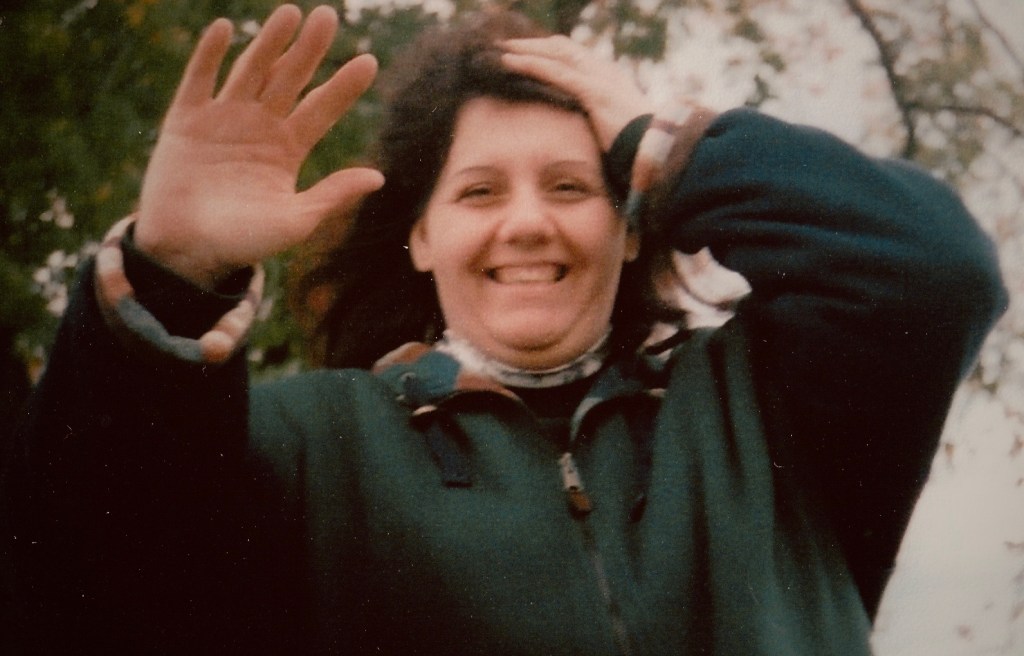
Melissa A. Morris. -
Rethinking Word
I recently picked up a copy of Microsoft Word for the first time in a long while.
The last time I had a new copy of Word was 2009, when I got Windows 7 on my last PC before switching to the Mac for good. Even with a new copy of Word 13 years ago, I had long ago dropped that as my main way of writing.
As a professional writer, I spent an inordinate amount of time thinking about tools. While I can write on anything and everything, I do have preferences. When it comes to the computer (analog/paper, iPhone and iPad are something I’ll write about another time), I use the Drafts app and a few other apps that synch my writing across computer, iPhone and iPad. That way I always have my writing with me, wherever I go.
When it comes to writing day-to-day articles, mostly for the web, I’ve been using TextEdit on the Mac since the late 1990s when I began writing for the web. I do it because, frankly, Microsoft Word, which
I used before, became too much of a pain. Word put in garbage coding that I would have to delete, and I would have to manually repaginate everything so there’d be no problems on the web. And smart quotes and some other types of characters would never render properly.
So I ditched it.I’ve written thousands of stories and millions of words on TextEdit, and it’s fine. It’s a no-fuss, no-muss word processor or text editor, or whatever you call it these days. It’s served me well. Longer form stories I’ve used either Ulysses or Scrivener, and I’ve also dabbled in IA Writer and Byword. It seemed for a long time I was buying and trying out one or another word processor.
A few weeks ago I saw an ad for Word and I ended up picking it up. I have dozens of files from the late ’90s and early 2000s that I had trouble opening, especially due to the passwords I put on them. I figured a fresh copy of Word would be just the thing to unlock them.
And it was.It’s hard to believe that I would remember the passwords from so long ago. I have trouble remembering the many passwords now. But back then, I had something on my mind that would become very important in my life, and the password was adjacent to that. And I would never forget.
And I didn’t.
It’s odd, finding something you wrote that you haven’t read in a while. (That’s another story.) But I needed to see what I had written, raw and telling, back then. It didn’t disappoint.
Since then, I’ve not abandoned what I’ve been writing with. But I’ve also, between home and work, I have been writing a few things in Word. Experimentally.
You know what? What I thought was bloated back then has seemed to be better now. The spelling and grammar checks, which I like as a backstop but haven’t used much, have caught a few things that I had missed. It’s been satisfying, putting the words one after another on the blank canvas of Word. And the coding issues seem to be gone. Only the smart-quotes remain, and I can live with that. Or figure a workaround.
So I’ll probably be using Word more. I won’t make it my main way to write text. But it has surprised me, and maybe I was too quick to ditch it, all the way back then.
-
On not following through
Wow, the universe is working overtime to send me signs this month.
Saw this new book (September) in the Kindle Daily Deals. I read Robert Harris’ Fatherland when it came out, 30 years ago. And during that time I was on again and off again writing a novel about this very topic, the three Regicides that fled Charles II and lived the rest of their lives, in secret, in and around my homeland of New Haven, Connecticut.
It’s a pretty exciting tale, if you’ve never heard it. That’s why I thought it interesting that the new monarch went for Charles III as his name.
I’ve heard the story forever, especially from my father, and you really can’t go anywhere without being reminded of it: Dixwell, Goffe and Whalley are not only that trio’s names, but they’re major streets in New Haven.
I wasn’t writing for publication, more for my own amusement. I put the story aside in the mid-’90s. Thought about reviving it again in October 2019, when I was back home for a brief visit and was walking on The Green and came upon John Dixwell’s grave behind the Church on the Green, about 40 steps from where I used to catch the bus every day for about five months in the spring of 1986. And then in January 2020 I found myself at Charles II’s grave in the magnificent Lady Chapel at Westminster Abbey, and it was one of the monarchs there whose story (and whose father’s trial and execution) I knew well). Two signs, right there.
I even ordered a few books on the topic and was reading them when the pandemic hit (and trying to find where I put the draft). Since I covered health care, the pandemic was one of the seven-day-a-week, all-consuming topics I covered so I didn’t have time to even breathe during lockdown and after that. So I went on to the next thing, which was for me Welsh.
Not sorry I followed the Welsh, as it has been inspiring and enriching, and continues to be. But I have always firmly believed in signs and their importance in calling turns in your life. And even if they don’t always point to opportunities but rather missed opportunities.
I chalk this one up to a missed opportunity, and also a sign that I’ve got to get moving. I’ve been writing a lot more lately in the past two months, being inspired I’ll say, and on two particular topics. It was already at a higher level but this makes it more of an obsession. Positive things happen when I’m obsessed. #amwriting
-
Grandpa and the Battle of the Bulge
https://www.history.com/topics/world-war-ii/battle-of-the-bulge
Today is the 78th anniversary of the Battle of the Bulge, which was the last time the German army attacked the Allied armies that had marched across France and Belgium resolutely following the invasion of Normandy on June 6.
It’s always been a day that I have marked, ever since I learned when I was eight years old that my paternal grandfather, Edward, had been there.
Oh, had he been there.
The Battle of the Bulge is important in history because it is seen as the last gasp of the German Army, a furious surprise attack in snow that targeted the American Army most of all. It was the bloodiest battle of World War II for the American Army and it trapped American soldiers in harsh conditions until the German offensive was halted Christmas Eve and then reversed later that month and into January.
There were 19,000 American soliders killed and another 70,000 wounded. But it led, to the collapse of Nazi Germany several months later.
My grandfather wasn’t a casualty and it’s hard to pinpoint just what he was doing. He and my grandmother, who passed three decades ago, were the only two people who really remembered. Nothing of his time at the Bulge survives, and I’ve looked.
But I do know a lot about the rest of his time in Europe, and his combat career, thanks to his almost daily letters home to my grandmother and then an unpublished manuscript. He landed in France a day after D-Day, an Army officer who had been training for months in England like hundreds of thousands of others for the invasion. He wasn’t a straight infantry soldier but he was often on the front lines, and danger and potential death loomed right around the corner just the same. He was a citizen soldier, to use Stephen Ambrose’s apt term.
Grandpa was a kid from Newton, Massachusetts, who grew up poor and put himself through Boston College through boxing and as a Massachusetts National Guard officer. He had been a journalist and then a social worker. He followed the news and was, in my grandmother’s words years later, concerned about the rise of totalitarianism and the Nazis. When Pearl Harbor happened, even though he had two young children at home and was going to graduate school at Harvard University in addition to his full-time job, he volunteered and got his commission back in the U.S. Army.
He spoke French and German, he was good with people, studious and a crack shot. He was a bookish kid, the son of Irish immigrants, who had willed himself into being a soldier long before the U.S. had joined the war. But reading his letters home, you get the feeling that while he would rather have been home, he understood the moment and he understood that he needed to be where he was.
He served across France and Belgium, with service so harrowing that I’m surprised he made it out alive. He was wounded in action that fall, but returned to service. And he was serving with the Army when the Germans attacked on a snowy Dec. 16.
He didn’t talk about it much. To my dad’s generation, World War II was history and what his father and so many others did was so long ago. Besides, this was the Baby Boom generation that both fought the Vietnam War and pushed back against it. My father has told me with regret that he didn’t talk much about his time in Europe, other than that it was meaningful and he was proud.
When I came of age, in the mid-1970s, he had only a year or two left to live. I was lucky enough to have two grandfathers who had been in WWII as well as two uncles. My maternal grandfather had been a B-24 and B-29 command pilot in World War II and had flown after the war. His experiences were markedly different from my other grandfather’s.
I had learned about World War II and was excited to my grandfather about it. We went to their house on the South Shore of Massachusetts, close enough to the ocean that you could often hear the waves. He was 65 years old then, just retired, the father of three and the grandfather of four, and had been married to my grandmother for 40 years or so. He moved slower, he was frail, and I didn’t know it but he knew he didn’t have long to live. These were the last few days he would end up spending in the vacation house that he had designed and built himself, and that even now remains in the family.
I asked him, as only an enthusiastic 8-year-old could do: What did you do in the war, Grandpa?
My father’s parents were reserved. My mother’s family was nurturing, lively, happy. My father’s side of the family, Irish immigrants all up from poverty and focused, were different. I didn’t talk about my feelings with them. They wanted to know how I was doing in school, what my other interests were, what I wanted to do when I grew up. I don’t really recall having much fun with them, and while I spent time with them, it wasn’t as easy or as comfortable as with my mother’s family.
But I could see in my grandfather’s eyes that I had touched a nerve. Even now, nearly 50 years later, I could see a softening and maybe even a few tears forming. It was just him and me, on the cement steps of the beach house. He sighed and told me that while what he and his generation did in World War II helped save the world, it wasn’t fun and it wasn’t pretty and it was in many ways really bad. I didn’t quite understand. I was looking, at 8, at the airplanes and the tanks and all the things that boys see when they think of war, the only things (hopefully) that they ever do see.
My grandfather knew that I was too young to understand, and he didn’t want me to feel bad. (I was prone to nightmares then and for a long time afterward.) But he told me that he wanted me to remember one thing: War, even if it was necessary (and he believed World War II was necessary), was not something to glorify and was something to do everything to avoid.
And I haven’t forgotten that moment or the lesson. It was the last time I ever saw him. He died, of colon cancer, not too long afterward. -
10 years on
It’s been 10 years since the murders at Sandy Hook Elementary School.
Twenty children and six adults were killed that morning, 11 days before Christmas, in a suburban Connecticut school. I’m a journalist who, by training and temperament, tries to stay professional about the tragedy that I’ve been around so much in my career. I’ve been able to keep to that for the most part, as difficult as it was and how often I wanted to cry.
I didn’t cover the Sandy Hook shootings. But it did occur in a town I knew pretty well, at a school I had been to once in happier times, and former colleagues of mine lost their daughter in the attack. And for all those reasons, it was more than just a headline.
As it was for so many people. Connecticut is a small state and it’s one that is connected so much to each other. I’ve lost count of the many people I know who knew somebody, or the family, of one of the children or adults who were killed.
“I wish I could tell you that the memory of that day has dimmed. I wish I could tell you that the knife-like sorrow and pain have subsided, but the fact is it is still raw and real for so many of us in Connecticut,” said U.S. Sen. Richard Blumenthal, D-Connecticut. “My mind goes back to the horrors of that day, and I think that reliving it reminds us of the need to honor those 26 lives with action.”
#neverforget.
-
‘The Hurting’ and me
The past week I’ve done something that I haven’t done in a long time: Listened to an album all the way through, the way the artists intended. Even when I lived in the world of 45s and 33 1/3s, and that was the first half of my life, I didn’t really do that. And mp3s and iTunes have saved me from that.
But I willlingly listened to Tears for Fears’ debut LP, “The Hurting,” released nearly 40 years ago. In fact, the whole album will be 40 years old in March. Some of the songs are older than that, Wikipedia tells me, being released between 1981 and 1983
“The Hurting” came out when I was in high school. It hit me at just the right time, a confluence of my musical and intellectual awakenings.
This is a different Tears for Fears from the band that would become huge by the end of 1984, with songs like “Everybody Wants To Rule the World” and “Shout.” This LP is darker, informed by childhood trauma and isolation, and overall more than a little depressing, all to a finely honed new wave synth.In other words, it was 16-year-old me’s jam.
The songs connected with me. Looking back, I can see why I identified with them. In 1982, I had moved across the country to southern California with my mother and stepfather. Everyone else I knew and loved were 2,500 miles away. Southern California was as far away from my upbringing in Connecticut as you could be, as I would eventually learn anew when I moved back East a few years later.
Beyond that, I was emotionally fragile. My parents had gone through a yearslong separation and divorce, and fought over me constantly. I was sent into what would be my first round of therapy, and which highlighted how broken I was. My parents shared custody and they did fine, but a custody battle erupted anew when my stepfather’s job transferred him to California. I left Connecticut one cold but sunny day in January 1982, after I was taken out of school for the last time early. That afternoon I saw my father cry for the first time when I left. I hated California at first but gradually got used to it and began to like it, and had friends for the first time in a while.
This is a long way of saying that I could relate to a lot of what Roland Orzabal and Curt Smith wrote and sang on “The Hurting.”
My entry into Tears for Fears was “Change,” which I remember being in somewhat frequent rotation on MTV back then. Despite the refrain “You can change,” it’s more about it being all too late. I was too young to understand what all too late meant.
What really resonated for me was “Mad World.”
Went to school and I was very nervous
No one knew me, no one knew meFor someone who had gone to five middle schools and was already on his second high school by the middle of ninth grade, that lyric cut pretty close to the bone.
But there’s a lot going on in “The Hurting.” One song, “Suffer the Children,” provided a perspective that I had never considered, although one that would make sense at the time to someone I would grow close to in the far future. “Ideas as Opiates” and “Memories Fade” were life lessons. Memories may fade but the scars do linger. And who would know that I would live out “Pale Shelter” in my adult life?
“The Hurting” works across much of the continuum of my life.
But the album also did a lot more for me, intellectually and creatively. Here were two artists, particularly Roland Orzabal, who were speaking to isolation and trauma and feeling out of place — emotions and experiences that are not unknown to teenagers but were constant companions to this particular teenager in 1983.
Tears for Fears, unlike any other artist of the time, gave me some of the language to understand what I was feeling. I learned that I wasn’t alone, that others felt that way. It was a time when you didn’t talk about your feelings, not that much. The band, and the album, validated how I was feeling and drove me to create in my own way and to seek out further ways to understand. I started a journal that I continue to keep today. And I read like crazy, driven even by trying to understand the name of the band. I picked up a book by Arthur Janov at the library, thanks to finding out the background of the band name. (That was a lot harder back in 1983 than it is today.) And it led me to more books on psychology and then sociology, which I devoured quietly but with enthusiasm and continued to do so for years afterward.
Tears for Fears also led me down a creative path. I’m not a musician but I have wanted to be a writer my entire life and I guess I am, since I have been paid to write professionally, sometimes quite well, for the past 33 years. Art of all kinds inspires me, and Tears for Fears’ willingness to confront their demons, to borrow August Wilson’s phrase, helped my angels to sing. “The Hurting” broadened what I was willing to write about, and helped connect me with my feelings.
The years went by and Tears for Fears rocketed to stardom. I gradually stopped listening to their newer work and I didn’t always listen to “The Hurting.” But I saw they released a new album earlier this year and it was just as soulful and soul searching as their younger work. That led me to rediscover “The Hurting” and write about what it meant to be.
It meant a lot. I don’t know where I would have ended up without it.
-
A true aviation legend
Col. Joseph Kittinger died a few days ago at age 94. He led an extraordinary life.
As an Air Force officer, in 1960, he jumped from a gondola 19 miles above the Earth’s surface for the highest parachute jump ever recorded. It came after a failed attempt the year before that nearly killed him, at speeds of more than 600 miles an hour, and challenges on the day where he was successful.
That record stood til 2012, when Felix Baumgartner broke it. Kittinger was one of his advisers, and the voice who guided him by radio all the way up and then all the way down. I watched that record attempt 10 years ago, and I was fascinated by not only by Baumgartner’s feat but also by Kittinger’s steady counsel.
I knew of Kittinger since I was a teenager, because in September 1984 he became the first person to fly a hot-air balloon across the Atlantic Ocean to Europe on his own. Kittinger left from Caribou, Maine, and what is now celebrated as the Rosie O’Grady Balloon of Peace Launch Site, not far from where I lived in Caribou.
Yet he showed his courage in other ways. In between the record parachute jump and the record balloon launch, he flew combat missions during three tours of service in the Vietnam War. In his last mission, in 1972, he was shot down and spent almost a year as a POW.
Joe Kittinger, pioneer and patriot. RIP.
Home
About Me
Journalist and writer. Loves writing, storytelling, books, typewriters. Always trying to find my line. Oh, and here’s where I am now.


Leave a Reply