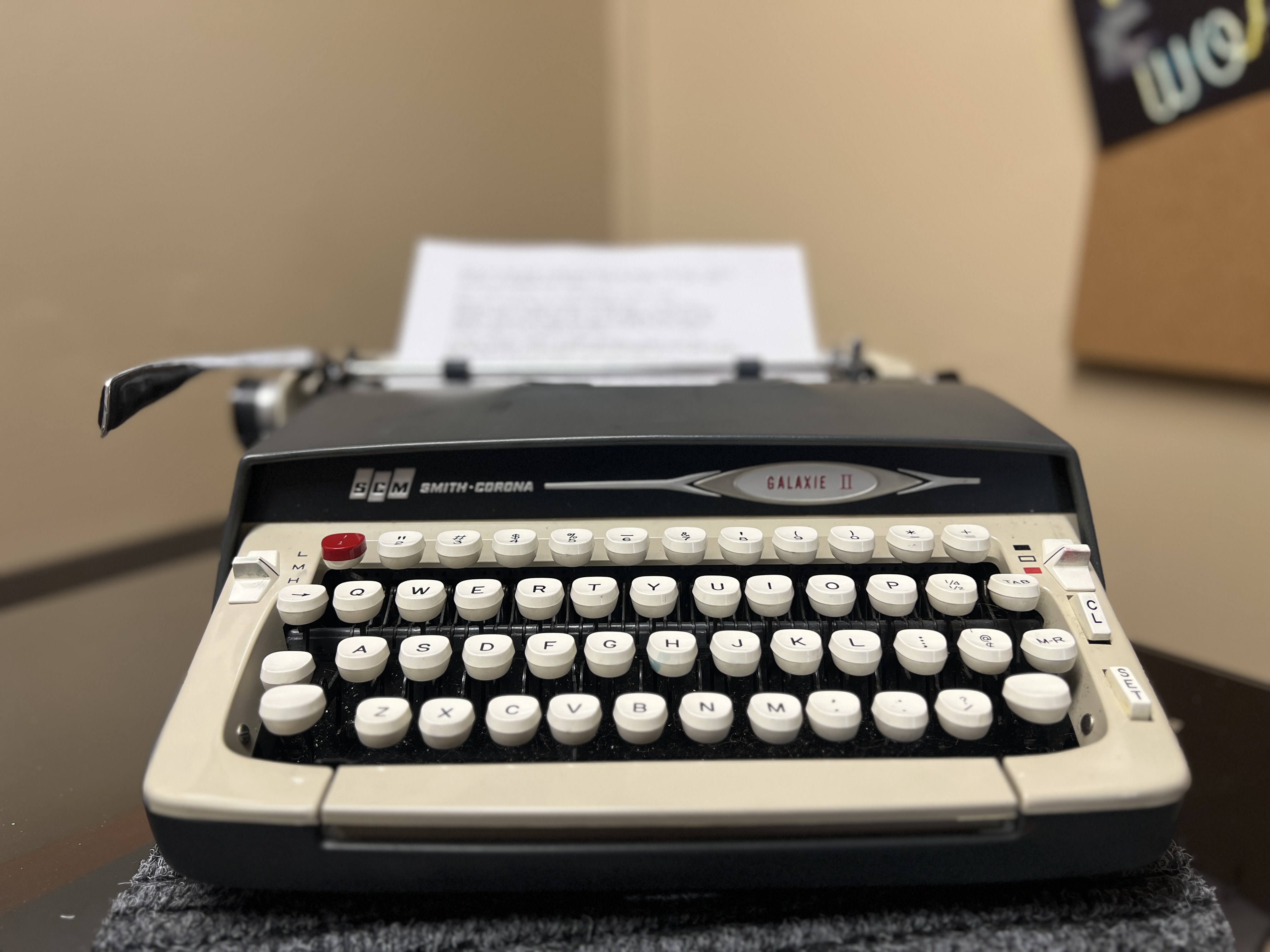
-
Why I’ll Miss NaNoWriMo
One thing I’m going to miss in November is National Novel Writing Month. I’ve been doing it on and off for about 20 years. Even “won” it once or twice.
But we found out in April that NaNoWriMo is no more.
NaNoWriMo was simple and yet difficult, too: Spend the 30 days in November writing at least 50,000 words of a writing project. That works out to 1,667 words a day if you keep up with it. As a professional writer, I do that just about every day, including weekends. But it’s one thing to write for pay, it’s quite another for a passion project.
NaNoWriMo was a set discipline, a grand adventure. And just plain fun.
By this time of October, I would be having fun trying to figure out what I was going to commit November too. I liked the idea that as it got colder outside, I could spend time inside in front of my MacBook, writing my own stuff. And I kind of like word counts, too. They are good rituals. I don’t get hung up on them, but I’m not scared by them, either.
And I liked by the end of the month, if all went well, you had a good start on a project. True, 50,000 words doesn’t make a novel or even a novella. But it was a start, and I started a lot.
And I finished some, too.
I think another thing about NaNoWriMo was its community. I also know several people turned their national novel writing month projects into actual soul books. They were inspirations to me.
Now, I know what you’re thinking: You don’t have to have that month to write a book. That is true. I have written long before NaNoWriMo and I will write after it, too.
But it was fun, wasn’t it?
-
Missing a legendary radio voice
Today is the first anniversary of losing a friend, WCBS Newsradio 88 in New York.
I know, it seems sad, saying I lost a friend in an inanimate object like a radio station. But what’s a radio station but made up of voices and the people behind them, keeping you company and telling you things, day and night, all year ’round? And this was especially connected to its audience. I loved it so much that no matter where I was, except for two years in San Diego, I listened to it whether it was the two-thirds of my life in New York or Connecticut, hearing it late at night or early in the morning thanks to its clear channel all over the East Coast, or via the Internet.
A year later, I still keenly feel the loss.
Why? WCBS was what I heard in the back seat when my dad was driving growing up. As a kid, I fell asleep to this station and woke up in the middle of the night, amazed that it was still on. (Those were the days when many TV and radio stations signed off.) And there wasn’t a big story between the late ’70s to this time last year that I didn’t turn to WCBS. ‘Course, it was even deeper than that. I got to know several people on WCBS, worked alongside their reporters in Connecticut and New York. And at least a little of my drive toward breaking news — some would say a compulsion — is because of WCBS.
I stayed up listening to the station all that Sunday night and I went outside and listened to the last 15 minutes in my car in the driveway. Wayne Cabot, the longtime anchor for WCBS, eased the station into its demise and it’s about as perfect an ending as you can imagine. I remembered most of the names and many of the bumpers and snippets called back many memories. By the time Wayne told about how he came to listen to the station as a kid — similar to my own story — it hit me hard. It was my Dad who brought me, at age 16, to the Manhattan headquarters of CBS News and WCBS on the personal invite of a legend, Douglas Edwards. That was the moment I decided I wanted to be a journalist.
Those final chimes and signoff and the silence at midnight, for the first time in 57 years, devastating.
-
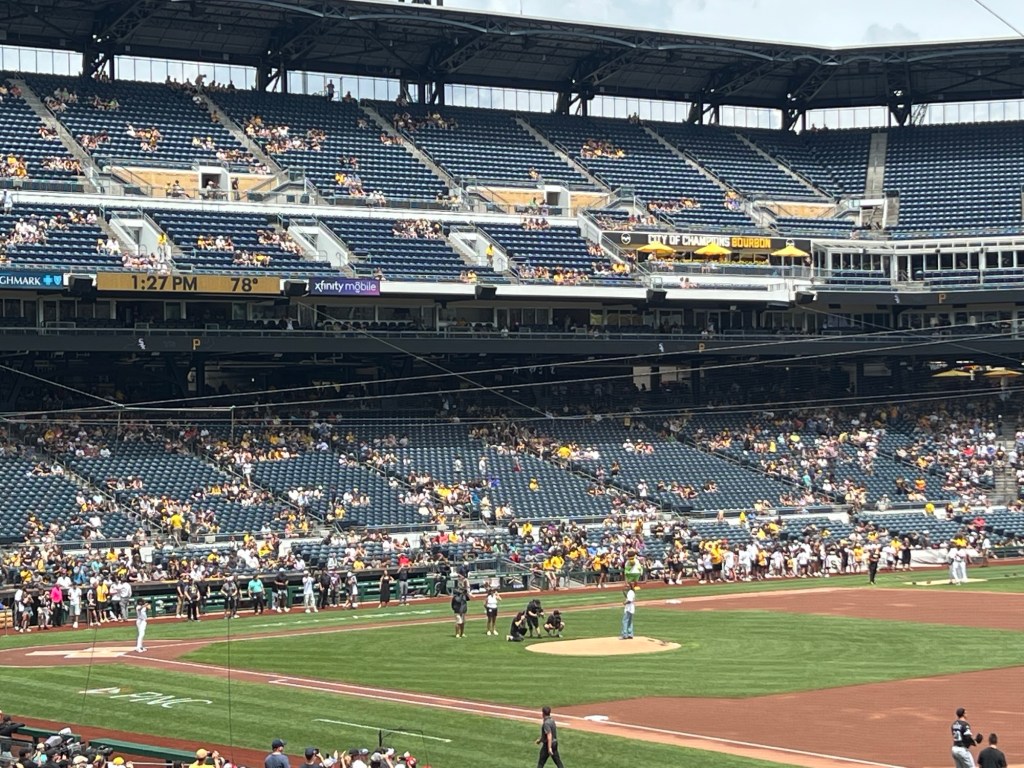
Great day for baseball!
-
Discovering Egg Creams and Lime Rickeys at Eisenberg’s
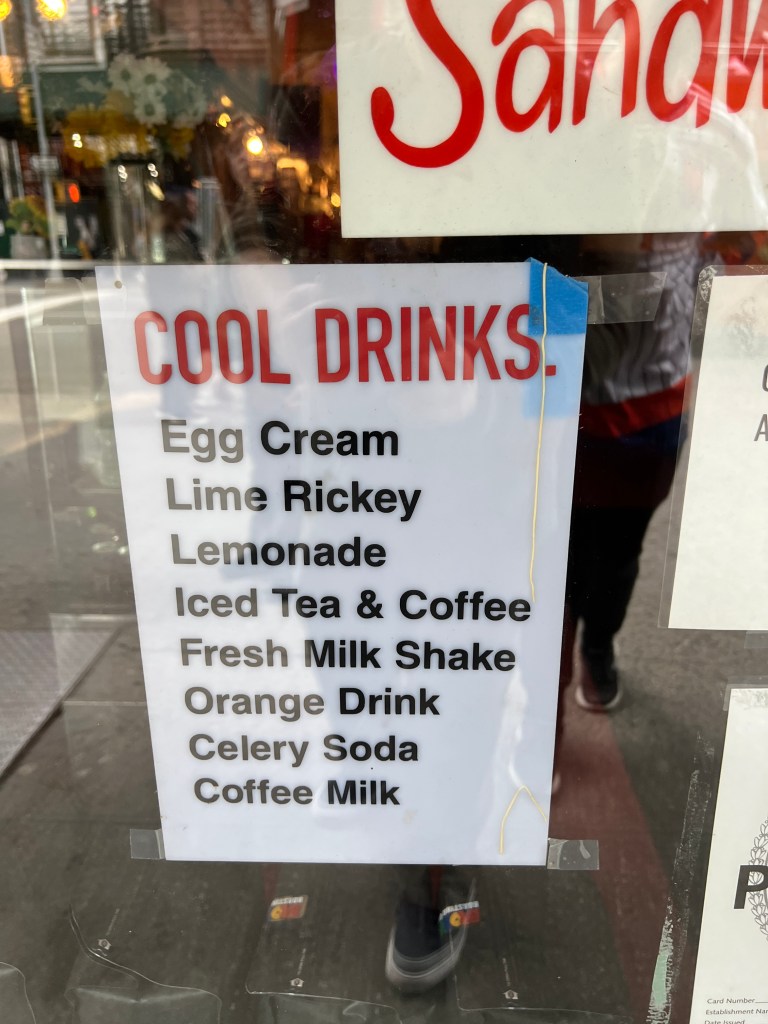
I was near 23rd Street and I couldn’t resist stopping by one of my haunts from my Chelsea days, Eisenberg’s, where they have been making egg creams and lime rickey’s since 1920. I couldn’t decide between an egg creams or a cherry lime rickey, and went with the latter.
If you haven’t ever had a handmade lime rickey, then you are really missing out. My dad used to take me at Brigham’s when we visited my grandmother’s in West Newton (Mass.), and I found this old timey luncheonette when I worked in NYC. It’s still exactly the way it looked 25 years ago, and the way it looked probably much longer ago than that.
-
Perhaps the Northern Lights?

Photo by Visit Greenland on Pexels.com Looks like there’s a chance again for much of the country to see the Northern Lights on Sunday night. Or at least to point their iPhones into the sky and see the colors they can’t see with the naked eye.
I missed last summer’s spectacular, for reasons not worth mentioning. But I saw them wonderfully last October. And I didn’t think I’d be lucky enough to see them again so soon, without going back to Northern Maine or Canada.
Here’s hoping!
-
RIP, Mike Peters
My Welsh family loved Tom Jones, of course. But I came of age digging a newer generation of music from the homeland, The Alarm and Super Furry Animals and a few Welsh-language bands. The Alarm, from Rhyl in NOrth Wales, rocked it hard in the ‘80s thanks to frontman Mike Peters, who died at age 66 this week.
Peters cared a great deal about being Welsh, and I would say that’s an almost universal national trait.
This is vintage Alarm, circa 1982.
-
How MTV Defined a Generation’s Sound and Vision
One of my younger colleagues asked whether OG MTV really was as influential as we older folks say.
Yes, yes it was.
Not all the time, not by a long shot. But at its best, MTV married sound and video in a way that blew away Gen Xers like me. I don’t know about you, but I waded through a lot of videos I wasn’t interested in on the off chance there’d be an alternative or new wave song I did want to see. How much time did I waste waiting for The (English) Beat’s “Save It For Later” or XTC’s “Senses Working Overtime”?
Or this video by The Cars, a band that I didn’t really appreciate until I saw the video in 1984 of “Drive” and understood it wasn’t anything else like they did. “Drive” is one of the better pop songs of the ‘80s, and that’s saying a lot.
This video was the kind of thing that was new in the ‘80s thanks to MTV, back before it started falling into what George Michael would rail against in “Freedom ’90.”
(BTW, kudos to actor Timothy Hutton, who created and directed the video. It’s a work of art.)
I didn’t have MTV in ’82 or ’83 when I was living in California, but my father in Connecticut did have it and the three times a year I’d visit, I spent a lot of time watching MTV. Like the entire summer of ’83 with the exception of spending a week in Aroostook County, Maine, and the Canadian Maritimes.
-
Edward R. Murrow’s Powerful Buchenwald Broadcast
Eighty years ago this afternoon, legendary CBS journalist Edward R. Murrow delivered one of the most important broadcasts of the 20th century, a report on his visit three days earlier to the concentration camp at Buchenwald.
It took Murrow, as cool a journalist as they come, that long to process the horror. This 9-minute broadcast is probably the most famous description, but nowhere near the only, of what it was like to enter a newly liberated Nazi death camp. Nor did Murrow capture the full scope of the Holocaust. That would come later.
The years haven’t dimmed the power of Murrow’s words. It’s a harrowing listen. But it’s an important listen. At a time when so much history is being shoveled into the memory hole or denied outright, we need to remember.
In high school, I became interested in Murrow after meeting through my Dad a few of the people who had worked with him at CBS. I’ve heard this and a lot of Murrow’s broadcasts, from “This Is London” pieces to the “See It Now” broadcast that’s the basis of “Good Night and Good Luck” and “Harvest of Shame.” I even held a script Murrow held while I was doing research at Yale for a high school paper on Murrow. I just listened to this again now. It still burns. Murrow was, without any training, one of the best journalists and speakers who have ever lived. That leaps out at me again.
But above all, the sheer horror of this and all that was done during the Holocaust..
“I pray you to believe what I have said about Buchenwald,” he said. “I have reported what I saw and heard, but only part of it. For most of it, I have no words.”
-
Why history (and translation) rock
If you read one thing today, then it should be this. It’s fascinating.
Home
About Me
Journalist and writer. Loves writing, storytelling, books, typewriters. Always trying to find my line. Oh, and here’s where I am now.


Leave a Reply