-
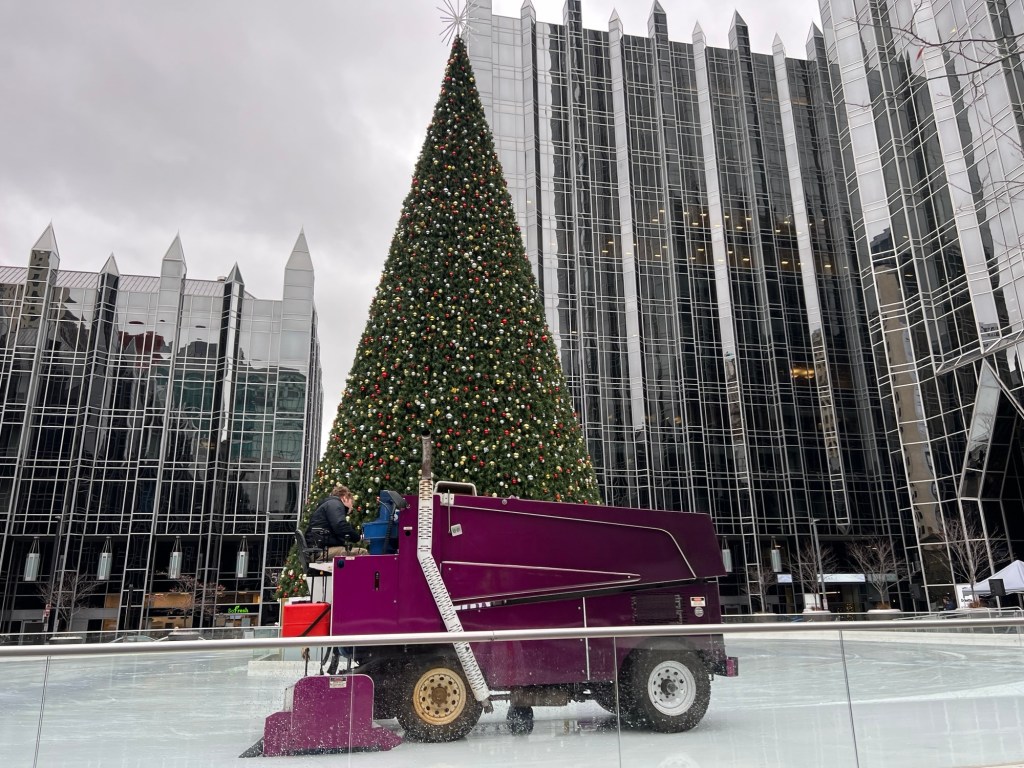
Zamboni
-
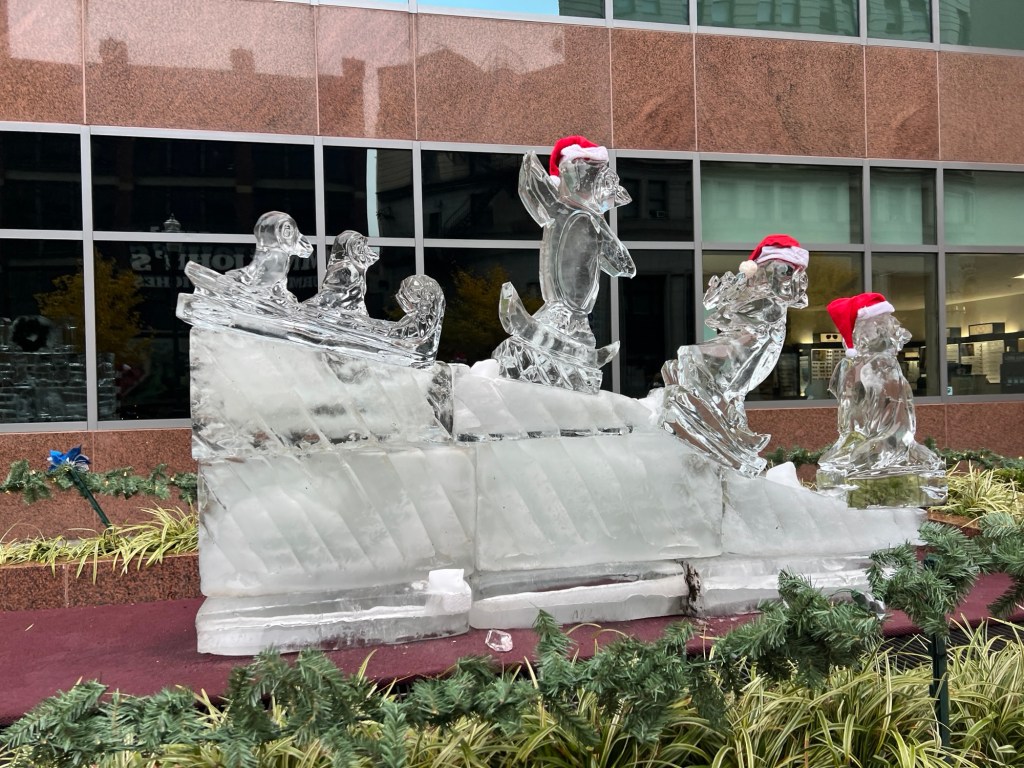
Nice on the ice
-
Don’t they know what day it is?
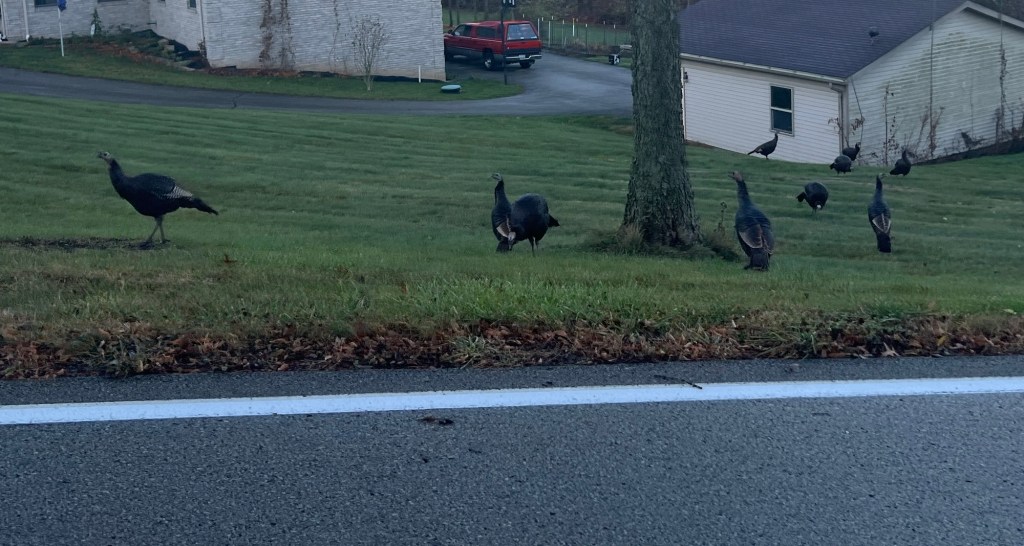
Seen on my drive, a bunch of turkeys who don’t know that Thanksgiving is coming soon.
-
An 80,000-year sight
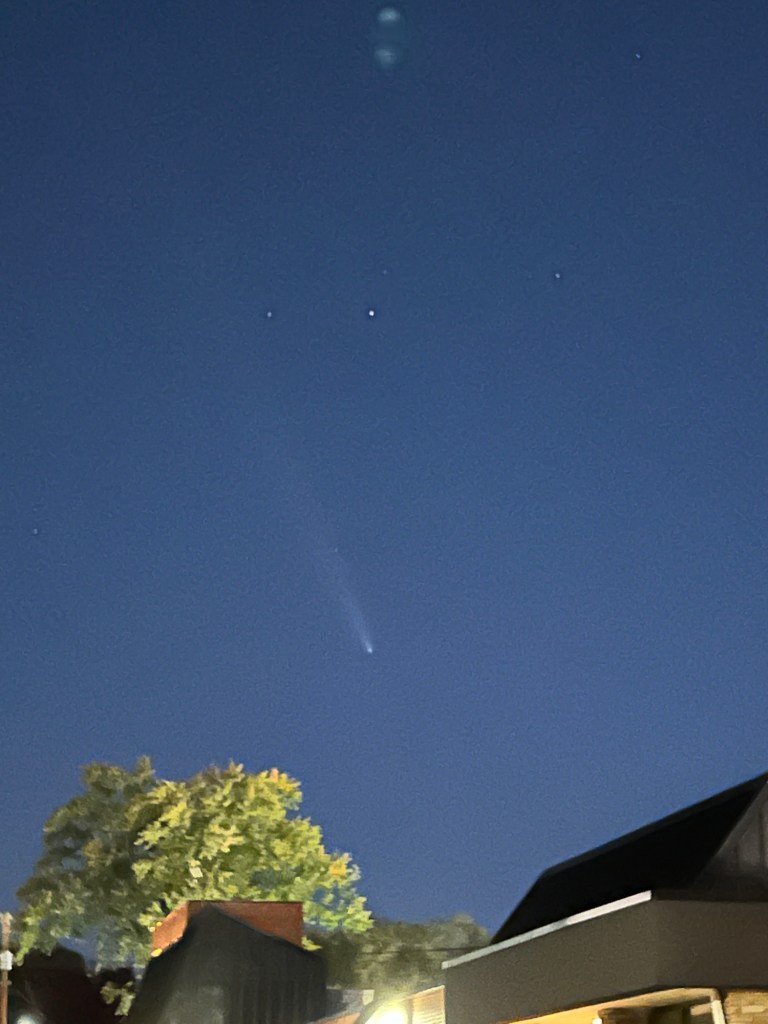
Glad I got to see this tonight. A happy accident.
-
Some kind of robot

,,, but I don’t know what it does.
-
Pumpkin patch life
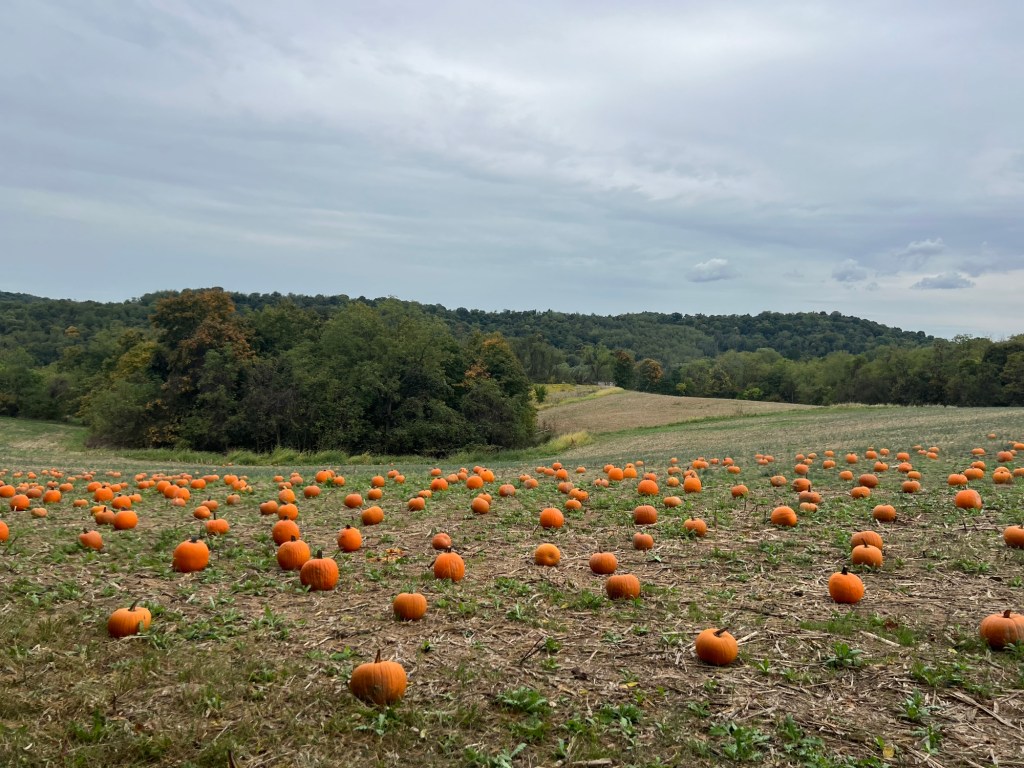
Pumpkin patches make me happy.
-
Gone but not forgotten
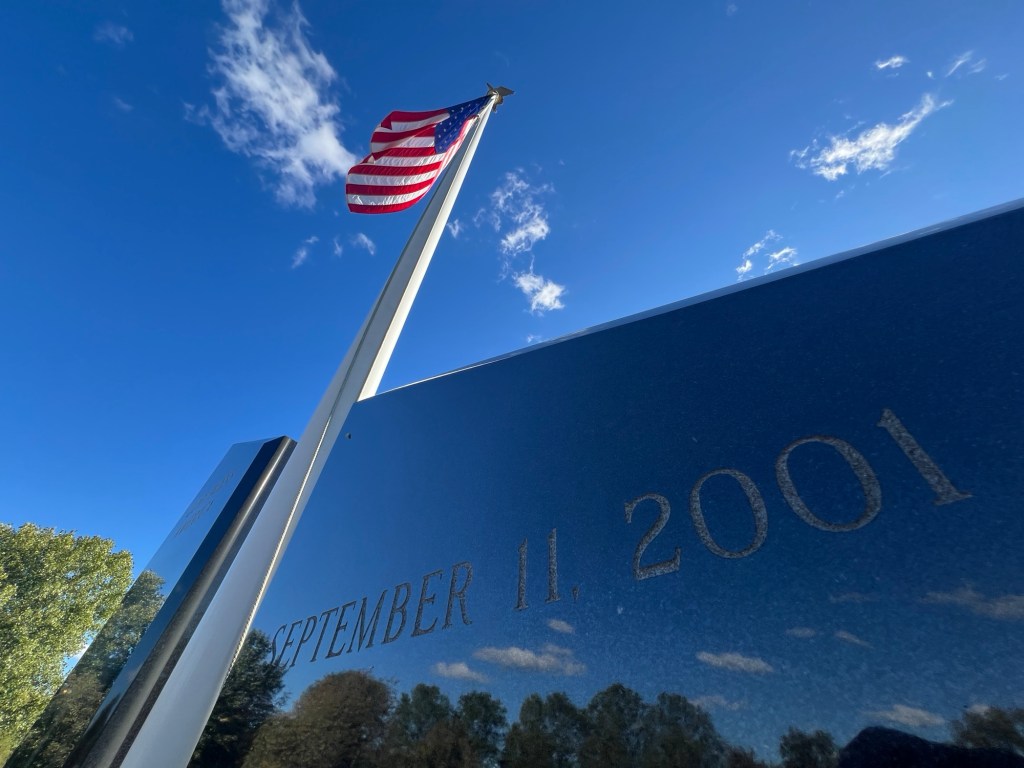
The Washingtonville 5 Firefighters Memorial in Washingtonville, New York, on Sunday. It’s a moving tribute to the five firefighters from the Hudson Valley village who were killed on Sept. 11, 2001. The village of Washingtonville, New York, an hour north of the World Trade Center, was forever changed on Sept. 11, 2001. Even before, it was known for its higher-than-average per capita of FDNY. The late Dennis Smith, who wrote the classic “Report from Engine Co. 82,” lived there. That day, five FDNY firefighters from Washingtonville died in the towers’ collapse: Firefighter Mark Whitford, Lt. Glenn C. Perry, Battalion Chief Dennis L. Devlin, Firefighter Gerry Nevins, and Firefighter Bob Hamilton.
Washingtonville never forgets. In a leafy part of the village is a memorial park with a playground and a large memorial to the Washingtonville Five. You expand that lens a few miles in either direction from Washingtonville and many more firefighters from there died that day.
“Dedicated to the honor and memory of America’s heroic rescue workers and innocent civilians who were the victims of the attack on the World Trade Center.”
Washingtonville never forgets. None of us ever should.
-
A loss that still staggers
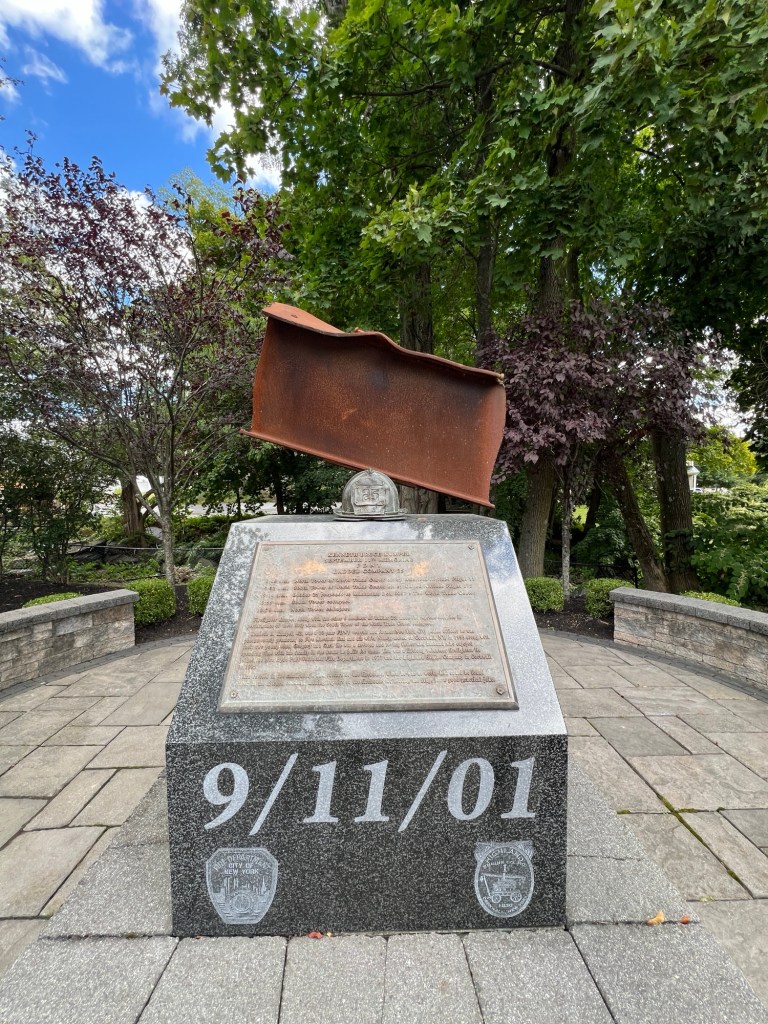
The Sept. 11 memorial in Cornwall, New York. I doubt there’s anyone in the Tri-State who didn’t know someone who was killed or wounded or survived Sept 11, 2001, at the World Trade Center. For as big and impersonal New York seems, here’s a secret: It’s not, really. The New York region is a lot closer-knit, with fewer degrees of separation, than I imagined growing up. It took Sept. 11 for me to understand.
The scope of the loss was staggering. Just about every town and village in New York and New Jersey and Connecticut within a 60-mile radius lost people at the Trade Center. That’s true in Orange County, New York, where I lived before and after Sept. 11, 2001. But the same can be said all through Long Island; up the Hudson Valley on both sides of the river; throughout northern and central New Jersey; Fairfield and New Haven counties in Connecticut; and of course, the five boroughs.
Many Orange County residents over the past five or six decades left The City for their suburban dream. Many of my neighbors in Monroe and Cornwall worked on Wall Street, on Madison Avenue, all over Manhattan. And significant number of Orange County residents either worked at the World Trade Center or served the FDNY, Port Authority police or the NYPD.
In Cornwall, New York, there’s a memorial to hero firefighter Kenneth Bruce Kumpel, who lived in town and was lost with the entire six-member Ladder Co. 25 when the South Tower collapsed at 9:55 a.m.
Kumpel was 42. He had a wife and two sons. According to the monument, he loved being a firefighter, and not only was 10-year FDNY veteran but a former NYPD officer, too, and a volunteer firefighter at the Highland Co. in Cornwall that is on the other side of the traffic circle. Kumpel and the 343 other FDNY firefighters — and the NYPD, Port Authority and EMS who also died — raced to the scene when everyone else fled.
I thought on a Sept. 11 impossibly far into the future when we lost Kumpel and nearly 3,000 other people in lower Manhattan, that it was worth sharing some of his story.
As the monument in Cornwall says in stone, “Lest we forget.”
We must not.
-
Saying goodbye to WCBS, a radio icon
You don’t go long in journalism, without saying goodbye to a laid-off colleague. It took less than a year into my career, and it’s been a constant ever since. I’m feeling that pain all over again with the shutting down of WCBS Newsradio 880. It’s been hard listening to each one of these anchors, reporters, producers, traffic reporters and others working behind the scenes to say goodbye. The first tranche was last Friday. Thursday and today were the final hours for people I’ve listened to for years: Wayne Cabot, Brigitte Quinn, Paul Murnane, Craig Allen, Tom Kaminski, Ray Hoffman, Sean Adams, I could go on and on.
They’ve all been pros, right up to the very end, even as listeners have probably gotten choked up. I know I have.
I’m glad they’ve had the opportunity to go out like that. While I’m not happy with Audacy for the decision, I praise its grace for letting an icon come to an end on its own terms. Journalism is an often cruel business and you don’t mostly get a chance to say goodbye, and sometimes you don’t get to say when you leave the stage. It’s a lot like life. James Thurber likened journalism to falling backward onto an open box of carpentry tools. It is, sometimes.
But WCBS, whose all-news format is two months older than me, I thought it would be on the air right up until Armageddon, reporting it all, just as it always did.
I take this personally because I can’t think of a time when WCBS hasn’t been in my ears. I’ve relied upon the news, invited the voices into my life, reported alongside their journalists in Connecticut and New York, even one time was heard on WCBS when I worked at The Hollywood Reporter. My parents even went to BU with one of the WCBS legends, Ben Farnsworth. The first time I saw a WCBS microphone at a news scene in Westport, Connecticut, I thought to myself, I made it.
Not only have I spent almost two-thirds of my life in Connecticut and New York, but the WCBS clear channel booms everywhere I’ve lived (other than two years in California). I’ve depended on it for the news, turned to it when the chips were down, laughed at the stories and poems of Charles Osgood and Dave Ross and the quips of anchors from Jim Donnelly to Wayne Cabot and so many others. The traffic reports of Tom Kaminski and others have kept me from many jams. And the steady voice and expertise of Craig Allen, who has been on WCBS since I was in high school, has been a lifesaver. It was Craig we listened to in September 1985 when Hurricane Gloria barreled from the Atlantic to Long Island and then the Sound and right into our house.
WCBS should have gotten all the awards for their coverage of 9/11 and its aftermath. I heard a fair amount of it live, in between my own bouts of reporting and editing on that day as a New York newspaper journalist. You can listen to it online, if you can stand it. They were at the top of their game that day and the days afterward.
Their longtime slogan was “more than just the headlines,” a not-so-subtle dig at their rival 1010 WINS. I’ve always known that WCBS was more than just the headlines. My dad had WCBS on constantly in the ’70s and after a while, even when I was 10 or 11, I started putting it on wherever I was and all through the night. There was something alluring about a constant stream of news in The Greatest City in the World, something powerful when big stories broke and their blanket coverage, and to be honest, comforting that when you were up in the middle of the night for whatever reason, WCBS was there, live, too.
-
Soda’s sell-by date

Maybe the soda would have tasted better if it had been in a can instead of a plastic bottle? Turns out soda does go bad. And sooner than you think.
I never really thought of this, as my soda intake (more than it should) is predicated on the drink-it-now strategy. I can’t remember the last time I had bought more than a 2-liter bottle and kept it.
It’s in, then out. Or consumed relatively on the spot.
We found a six-pack of Dr. Pepper that had been forgotten downstairs. (My daughter used to like Dr. Pepper.) I didn’t think much of it, other than to take one with me today.
I opened it, began to drink, and wondered where all the fizz went. It tasted … flat. Is flat still a word that’s used for soda?
Because that’s what it was.
There had been no carbonation in it, a lot like it would have been if the soda had been left opened on the counter for a day or two. Except here, I was the first to open it.
Puzzled for a minute, until I looked at the expiration date: October 2023. That’s not quite a year. If I had bothered to look, I probably would haven’t even bothered to drink it. But since I did, now I know why.
There really are expiration dates on sodas.
Home
About Me
Journalist and writer. Loves writing, storytelling, books, typewriters. Always trying to find my line. Oh, and here’s where I am now.


Leave a Reply