-
Ives does Dylan
Here’s a combination that I wouldn’t have thought of, Burl Ives singing Bob Dylan. Spoiler alert: it’s quite good. Ives is a complicated figure, much more so than his reputation as the host of “Rudolph” would suggest. He was a folk music pioneer who worked with Woody Guthrie and Peter Seeger, really menacing actor (and Oscar winner), and someone who lost Seeger’s respect after testifying during the blacklisting.
-
Beginning 2025 and every year
I have an odd New Year’s tradition for the past 30+ years tradition: the first song I listen to every year is Artie Shaw and His Orchestra’s version of Cole Porter’s “Begin the Begiuine.”
It happened because in the early ‘90s, my aunt had found a bunch of my paternal grandfather’s records and said I could take whatever I wanted over Christmas break. A lot of big band, some Burl Ives and Roger Miller among the three dozen or so LPs through about the late 60s. I brought home the big band records and this was the first I put in the turntable, a little after I woke up on New Year’s Day.
I was hooked, and the habit stuck. It’s hard to go wrong with Artie Shaw and Cole Porter.
-
Apollo 8’s mic drop
Fifty-six years ago this week the three brave men undertook up to then was the most spectacular and hazardous journey ever undertaken: Apollo 8, the first trip from the Earth to the Moon. That took a lot of planning and guts, and think about it: This is a trip that we haven’t been able to replicate since 1972, and Apollo 8 was first.
And on Christmas Eve 1968, broadcasting live the first views of Earth and the Moon, Frank Borman, Jim Lovell and Bill Anders delivered a Christmas Eve message for the ages. It’s in my opinion one of the most powerful few minutes of live TV ever, then and now.
You see, 1968 was one of the toughest years we faced as a country, violent and tragic and full of war at home and abroad, and a Cold War and nuclear threat over us all. Martin Luther King Jr. and Bobby Kennedy were taken in 1968 long before their time and those losses still reverberate today.
But Apollo 8’s voyage ended the year with a triumph that showed spirit, grace and peace. In the words of one ordinary citizen to the crew of Apollo 8: “You saved 1968.”
I was only a little over a year old in 1968 but I had a CBS News record when I was a kid of that pivotal year and I was mesmerized by the drama and this message. I have listened to it on Christmas Eve every year since the late ‘70s.
I know it by heart, but even now, Frank Borman’s ending words in those times still catches me.
“God bless all of you, all of you on the good Earth.”
-
A 1971 monster hit, and its unironic cover
Michael Brewer — half of the duo Brewer & Shipley — died Tuesday at age 80. Maybe you don’t know Brewer & Shipley by name but you probably know their most famous song, “One Toke Over the Line,” which I can’t believe was actually a hit.
Not only that, but it was also performed in 1971 on the “Lawrence Welk Show” in a really earnest way because apparently Welk thought it was a “modern day spiritual.”
Ah, the ’70s. where a song about marijuana, the Starland Vocal Band’s “Afternoon Delight” and Rick Dees’ “Disco Duck” could all be super hits.
-
80 years after the Battle of the Bulge
This is the 80th anniversary of the Battle of the Bulge, the long and brutal clash between the Allied Army and the Nazis in a cold and snowy Dec. 16, 1944, and Jan. 28, 1945, along the German, Belgium and Luxembourg borders. It was a fierce counterattack by the Nazis as the Allies neared the border, and it came sadly as a surprise and trapped a lot of soldiers. That the Allies prevailed took a lot – 19,000 soldiers killed and another 65,000 wounded – but it also led to the defeat four months later of Germany.
It also cuts through my family history. My grandfather, 1st Lt. Edward A. Gough, was there and fought through the entire battle. He survived unscathed from the Bulge, at least physically. He landed a day after D-Day and served in the First Army through Normandy and that drive to the Ardennes, and was wounded in action once that September, according to the service record I have.
It’s stunning to me how quickly Americans forget their history, and fail to appreciate the sacrifices of the men and women who came before us. Even when we owe a lot to them.
-
Glenn Miller and ‘Sun Valley Serenade’
Bandleader and WWII mainstay Glenn Miller disappeared 80 years ago Sunday as he flew in a small Army Air Corps plane going from England to Paris. If you have seen the biopic “The Glenn Miller Story” starring another WWII hero, James Stewart, then you will remember that scene when the world finds out he’s gone.
“Sun Valley Serenade” has been one of my guilty pleasures since I was a teenager, because my grandparents taught me to love old movies and big band music. This is both. It’s one of only two movies featuring Miller, and it’s a blessing we have these performances on film. “Chattanooga Choo Choo” – with Dorothy Dandridge, Nicholas Brothers, the Modernairres and Tex Beneke – has got to be up there with one of the finer musical performances put on film.
A lot of legends here – among the band as well as a young Milton Berle, Lynn Bari, John Payne and especially Sonia Henie – but only one is still alive: 102-year-old trumpet player Ray Anthony, who you see in this clip. He’ll be 103 in January.
-
Black Friday

I can’t believe it but I am actually in a shopping mall on Black Friday. I don’t think that has happened since the ‘90s, and I really wish I kept up the streak.
-
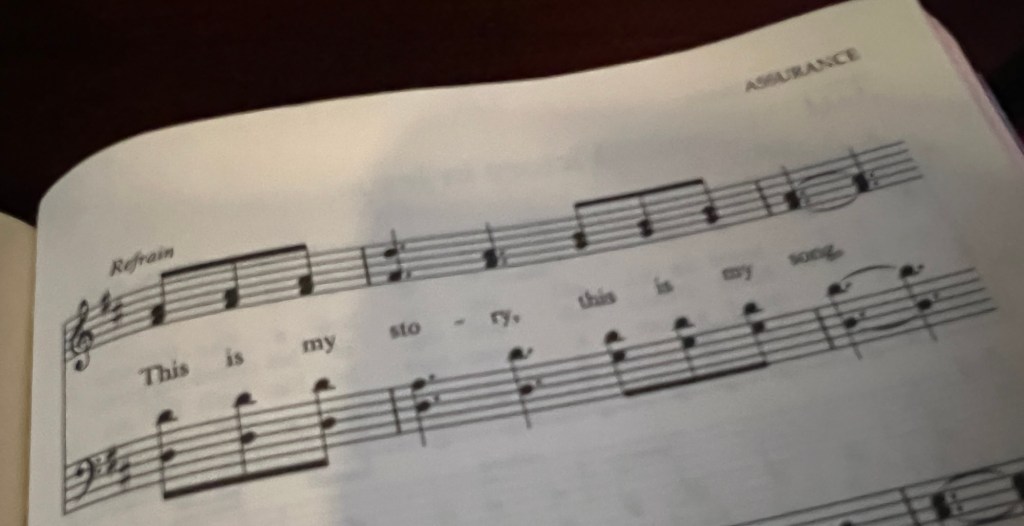
Story, song, all the day long
-
Zamboni

-
Nice on the ice

Home
About Me
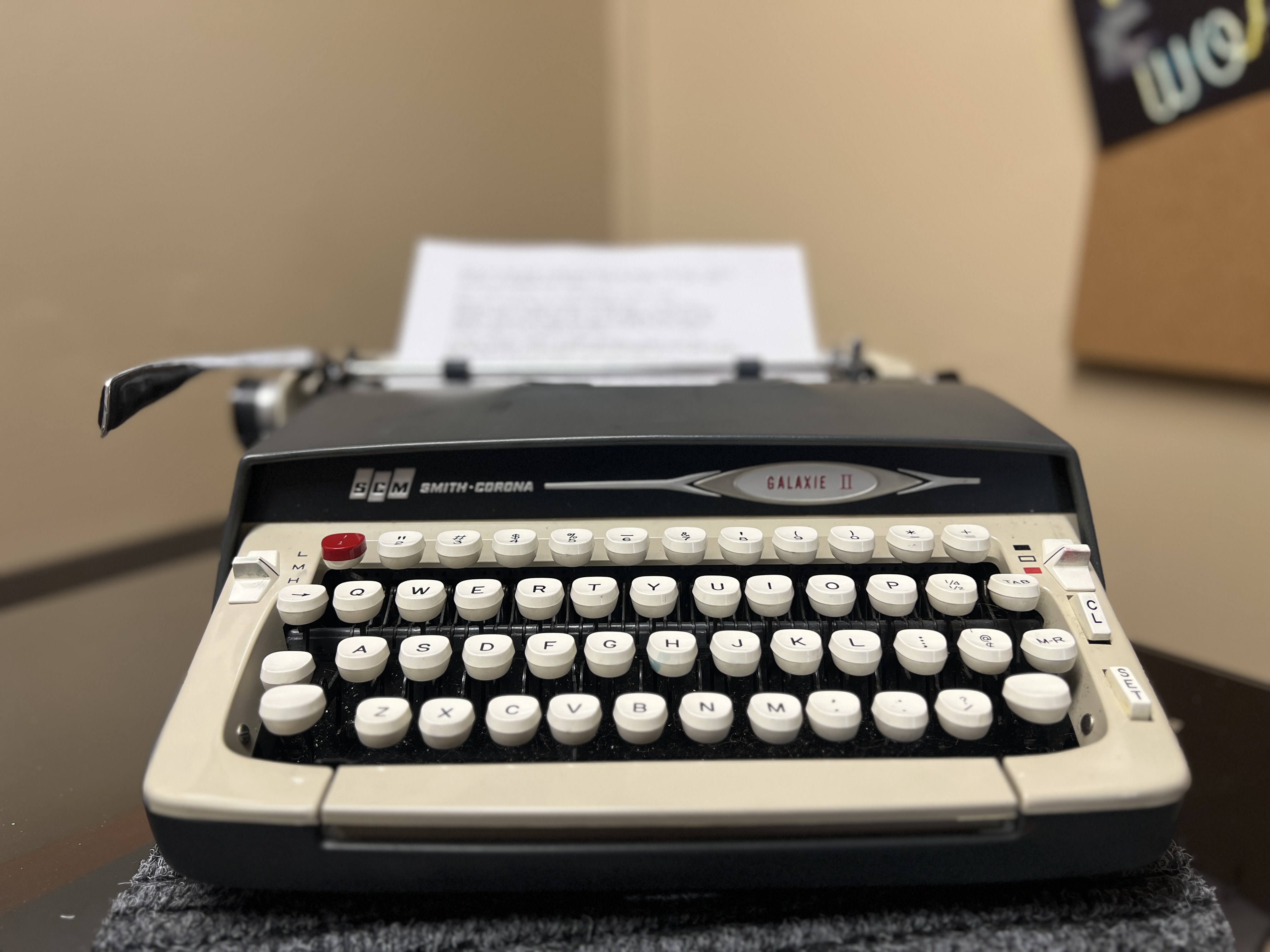
Journalist and writer. Loves writing, storytelling, books, typewriters. Always trying to find my line. Oh, and here’s where I am now.
 Nows and Forevers
Leave a comment