-
A coronation-free zone
Yes, I have been to Westminster Abbey. I have studied the various kings and queens of England. I have even seen the Crown Jewels at the Tower of London.
That still doesn’t mean I give a tosh about the coronation if King Charles III. And a report from over on this side of the Atlantic, I haven’t heard anyone talking about it.
Just let me know when I can listen to the BBC again.
-
A door closes on the pandemic
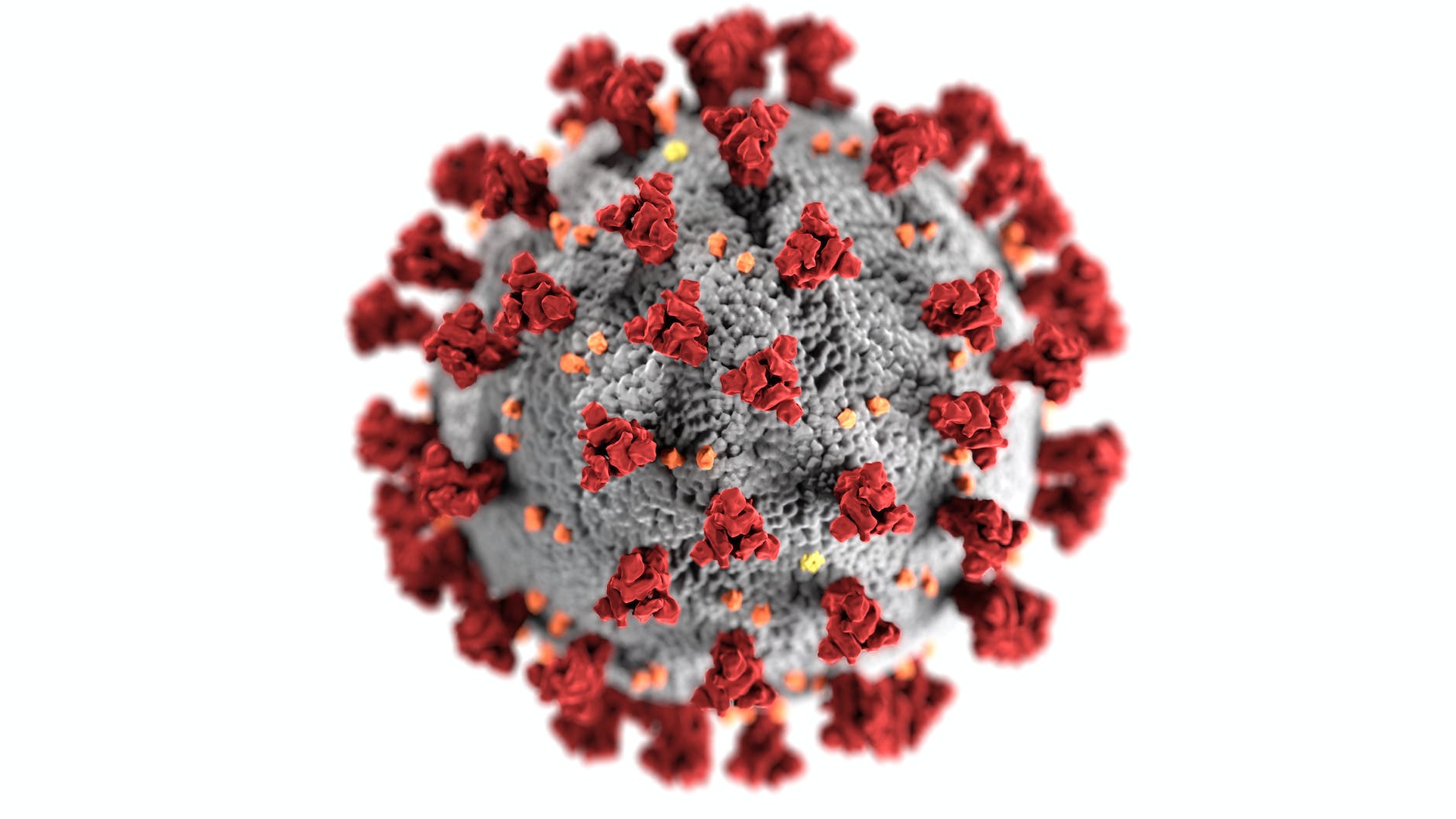
Photo by CDC on Pexels.com Another chapter is closing on the Covid-19 pandemic.
The World Health Organization announced Friday an end to the global public health emergency that it put into place in January 2020, back when the virus was rushing through Wuhan, China, and about to explode elsewhere in the world. Since then, at least 7 million people have died and the top WHO official said probably 20 million people died in the last three years of Covid-19.
Add to that the U.S. is going to be ending its public health emergency next week, and it’s clear we’ve turned a corner on Covid-19.
Some would say that we reached that point a long time ago. Others would say it’s too early, that Covid is still a big threat to public health.
I look at my own life and find that I fall somewhere in between. I cover health care in my job as a journalist, and it’s true that Covid-19 just doesn’t come up as much as it did even a year ago. There are still people getting the virus, there are still people being hospitalized, and there are still people dying from it. But, according to several physicians and hospital executives I’ve talked to, the situation is nowhere near as dire as it was even a year or so ago.
And that makes sense. There’s a level of immunity in the world now. I know a lot of people who have had Covid, some multiple times. There have also now been two vaccination rounds, one for the original and the other for the next-generation variants. And there is still treatment that works in many cases to keep most people with Covid-19 alive. I say “in many cases” because treatment doesn’t always work, sadly. I think we all know that in our own lives.
A year ago, I was masking all the time and had just received my third booster shot. I wasn’t in the office that much at that point, although I was coming back more often, and I always wore a mask. I was out in the world, whether it was for work or personal time. But I was still careful. I even flew to the United Kingdom and spent eight days there a year ago, and I tested constantly (you had to still get a negative test to re-enter the country then) as well as wearing a mask all but outside and one time with friends at dinner. Beyond that, I ate outside or, in one case, ate on an off-hour and well away from others.
I stuck to that for the most part through the summer of 2022. But in September, when I received the bivalent booster (apparently being one of the few to receive it), something changed. I started to relax more. I knew I was still at risk to get Covid-19. But I also realized that, at some point, I needed to get back to living. I stopped using masks at work. I stopped using them when I was out. I avoided people who were sick — that’s just good practice anyway — but I didn’t constantly think about Covid.
People around me would say that I was late to that party. Where I live, it has been a long time since people took a lot of precautions, maybe as far back as the summer of 2020 and certainly before the vaccines were out in the winter of 2021. I thought that was unwise. But gradually through 2021 and 2022 I saw more people/most people going through their lives without taking many or any precautions.
And gradually, I did, too.
That makes me relieved but it also makes me feel guilty. One person I know died of Covid in the early months, and many others have been sickened and some have long Covid. There’s no denying that millions of people around the world have died from Covid, and the pandemic changed so many things. Hospitals, and health care workers, will never be the same. They deserve all the credit in the world for what they did, going to work not only in battle conditions but also at the risk of their health and their families.
But I feel guilty because of how the world changed and how many people were taken from us. It’s not a political thing for me. It’s a human thing.
And there’s also the fact that governments and WHO can declare the pandemic emergency over. But that doesn’t mean that it is. Covid will be with us for the long term, just as the flu and the common cold are. I fear that we’re not ready for the next pandemic, and there are structural problems that experts say continue to be out there, hamstringing us.
Or as Tedros Adhanom Ghebreyesus, the director of WHO said today:
“This virus is hear to stay. It’s still killing and it’s still changing.”
-
Baseball, it really is a field of dreams

PNC Park, the home of the Pittsburgh Pirates. The feel-good story of last week in baseball was Drew Maggi’s MLB debut after 13 years in the minors. Maggi, who is 33 years old, had languished in the lower echelons of baseball until a surprise callup by the Pittsburgh Pirates.
Took a few games, but Maggi had his first MLB at bat as a pinch hitter, late in a game. He drove his first major-league pitch deep but foul, and eventually struck out. But the reaction that Maggi got, from the PNC Park fans and among the Pirates broadcasters, it could have been a home run. That has to be one of the most joyous strikeouts in baseball history.
It’s hard not to root for Drew Maggi. And I felt bad when he got sent down to the minors, although that’s an occupational hazard for a ballplayer.
I thought about that again when I read a New York Times article this weekend about 38-year-old three-time All Star Daniel Murphy, who finished up a 12-year career in September 2020.
Or maybe not. Murphy is trying for a comeback, having joined the independent league Long Island Ducks, with an eye for maybe making it back to The Show. It’s happened before: The Ducks themselves, in 35 years, have seen 27 of their players play in MLB. Murphy wants to be No. 28.
I remember Murphy when he broke into the Big Leagues in 2008 with the New York Mets, which beyond the Red Sox is probably the team I’ve rooted for the most (although it’s not even close with the Red Sox, and I hated the Mets for the 1986 World Series). Murphy played well — he was a three-time all star, including in 2017.
“I didn’t realize how cool our game was,” Murphy told the Times, explaining why he’s back in baseball. After watching his kids play ball and Ken Burns’ documentary “Baseball,” Murphy decided to try again.
“I think I’ve got a bit of baseball left in me, and I want to find out,” Murphy told The Times.
It remains to be seen whether Murphy will get back. To get to the MLB level, you have to be very good — extremely good. For every spot in the majors, there are many, many players who didn’t make the grade. And others who were there only a short time, only a little bit longer than Moonlight Graham.
That Murphy was there at all, he and his talent overcame overwhelming odds. Not sure about what the odds are for him to get back, but he’s going to try. And that Maggi had his first MLB at-bat after so long in the minors, also amazing. I know I never had that level of talent, even though I loved baseball so much when I was a kid.
Of course, Maggi’s story doesn’t have a Hollywood ending. He played one more game without a hit, and got sent back down to the AA Altoona Curve where he was playing before his callup.
I hope Maggi will be back, playing for a Pirates team that has been scorching hot in the first month of the 2023 season. The Pirates are 20-9, with the third-best season opening in its history and they’re 11 games over 500, the first time since they made the playoffs in 2015.
Having Maggi on a World Series-winning Pirates team in 2023? That would be a Hollywood ending.
-
A stellar songwriter
If there are songs that help to tell the story of your life, then Gordon Lightfoot has one or two songs on my personal soundtrack.
For better or worse.
Looking over popular music over the past number of decades, there are some artists you don’t really understand why they became famous, and at the same time you thank God that they did.
Gordon Lightfoot, who died a Monday at age 84, was one of those artists.
It’s hard to believe, looking back over the course of 50-something years, that Lightfoot was as popular as he was in the 1960s and 1970s. His first solo hit, “If You Could Read My Mind,” is a multilayered and pained look at a broken marriage, written when his own first marriage was ending. Maybe his most famous song ever, “The Wreck of the Edmund Fitzgerald,” is about what might otherwise have been a long-forgotten Great Lakes shipwreck.
It’s hard to imagine in 2023 that either could have been the tremendous hits they were. But both were top five songs in the ’70s, with “Edmund Fitzgerald” reaching No. 2 on the Billboard Hot 100. Lightfoot was a pioneer in folk and folk rock.
I have had Gord’s Gold as a record, a CD and then on my iPod and iPhone since the early 1980s. I am not ashamed to say it’s one of my favorite “best of” records, and I often played my dad’s other Gordon Lightfoot albums when I was a kid. What great songs:
“Sundown”
“Carefree Highway”
“Rainy Day People”
“Cold on the Shoulder”
“Cotton Jenny”But my love of his earlier music was just as strong, as I have been listening to Peter, Paul and Mary for even longer. Two of their earlier hits, “For Lovin’ Me” and “Early Morning Rain,” we’re written by Lightfoot when he was a young songwriter, before he became famous.
Still love this line:
“You can’t jump a jet plane, like you can a freight train.”
And yet it’s more, as I go back to the soundtrack. Songs have meanings in your life, whether you realize it at the time or not. And “Carefree Highway” has hit me pretty hard in recent months, in a way it has never before.
-
A coronation yawn
I keep waiting for someone I know, many of whom know I have ties to the UK, to ask whether I am getting up early next week to watch King Charles’ coronation.
As we say in Welsh, dim diolch. That means no, thank you.
It’s true I have been known to get up early for a rocket launch or something astronomical. And even though this will be the only British monarch coronation since my parents were kids, I have no interest. Even though a few trips to London ago, I took my daughter to the Tower of London to see the Crown Jewels and we spent a late afternoon at Westminster Abbey, where the coronation will be held.
The Monarchy, and the public fascination around it, just isn’t my thing. I am kind of surprised any American gives, as they say, a tosh.
-
The White House Correspondents Dinner and me
My journalism career has taken me a lot of cool and exclusive places. But not the White House Correspondents Dinner.
And I’m OK with that. I did for several years in the 200s attend and cover the Radio/TV Correspondents Dinner, the lesser-known but still star-studded gala that draws the president one year and the vice president the next. And it brings in many of the same crowd, although it hasn’t had the extra touch the WHCD does.
And the Radio/TV Correspondents Dinner interesting to cover. I sat next to a cabinet secretary, a presidential campaign adviser, any number of TV journalists and network presidents. That wasn’t because I was important; it was because my then-employer, The Hollywood Reporter, was. It could have been anyone there, although I’m glad I had the experiences. I ran into a lot of famous people, political and otherwise. But those stories are for another day …
I knew about the WHCD even before I covered politics and the media, because I had been a faithful C-Span viewer in the ’80s and ’90s.
I had watched several of the big moments, including Stephen Colbert’s takedown of President Bush, in character, right next to him in 2006. But my lasting memory of the WHCD came six years before that, in April 2000. Back then, I was living in Caribou, Maine, about 10 miles from the Canadian border and seemingly 1,000 miles the halls of power that WHCD attendees inhabited. And working at a small newspaper in far northern Maine, I have to say that it was 1,000 miles from my thoughts, too.But one Saturday night, alone and with absolutely nothing to do, I flipped the stations and found the C-Span coverage of the dinner. At that moment, there was a chyron that said “Waiting for the president’s speech” or something like that, and it was just a wide shot of attendees eating and chatting in a hotel ballroom.
Then, a few minutes later, as I debated how long I wanted to wait, there was a video from “The West Wing.”
The political drama starring Martin Sheen and Allison Janey had just started, and was about to complete its first year. I was hooked on it immediately, and it was the only show I watched religiously, now that “Sports Night,” also by Aaron Sorkin, and “Star Trek: Deep Space Nine” were off the air. “The West Wing” was just that good.
The video, I guess you would call it a spoof, showed the real White House press secretary, Joe Lockhart, finding himself in “The West Wing” universe.
I mean, kind of. The actors were playing themselves, not their characters, on the “West Wing” set. There were a lot of great gas, smart writing, and the payoff at the end is pretty funny. I don’t want to spoil it, but it’s funny.
Really funny. And not just because of the “people walking quickly through the hallways.”I am not going to spoil anything, but it’s priceless to hear Rob Lowe and Bradley Whitford wonder whether they’re going to get the A-story or “whether we’re going to be the guy with three and a half pages of exposition on the Census.”
The skit was, for a long time, hard to find. It was somewhere, hidden away, in the C-Span archive coverage of the event, but the video ran three hours long and there was nothing calling it out so you had to look. YouTube hadn’t been invented yet. And then it took several years later for someone to upload it. To my knowledge, the “West Wing” skit was never available anywhere, no doubt due to clearance issues. It’s not on the Season 1 or Season 2 discs, which I have.
Which is a shame. I know a lot of “West Wing” fans who had never heard of it. I certainly wouldn’t have, even though I am a huge fan of the first two seasons, if I hadn’t accidentally stumbled upon it. The skit was funny 23 years ago and a lot of it still stands up today. (Allison Janey revived her character, CJ Craig, for another WHCD bit a few years ago.)
It certainly holds up better than the other video from the evening, a video chronicle of how President Bill Clinton was spending his last months in office after two terms. I remember being amused at the time, although that one doesn’t age as well.
I don’t really watch the WHCD coverage anymore, although I caught a bit last night. I did watch one or two since I left the media beat a dozen years ago, although I’ve got a relatively strict policy of not looking back, so I don’t seek it out.
Plus maybe it just doesn’t feel as funny anymore.
-
A forgotten cereal
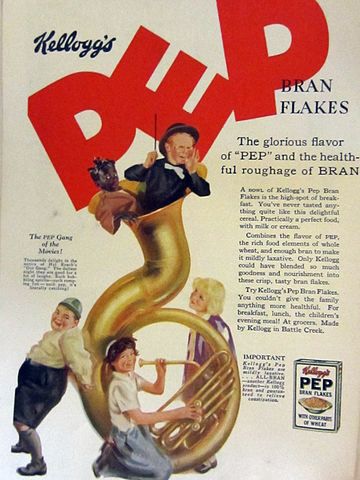
A Pep ad from the 1940s. Listening to old time radio shows you come up against old-timey brands that came and went long before you were on the scene.
Sal Hepatica, Fletcher’s Castoria, Lux, to name just a few. This week I came across another long-gone brand, Pep Cereal.
Pep sponsored “The Adventures of Superman,” which ran on the Mutual Broadcasting System in the 1940s. I had never heard of it, even though it was made by “Kellogg’s of Battle Creek,” which I had heard from.
So of course I had to look it up.
“You’ve never tasted anything quite like this delightful cereal,” read an ad I found while Googling.
I will never know, of course. They stopped making it in the 1970s, which I was definitely and under-12 cereal consumer but never saw a box nor tried it. Maybe my parents, who were young when this Superman episode was first on in the 1940s?
“Not really,” my father said when I asked him.
Guess he wasn’t a Superman fan.But even if Pep is long gone, some vestiges survive: Namely the pins and paper airplane models that came in every box, thanks to eBay.
The Superman announcer would interrupt the action every once in a while to talk about Pep, and to tell kids to collect all the pins. It being the summer and early fall of 1945, at the end of World War II, the pins there were the insignias of various Army Air Corps, Navy and Marine Corps air units.
You can find some antique boxes, a lot of pins, and, amazingly, the paper airplanes. Thanks to eBay.
-
Learning another language in later life helps unlock brain potential
Maybe the last two years of intensive language study have had an extra added benefit. It may help stave off dementia.
The study published recently in the academic journal Neurobiology of Aging is yet more proof that regularly speaking a second language from when you’re younger helps you when you’re older.
It didn’t look at people like me, who picked up another language when we were older. Instead, it studied people who spoke two languages daily beginning when they were youth, and how that helped their memory and recall tasks. And they used MRIs and cognitive assessments to do that.
What did it find? That if you are bilingual, you’re generally better off as you get older when it comes to remembering and using your brain.
“Bilingualism may act as protective factor against cognitive decline and dementia,” the authors conclude. “In particular, we observed that speaking 2 languages daily, especially in the early and middle life stages might have a long-lasting effect on cognition and its neural correlates.”
It wasn’t the reason I began studying languages — well, one language in particular — a few years ago. But I will admit that the effort also helped use more of my brain, in different ways than I was used to, and that has I think paid dividends beyond expressing myself in another language.
Although that has been cool, too.
I have been, for the most part, monolinguistic. I spent my entire middle and high school years, along with college, studying French and, living so close to Quebec, I got to use it a fair amount. But I never really kept up with it and I never really took the next step, which was thinking and writing profusely in French. So it went away, for the most part. I can help my daughter with her French homework, that’s about it.
But it wasn’t until I began to study Welsh via Learn Welsh/Dysgu Cymraeg — in intensive classes over Teams and Zoom — that I really could say I was bilingual. For hours upon hours a week — between 10 and 15 hours a week in class, all in the early morning hours East Coast US time, sometimes seven days a week — I went through the first two years of Cymraeg and into my third year. I can honestly say that it was one of the most profound learning experiences of my life: the language, the history and culture I absorbed, the tutors and the students I met. They were friends not just online but offline, and I’ve visited with several on my trips to Wales since.
Some day I’ll write about how wonderful an experience it was.
But beyond all that, I learned something very valuable about myself: That I had more of my brain that I could use and that I could tackle something quite difficult and unexpected, and succeed. It wasn’t easy, and I was definitely not the most facile learner. There are some days that I woke up and went into a cold sweat with all that I had in my brain and all that slipped out in Cymraeg. But there were other days and nights when I would wake up in the middle of a dream in Welsh.
I wasn’t the only one who was older who was learning Welsh. In fact, there were many students in my classes and special sessions who were in their 60s, their 70s, their 80s and who were absolutely passionate and talented students. They were, and are, inspirations. And more than one of them told me that they were studying not only because they wanted to learn Cymraeg, but because they wanted to push back against the potential for dementia.
For reasons that this new study makes clear. -
An epic life
https://www.washingtonpost.com/lifestyle/2023/04/25/harry-belafonte-dies-appreciation-haygood/
We lost a giant this week: Harry Belafonte.
I grew up in the ’70s and ’80s and knew Belafonte not as a singer or an actor but as a civil rights activist and a force for good. (I thank my mom for telling me about him.)
But even I, knowing some of the story, realize the entire scope of Harry Belafonte.
Wow.
I would recommend reading any of the long obituaries, because they tell of an amazing life.
One of the best was written by Wil Haywood and published this week in The Washington Post:
“So, let us remember Harry Belafonte not for Hollywood, but for Selma, and his epic and ongoing role in trying to push a racially-haunted nation forward.”
I agree.
Home
About Me
Journalist and writer. Loves writing, storytelling, books, typewriters. Always trying to find my line. Oh, and here’s where I am now.
 Nows and Forevers
Leave a comment