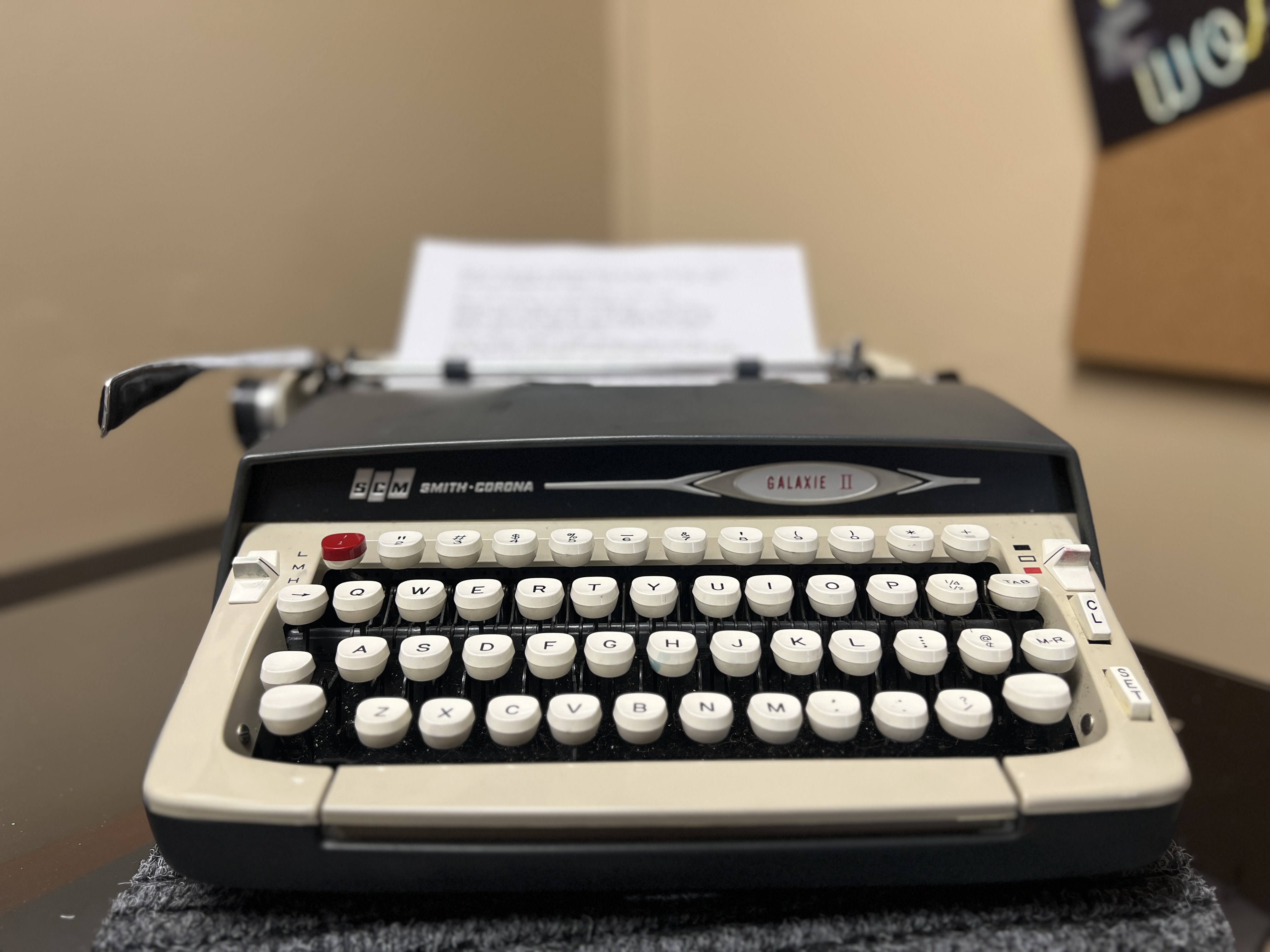
-
Learning another language in later life helps unlock brain potential
Maybe the last two years of intensive language study have had an extra added benefit. It may help stave off dementia.
The study published recently in the academic journal Neurobiology of Aging is yet more proof that regularly speaking a second language from when you’re younger helps you when you’re older.
It didn’t look at people like me, who picked up another language when we were older. Instead, it studied people who spoke two languages daily beginning when they were youth, and how that helped their memory and recall tasks. And they used MRIs and cognitive assessments to do that.
What did it find? That if you are bilingual, you’re generally better off as you get older when it comes to remembering and using your brain.
“Bilingualism may act as protective factor against cognitive decline and dementia,” the authors conclude. “In particular, we observed that speaking 2 languages daily, especially in the early and middle life stages might have a long-lasting effect on cognition and its neural correlates.”
It wasn’t the reason I began studying languages — well, one language in particular — a few years ago. But I will admit that the effort also helped use more of my brain, in different ways than I was used to, and that has I think paid dividends beyond expressing myself in another language.
Although that has been cool, too.
I have been, for the most part, monolinguistic. I spent my entire middle and high school years, along with college, studying French and, living so close to Quebec, I got to use it a fair amount. But I never really kept up with it and I never really took the next step, which was thinking and writing profusely in French. So it went away, for the most part. I can help my daughter with her French homework, that’s about it.
But it wasn’t until I began to study Welsh via Learn Welsh/Dysgu Cymraeg — in intensive classes over Teams and Zoom — that I really could say I was bilingual. For hours upon hours a week — between 10 and 15 hours a week in class, all in the early morning hours East Coast US time, sometimes seven days a week — I went through the first two years of Cymraeg and into my third year. I can honestly say that it was one of the most profound learning experiences of my life: the language, the history and culture I absorbed, the tutors and the students I met. They were friends not just online but offline, and I’ve visited with several on my trips to Wales since.
Some day I’ll write about how wonderful an experience it was.
But beyond all that, I learned something very valuable about myself: That I had more of my brain that I could use and that I could tackle something quite difficult and unexpected, and succeed. It wasn’t easy, and I was definitely not the most facile learner. There are some days that I woke up and went into a cold sweat with all that I had in my brain and all that slipped out in Cymraeg. But there were other days and nights when I would wake up in the middle of a dream in Welsh.
I wasn’t the only one who was older who was learning Welsh. In fact, there were many students in my classes and special sessions who were in their 60s, their 70s, their 80s and who were absolutely passionate and talented students. They were, and are, inspirations. And more than one of them told me that they were studying not only because they wanted to learn Cymraeg, but because they wanted to push back against the potential for dementia.
For reasons that this new study makes clear. -
An epic life
https://www.washingtonpost.com/lifestyle/2023/04/25/harry-belafonte-dies-appreciation-haygood/
We lost a giant this week: Harry Belafonte.
I grew up in the ’70s and ’80s and knew Belafonte not as a singer or an actor but as a civil rights activist and a force for good. (I thank my mom for telling me about him.)
But even I, knowing some of the story, realize the entire scope of Harry Belafonte.
Wow.
I would recommend reading any of the long obituaries, because they tell of an amazing life.
One of the best was written by Wil Haywood and published this week in The Washington Post:
“So, let us remember Harry Belafonte not for Hollywood, but for Selma, and his epic and ongoing role in trying to push a racially-haunted nation forward.”
I agree.
-
Has spring sprung? I thought so

Feels like it should be spring if there are already dandelions. And yet, the temperature is giving conflicting information. I thought it was spring. The calendar turned to March 21 and it did get warmer here, with a few days of 80 degrees in April. I can’t remember that March came in like a lion and went out like a lamb.
It’s certainly been a while since I have seen snow.
So imagine my surprise when I had to scrape the frost off my windows earlier this week. And maybe tomorrow: There’s another frost warning tonight.
Bad time to forget where I put the ice scraper.
-
Why Bottle Caps are the best
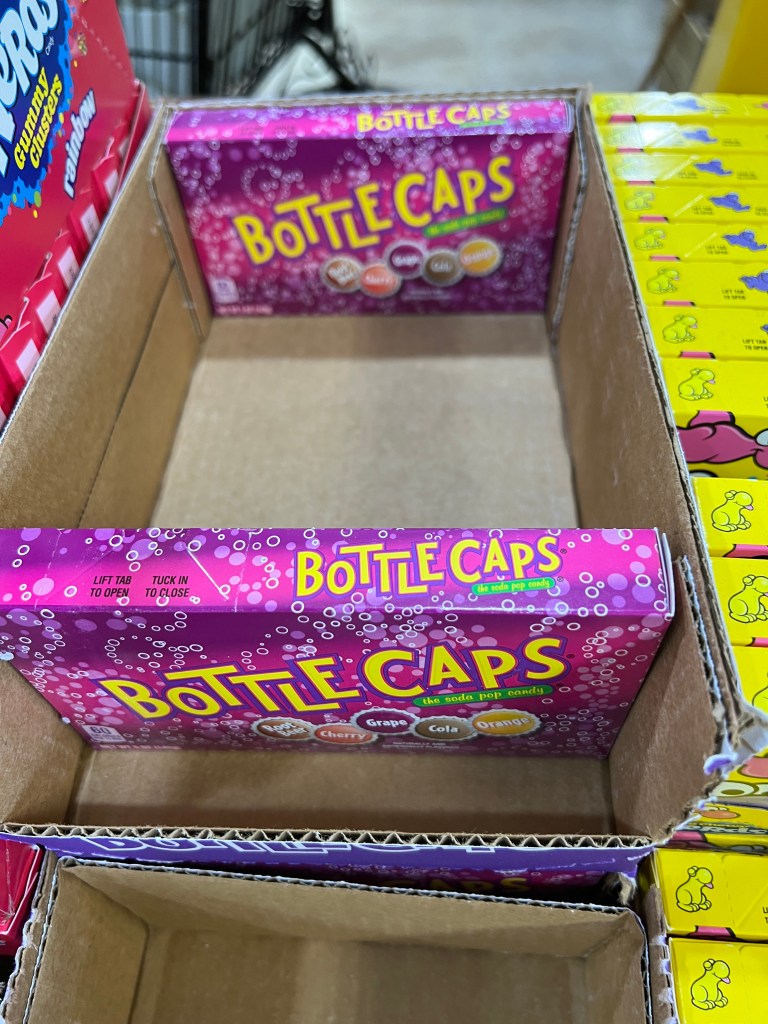
I am not the only Bottle Caps fan. I am not a huge fan of candy, but there are two that I have trouble resisting, and they are both round: Necco Wafers and Bottle Caps.
I will have to write about Necco wafers. The old-timey candy just takes me back to growing up and visiting my grandparents’ house in Massachusetts, where they would always have them.
No, today I am writing about Bottle Caps, a candy I found all by myself. Turns out it is only a little younger than me, having first come out in 1972.
They were hands down my favorite back then, and while I am not known for my discriminating palate, I felt like I could taste the difference between cola, root beer, grape, orange and cherry, just like I could in real life, too.My favorite? Root beer. Just like in my soda.
There was a long time in the ’90s through about the early 2010s that I didn’t have a Bottle Cap. Couldn’t find them. But then I started seeing them again in the stores, and I ended up enjoying Bottle Caps all over again.They are smaller now, and they don’t look like bottle caps much anymore, either. But they taste sooooo good. So when I went to the grocery store today, and saw them, I had to pick up box. Looks like I am not the only one.
-
I Must Say More Than Ever
“Come On Eileen, the As It Should Have Sounded Remix 2022.” Dexys and Kevin Rowland have been putting out great music since the early ‘80s, with a different song called “Geno” predating this. But they are immortal for “Come on Eileen,” which I suppose is a pretty good way to go down in history. (Though I rather like his version of “Both Sides Now” from 2016 too.)
This obviously hits me where I live for my Celtic roots, plus Birmingham also birthed The Beat and Dexys seeded other music I enjoy: The fabulously talented Mick Talbot went on to cofound The Style Council, and Stoker and Mickey Billingham were in General Public. Plus if memory serves, it was Rowland who went out of his way to get The Proclaimers recorded.
Forty years on and maybe I am being too sentimental, but this new video shows the band and Rowland are much more. It’s worth watching just for that, and to hear a classic again.
-
Back to John Donne
I have my Westbrook (Connecticut) High School English teacher Jan Hart to thank for introducing me to John Donne, as she introduced me to so much of value in my junior year of high school. Donne has followed me ever since, whether it’s lines of his poetry I read from time to time, the title of Robert B. Parker Spenser book, and other stops along the way, and trying to see London through Donnie’s eyes, all the way to here, where I clicked this essay.
Makes me miss Donne, and Mrs. Hart, who died too young, all over again.
I recommend this whole essay: “The pleasures of Donne are akin to the pleasures of cracking a safe: there is gold inside. And besides, why should it be easy? Very little that is worth having is easy.”
I’ve kind of sworn off English-language books for the couple of years to focus on Welsh, but this book, “Super-Infinite: The Transformations of John Donne,” by Katherine Rundell, is on my list now that I’m back to my native tongue again.
-
‘The Cones of Dunshire’
Me, every time I get really excited about a new hobby or interest for the past 40+ years. #writing #welshlanguage #amateurradio #astronomy #meteorology #sabermetrics #typewriters
-
Going gray (scale)
With my screens, both mobile and laptop, I’ve gone old-school.
I’ve changed my iPhone and MacBook screens to grayscale. That takes care of about 80% of my screen time, although I’m considering doing the same thing for my iMac and iPad, too.
I haven’t stared into a noncolor screen for a long time, easily 30 years for a computer and ever since I got the iPhone in 2008. But I’ve been thinking a lot about my relationship to technology and how much time I spend on it. And I’ve decided to find ways, big and small, to reduce that time.
Don’t know whether this change — along with dropping social media from my iPhone — will end up drastically changing my life. I highly doubt it. Nor do I really know whether looking at a screen, whether it’s color or grayscale, will have a big effect on my health. (Some sources say yes, some sources say no.)
But I’m going to try.
I didn’t get this idea on my own. I was listening to a podcast (the Ham Radio Crash Course, which I recommend if you’re into ham radio) when one of the hosts mentioned she had done that. She said that it took some getting used to, particularly with pictures, but that she thought it was a good idea. I was driving a long distance while listening to the podcast and started thinking about whether I would do this.
So I did.
A couple of days in, I’m still getting used to grayscale. I use my iPhone for a lot of things, whether it’s communication, entertainment (audio and visual), personal and work emails, and a host of other things. I never really thought of whether the colors have an impact on me. I still don’t. It took a little getting used to and my son, seeing the gray screen, asked what was wrong with the phone.
“Nothing,” I said. “I just changed it.”
I’ll admit some of it took getting used to. The Ham Radio Crash Course Cohost, Leah, had said that photos were a challenge. That is the case, which I’m still getting navigating. (I’ll probably have to turn it back to color if I take any photos for work.) And I use the iPhone to watch video and TV shows, so I don’t know what to do about that.
I watched a “Star Trek” episode in grayscale last night. It was … interesting.
After a few days of the grayscale iPhone, I took another plunge and I converted my work MacBook to grayscale. I missed the color of my background photo but, so far, little else.
What I’ve gotten in return is less time on screens — or, should I say, more productivity — as well as probably less dopamine hits and blue light. I continue to use my iPhone for writing and my MacBook for work. After a few days I got used to less color. And I am feeling much more focused, and maybe more balanced between screen and real life.
No idea whether I’ll be able to keep it up. But at the moment, that’s welcome.
-
A memorial to a fallen hero
I was looking through some filings with the Pennsylvania Legislature yesterday when I came upon a resolution that took me back.
It was a request for cosponsors for a resolution to rename a bridge on Syberton Road in Gallitzin Township, Pennsylvania, for Private Martin J. Hanlon.
Hanlon was a 1968 graduate of Cresson High School in Cambria County and joined the Marines, eventually ending up in South Vietnam. On Dec. 27, 1970, Private Hanlon was in a truck in Quang Nam, that hit a landline and he was killed.
Hanlon was 21 years old.
According to one of the many posts on the vvmf.org about Private Hanlon, he wasn’t even supposed to be working that day and he had volunteered to be on that convoy.
“Marty chose to ride that day, the rest is history,” wrote one friend in 2017.
I don’t know much else about Private Hanlon or the request, filed by Pennsylvania State Rep. Jim Rigby, to rename the bridge in Private Hanlon’s honor. Private Hanlon, according to the resolution, received the Purple Heart, Combat Action Ribbon and other medals for his service.
And he’s memorialized on Panel 5, Line 11, on the Vietnam Veterans Memorial.
I drive by a fair amount of these memorials, to service members and fallen police officers, and always try to remember who they are so that I can look them up later and honor their sacrifices. It’s a lot easier now than it’s ever been. When I was growing up, in the pre-Internet days, it was almost impossible. But I tried to do that even then, ever since I realized my family had connections to some of those memorials. Both my grandfather, a World War II veteran, and my father, whose friends were drafted to serve in Vietnam, had connections to some of the people honored in their hometowns.
I don’t know the backstory, but I’m glad that Rep. Rigby is remembering a young man who made the ultimate sacrifice so long ago. I know what it’s like to try to keep the memory of a lost loved one alive. It’s hard, even when that person has lived for decades. Private Hanlon never got that chance, and the older I get, the more I realize how tragic that is. Hanlon would be 73 this month, had he lived.
Home
About Me
Journalist and writer. Loves writing, storytelling, books, typewriters. Always trying to find my line. Oh, and here’s where I am now.


Leave a Reply